

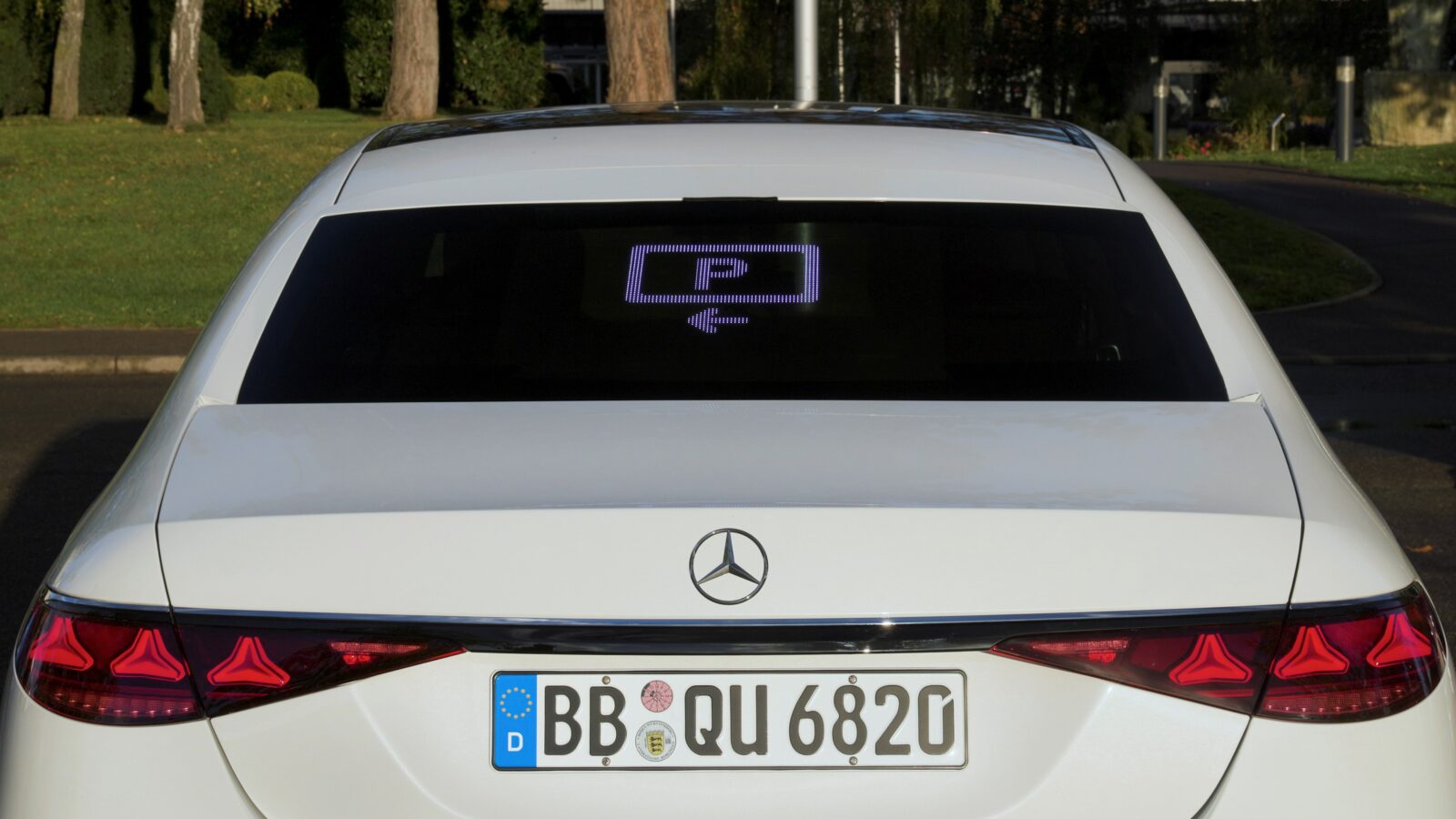
Mercedes-Benz has shown three technologies it’s working on for future cars: car windows that can display messages, a windshield that works as a screen, and a new way of managing power in electric car batteries. None of them has a production date, a target model or a price yet. They show where the company’s engineers are spending their time, not what you can buy next year.
The first idea puts LED display elements inside the laminated glass of the windows. When they’re off, the company says they’re almost invisible. When needed, the rear window could show brake lights, warning symbols or traffic information to drivers behind. Mercedes uses two kinds of LED. Mini LEDs handle large areas like the rear glass. Micro LEDs have a higher resolution and are meant for smaller areas with more detailed graphics, such as animations. The big unknown is regulation. Car lighting rules are strict, and a rear window that displays messages to other drivers would need approval before it could reach a showroom.
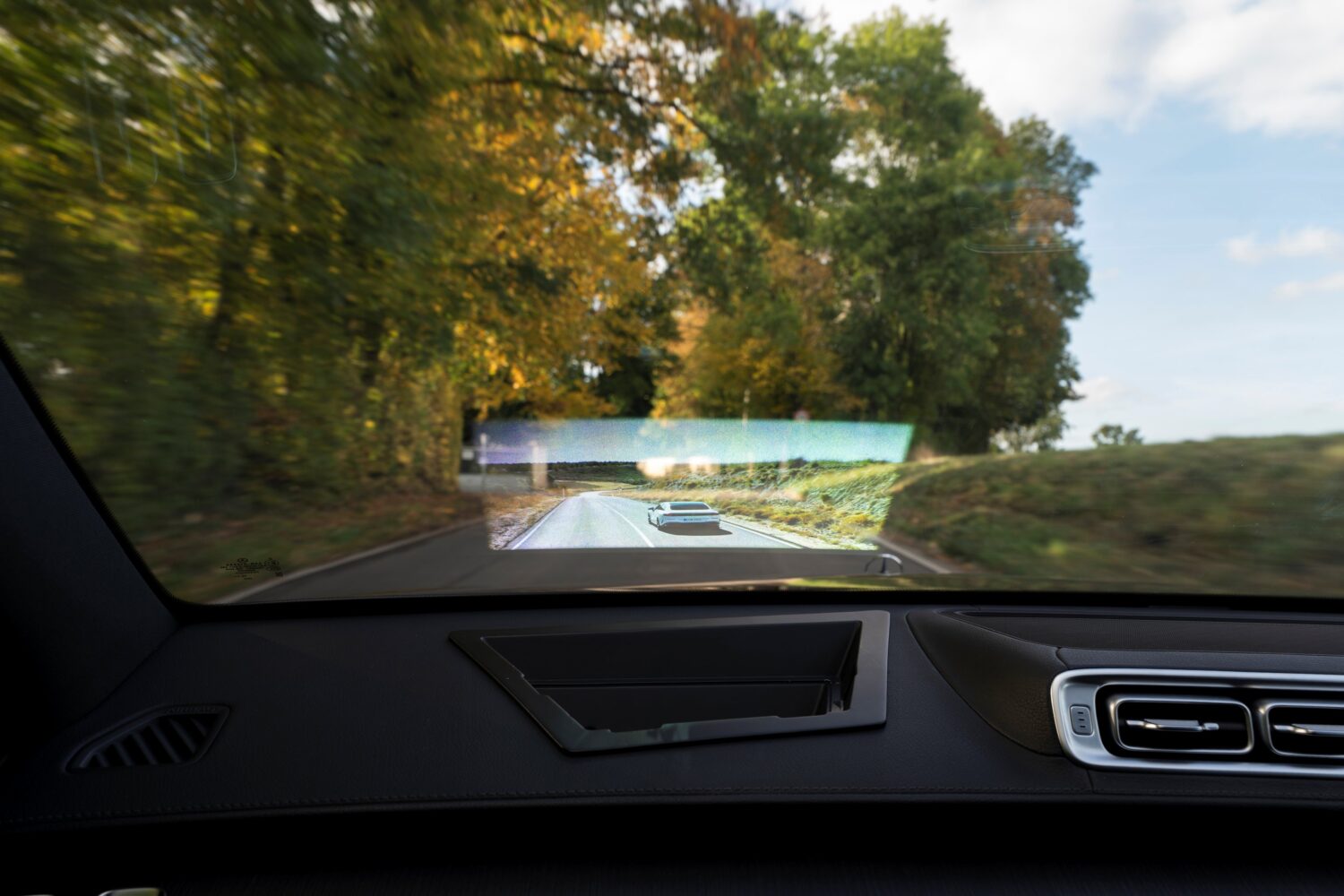
The second idea turns the windshield into a display. A projector in the dashboard shines content onto a clear film laminated into the glass. The film uses holographic optical elements to reflect only the light coming from the projector, which Mercedes says keeps the image readable in direct sunlight. The image can only be seen from certain angles, so the driver and front passenger could watch different content at the same time. Mercedes lists navigation, points of interest, video calls and films as examples. That’s a different approach from the MBUX Hyperscreen, which covers the dashboard in glass. Here, the screen only shows up when there’s something to show. Carmakers are increasingly using the windshield as a display. BMW’s Panoramic iDrive, for example, projects information along the bottom of the glass.
The third project is the least visible but probably matters most. Mercedes calls it the Power Converter: small programmable converters that manage the energy from individual battery cells or groups of cells. In today’s battery packs, the voltage depends on how many cells are wired in series. With this system, software sets the voltage and holds it steady at up to 800 volts, whatever the cells’ charge level or age. Mercedes says this could lead to smaller, more flexible battery designs. It could also combine AC charging, DC conversion and bidirectional uses such as vehicle-to-home and vehicle-to-grid into one unit. The current version delivers only 3 kW. That works for some charging and power-supply jobs, but it’s far below what a car needs to drive.
It’s easy to get excited about the windshield and window displays. The converter is more likely to actually affect how far an electric Mercedes can go on a charge and how much it costs, as long as the company can increase its output from kilowatts to the much higher power a car needs to drive.