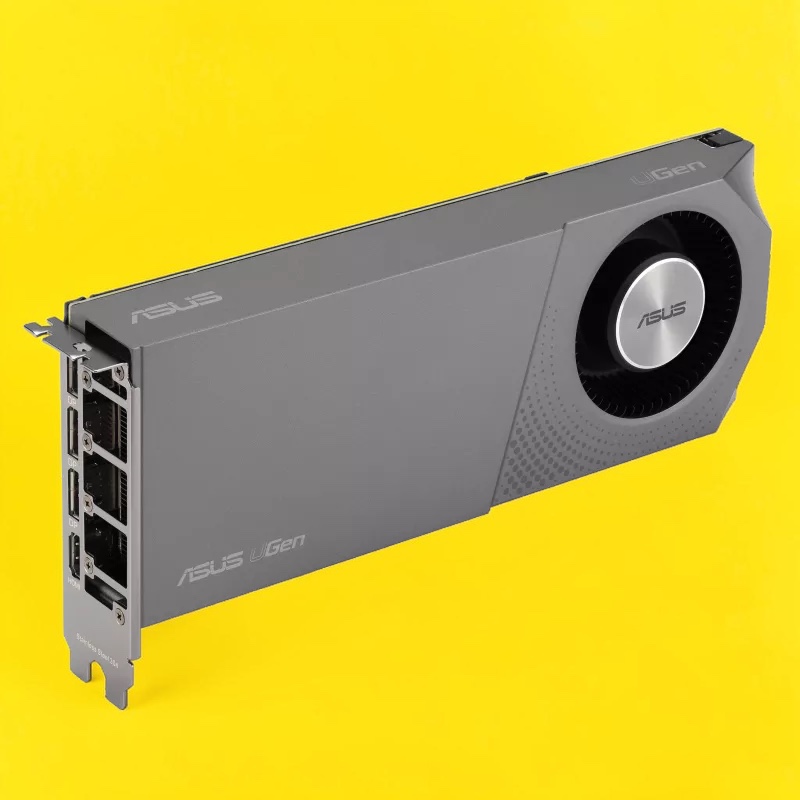
ASUS is going after one of the most frustrating bottlenecks in local AI, which is running out of video memory long before you run out of compute. Its new UGen Intel Arc Pro B70 32GB is a workstation accelerator built for inference, and its pitch is simple: lots of VRAM at a price that undercuts the usual options. The catch is that ASUS hasn’t announced that price yet.
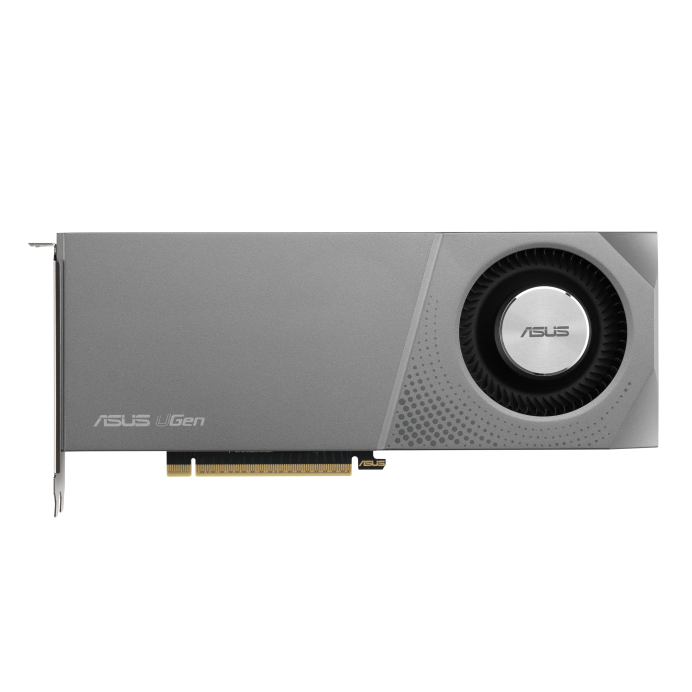
The card uses Intel’s Xe2 architecture with 32 Xe-cores and 256 XMX matrix engines. ASUS rates it at up to 367 TOPS of INT8 performance. The 32GB of GDDR6 memory includes ECC error correction and sits on a 256-bit bus with up to 608GB/s of bandwidth. Board power is 310W, the card fits in a full-height dual-slot design, and it connects over PCIe 5.0 x16. You still get display outputs too: three DisplayPort 2.1 ports and one HDMI 2.1b.
Memory capacity is the headline because it decides what a model can do on local hardware. Long context windows make the KV cache much bigger, and running several agents at once means several models sharing memory. When a model spills over into system RAM, performance falls off sharply. ASUS says the drop can reach 90 percent. The company says one card handles most models under 27 billion parameters, plus a 128K-token context with Llama 3.1 8B. Two cards give you 64GB and four give you 128GB. ASUS quotes 43.4 tokens per second for an 80B-class model on a dual-card setup.
Intel’s software has historically been the weak spot, and this is where buyers should be careful. ASUS lists support for vLLM, llama.cpp through SYCL and Vulkan, Ollama, OpenVINO, oneAPI, PyTorch XPU and ComfyUI. Validated models include Llama, Qwen 3.x, DeepSeek-R1 Distill, Mixtral and OpenAI’s gpt-oss 120B. Intel’s LLM Scaler also handles INT4 and FP8 quantisation on its own, without CUDA-based tools. Still, ASUS admits there are “known ecosystem limitations” without saying what they are. Teams built around CUDA should test their own workflows before buying in bulk.
Bandwidth is the other trade-off. Nvidia’s GeForce RTX 5090 also has 32GB, but its GDDR7 memory runs at roughly three times the B70’s bandwidth, and that directly affects how fast tokens are generated. The B70 isn’t trying to win that race. It’s aimed at small businesses, studios and regulated fields like law, healthcare and finance, where keeping data on-site matters more than raw speed.
Everything now depends on pricing. If ASUS and Intel can sell 32GB of ECC memory well below Nvidia’s workstation cards, the B70 could become an easy choice for budget local AI servers. If not, it’s just one more card on an already crowded shelf.