TL;DR: VisionQuest gives Marvel’s Westview saga a smart, moving finale, powered by Paul Bettany’s haunting Vision and James Spader’s hilarious Ultron, even if its slow-burn mystery and timid AI themes hold it back.
There’s something poetic about where VisionQuest lands in the MCU timeline. Marvel’s live-action Disney+ push started back in 2021 with WandaVision, a show that only went first because the pandemic stalled The Falcon and the Winter Soldier, and five years later the studio is visibly pulling back from that strategy. Daredevil: Born Again is wrapping up with its third season, animation is doing more of the heavy lifting, and big live-action series are becoming rarer. So a show built around Paul Bettany’s White Vision, the last major unresolved piece of the Westview story, ends up feeling like the final page of a chapter rather than just another spin-off. Showrunner Terry Matalas, who did wonders rescuing Star Trek: Picard in its final season, treats that responsibility seriously across eight hour-long episodes premiering on Disney+ on October 14.
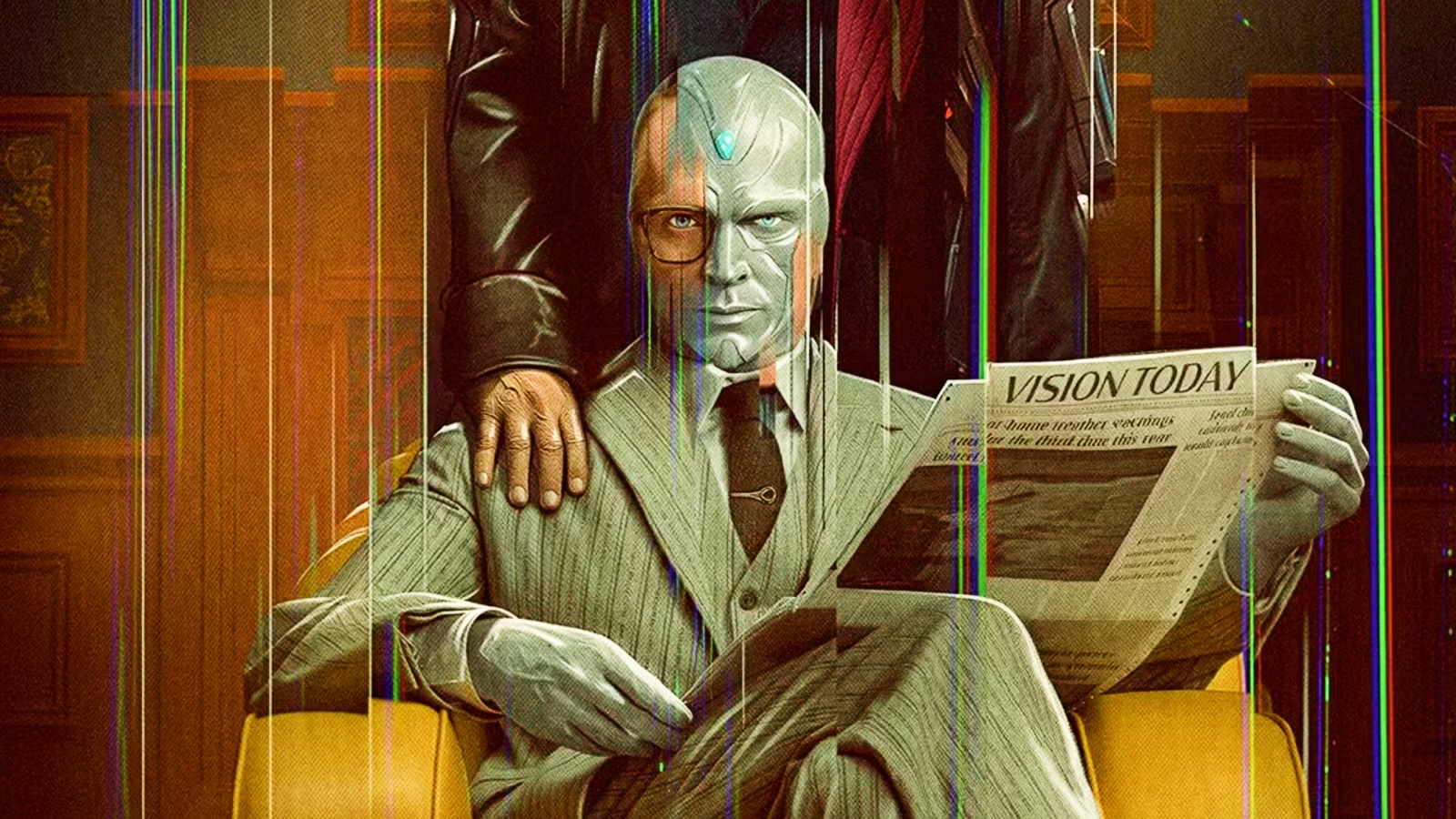
The setup finds Vision back in Edinburgh, working a pub job in the city he once shared with Wanda, while his real life unfolds inside a mansion he’s built within his own mind. That mental retreat is home to every AI Tony Stark ever cooked up, including Emily Hampshire’s E.D.I.T.H., Orla Brady’s F.R.I.D.A.Y. and James D’Arcy’s J.A.R.V.I.S. It’s also a prison, because Vision has Ultron locked away in there, a twist Marvel already spoiled in its own trailers. When a hidden mastermind sends a ruthless bounty hunter named Paladin after Vision, the series transforms into a globe-hopping thriller that digs into who Vision really is, what Ultron became, and where AI in this universe actually comes from. That’s a lot of lore to juggle, and the show mostly keeps every ball in the air.
Paul Bettany turns an empty copy into the MCU’s most fascinating hero
Bettany has always done remarkable work with a character who, on paper, is a polite android with a gemstone in his forehead. VisionQuest asks something harder of him, because this Vision carries every memory of the original right up to his death in Endgame without any of the emotional growth those memories once produced. He knows what love felt like the way you know the plot of a game you watched someone else play on YouTube, and the show makes that gap the engine of the whole season. Bettany plays it with incredible restraint, letting tiny hesitations and flat glances communicate a man haunted by a goodness he can’t access. It’s the kind of performance that makes the quieter scenes land harder than the action set pieces.
What impressed me most is how that central idea keeps deepening rather than repeating. The season uses non-linear storytelling to shuffle timelines and perspectives, which lets it reveal pieces of Vision’s identity in a way that feels earned rather than dumped in a lore-heavy monologue. Fans of Blade Runner, Westworld or Mass Effect’s endless debates about synthetic souls will recognise the questions, but the show ties them firmly to five years of MCU history. Matalas clearly understands this corner of the franchise, and he picks up threads from WandaVision and Agatha All Along with real care. It never feels like homework, even when it leans on deep cuts.
James Spader’s Ultron is the best villain Marvel forgot it had
If Bettany is the soul of the season, Spader is its mischievous grin. Ultron spends most of VisionQuest in human form rather than as a hulking CGI robot, a choice some fans have pegged as budget-saving, but it gives Spader room to actually perform and it pays off enormously. This Ultron is less a genocidal machine and more an exhausted genius who finds everyone around him slightly beneath his attention. Matalas uses him as the show’s comic engine, though the humour comes from arrogance and self-awareness rather than Marvel’s usual quip factory. He occasionally pokes at the series’ own storytelling habits so pointedly that he nearly winks at the audience, and that meta streak is genuinely funny.
The supporting AIs also get more than cameo duty. The series explains why each of Stark’s creations wears the human face it does, and those reveals feed into some of the smartest turns of the season. D’Arcy’s J.A.R.V.I.S. remains a treat for Agent Carter loyalists, while Ruaridh Mollica’s Tommy Maximoff and Todd Stashwick’s Paladin keep the real world from feeling like an afterthought. Stashwick in particular brings a swaggering menace that makes Paladin feel dangerous to a being who could theoretically phase through him.
The mystery box drags and the genre swaps wobble
VisionQuest isn’t flawless, and its biggest issue is pacing. The shadowy villain pulling Paladin’s strings is introduced in the premiere but doesn’t get unmasked until the end of episode seven, and in between there are stretches where the season feels like it’s stalling for time. Hour-long episodes make that stalling more noticeable, much like those Lost-era seasons that kept dangling answers just out of reach. The show also flips genres a few times, borrowing the look and feel of different kinds of TV in a way that mostly feels decorative. Since WandaVision built its entire identity on brilliantly remixing television eras, these detours invite a comparison VisionQuest can’t win.
The other missed opportunity is thematic. A big-budget series about artificial intelligence arriving in 2026 had a rare chance to say something about the real conversation around AI, from privacy and creative theft to the environmental cost of data centres. Instead, VisionQuest is almost entirely focused on what AI means inside the MCU, which is satisfying for lore fans but feels a little timid. I understand that a project in development for years can’t chase headlines, but the silence is noticeable.
Verdict
VisionQuest is one of Marvel’s strongest Disney+ series and a fitting close to the story WandaVision started. Bettany delivers a career-best take on Vision, Spader finally gets to show what Ultron could have been, and Matalas weaves years of loose threads into a mostly satisfying whole that genuinely benefits from the episodic format. The drawn-out central mystery, some unnecessary genre detours and a reluctance to engage with real-world AI keep it from greatness. WandaVision fans, Agatha All Along viewers and anyone who’s waited years for Vision’s return should make this a priority. Casual MCU viewers may find the slow middle stretch a test of patience, but the payoff is worth it.