
OpenAI’s GPT-6 family has made its way into ChatGPT, and the biggest change may not be the model itself but how its answers appear on screen.
Starting today, Plus, Pro, Business and Enterprise subscribers are getting GPT-6 Sol, while Free and Go users will begin receiving GPT-6 Luna from tomorrow. Both are versions of the GPT-6 models OpenAI introduced last month, tuned for everyday conversation rather than specialist work. Luna is the same lightweight model OpenAI is already positioning against Anthropic’s newly launched Claude Haiku 5.5 on the developer side, so free users are getting the company’s low-cost tier rather than a cut-down extra.
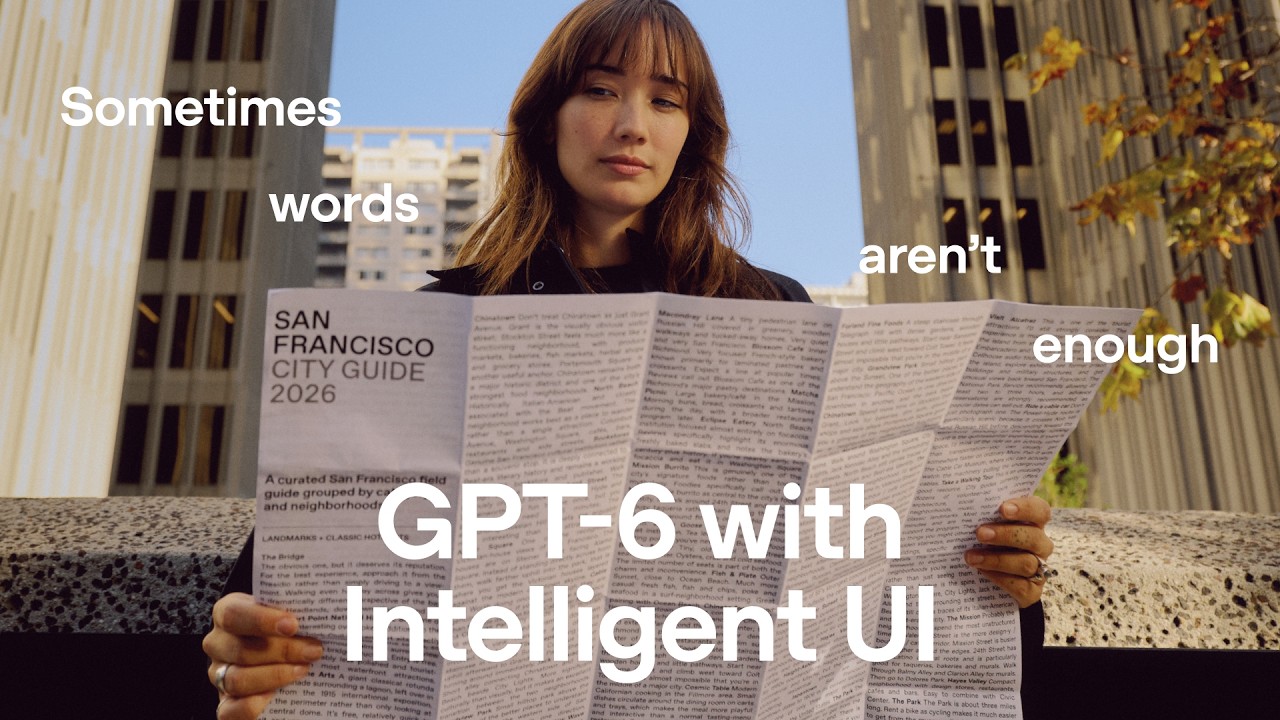
The headline feature is what OpenAI calls Intelligent UI. Instead of always answering in text, ChatGPT can now choose the format that best suits the question. That might mean a side-by-side layout for comparisons, an interactive diagram to explain a concept, or charts, forms and tappable buttons placed directly in the conversation. Ask something more complex and it can build a widget with adjustable inputs so you can see how changing a value affects the outcome. ChatGPT can also create small working tools on request, such as calculators, bill splitters and simple games. OpenAI says it will still default to plain text when that is the most useful answer.
None of this is entirely new. Claude has offered interactive artifacts for some time, Google has tested generative interfaces in Gemini, and ChatGPT already had Canvas for longer documents and code. What’s different here is that the format is chosen automatically within a normal chat, rather than through a separate mode the user has to enable.
The other notable change is in how GPT-6 reasons. OpenAI says ChatGPT can start answering while it is still thinking, adding to the response as it goes rather than leaving users waiting for the full reasoning process to finish. That should make the slow pauses typical of reasoning models feel shorter, although it’s unclear how the model handles cases where later reasoning contradicts something it has already shown.
There’s also a trust issue. A polished interactive calculator or chart can look far more authoritative than a paragraph of text, even if the underlying numbers are wrong. Richer presentation makes mistakes harder to spot, not easier.
OpenAI hasn’t said whether every Intelligent UI feature will be available equally across all tiers and platforms, or how much Luna can do compared with Sol. For now, it appears that ChatGPT is moving away from being a simple chat window and toward a tool that builds interfaces on demand.