
The car that talked back
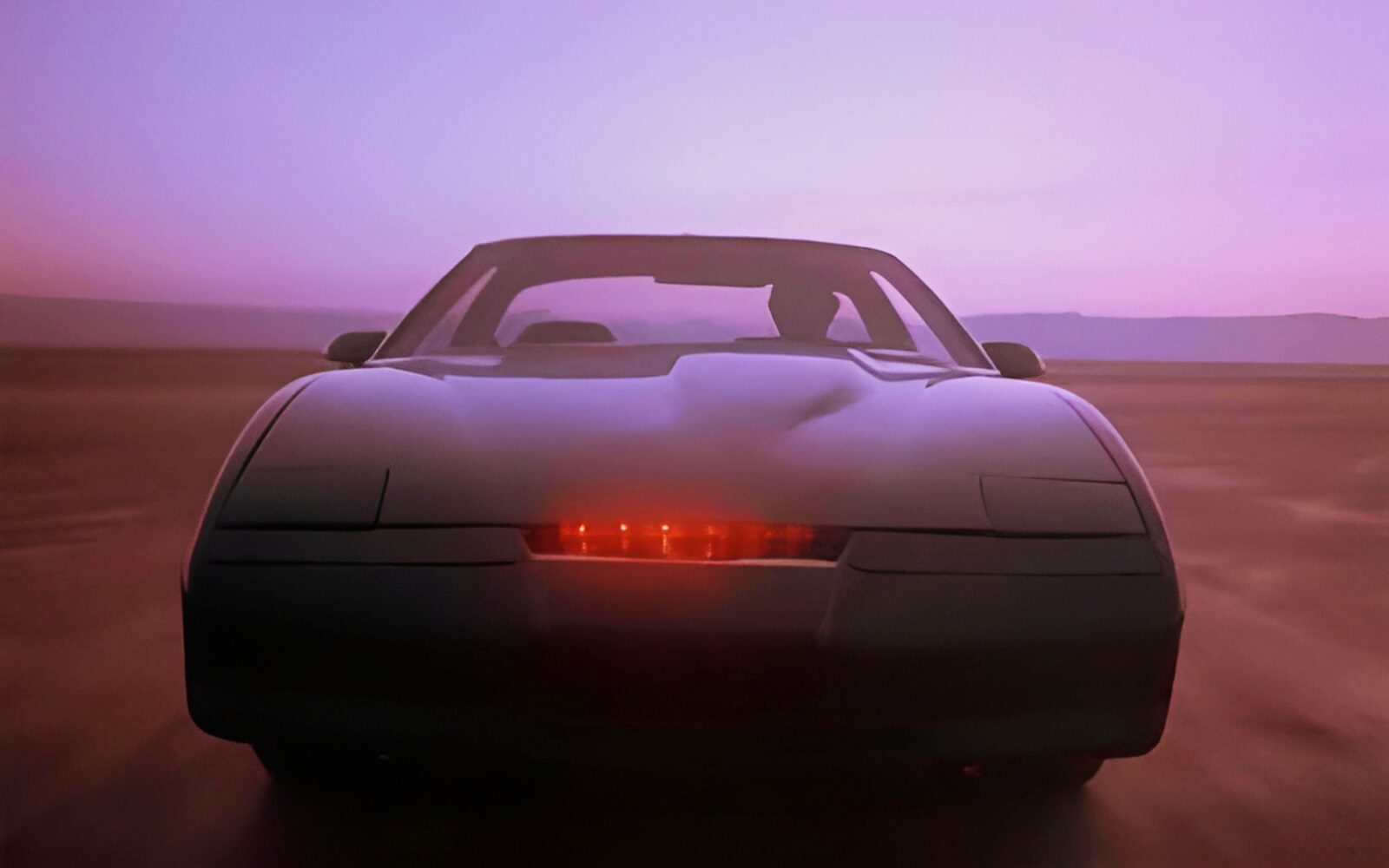
In 1982, NBC asked us to believe that a black Pontiac Trans Am could think, talk, drive itself and judge our life choices in a crisp, faintly disappointed voice. We believed it. We were also the generation that believed quicksand would be a major problem in adult life.
Forty-four years later, the joke is on the skeptics. Your car can now hold an actual conversation, people in Dubai are hailing taxis with nobody in the driver’s seat, and a Tesla will crawl across a car park to fetch its owner like a very expensive golden retriever.
KITT, it turns out, wasn’t fantasy. It was a product roadmap with a synth soundtrack and a man in a leather jacket. So let’s run the scanner over the Knight Industries Two Thousand and see which of its party tricks we’ve actually built, which ones are halfway there, and which ones are still firmly parked in Hasselhoff’s imagination.
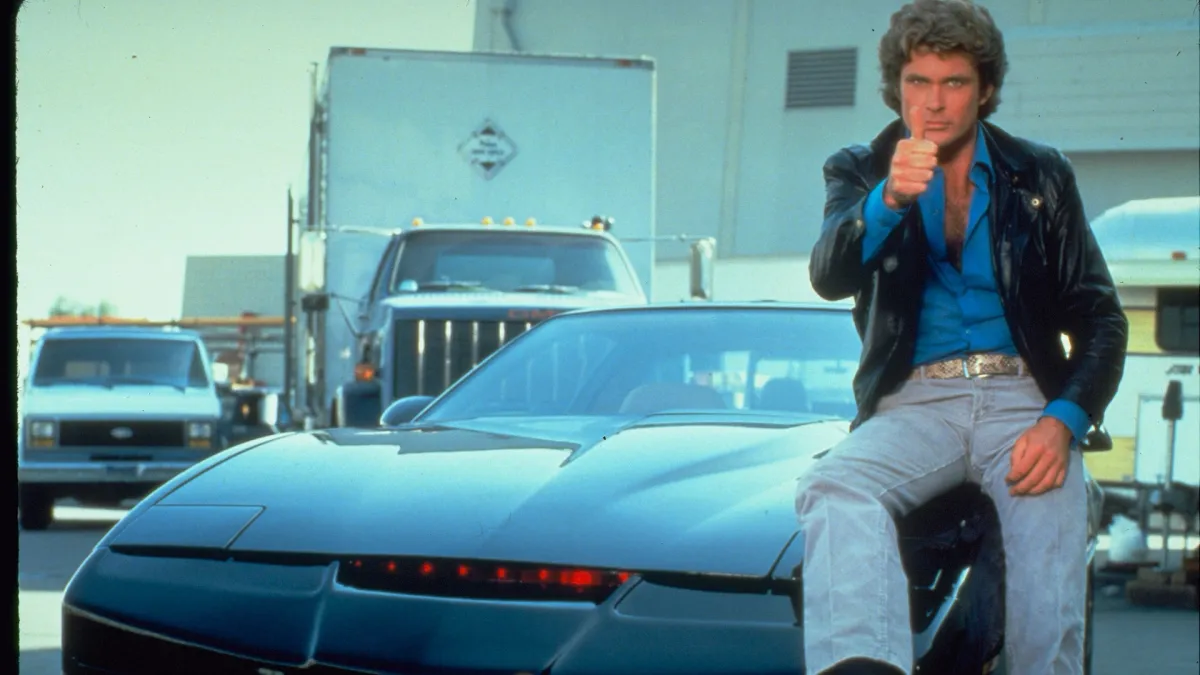
“Hey KITT” is now “hey Mercedes”
KITT’s real superpower was never the turbo boost. It was the chat. Voiced by William Daniels with the energy of a butler who has seen too much, KITT understood context, answered follow-up questions and occasionally told Michael he was being an idiot. In the 80s, that was pure science fiction.
For most of the time since, car voice assistants have been glorified remote controls. Mercedes has openly admitted its older MBUX system was decent at roughly 20 scripted tasks and fell apart the moment you went off-script. Ask it something weird and you got the in-car equivalent of a blank stare.
That era is ending fast:
- Mercedes rebuilt its MBUX Virtual Assistant around Google’s Gemini-based Automotive AI Agent, so it can untangle messy requests, handle follow-ups and remember what you were talking about earlier in the drive.
- GM is rolling Gemini into its cars, trucks and SUVs starting in 2026, so you can dictate messages, plan multi-stop routes and prep for meetings by just talking.
- Tesla went the Grok route, because of course it did.
What’s still missing is the attitude. No production car will yet sigh audibly when you ignore its route suggestion for the third time, or note in a dry voice that your plan has a 12 percent chance of success. Give it a firmware update or two. Somebody in a product meeting is definitely pitching “sass mode.”
Nobody’s driving, and that’s the point
In the show, “auto cruise” was KITT’s way of letting Michael flirt, eat a sandwich or stare meaningfully into the distance while the car handled the highway. In 2026, that’s a business model.
Waymo is the closest thing America has to a KITT fleet. By May 2026 it had passed 20 million trips with roughly 3,000 robotaxis, and it’s chasing one million rides a week by the end of the year. In August, California regulators cleared it to expand across 18 counties, freeways included, day and night, rain or fog.
Dubai didn’t want to be left out of the sci-fi party either. WeRide has been running fully driverless, paying robotaxi rides in Jumeirah and Umm Suqeim since March 31, 2026, Baidu’s Apollo Go went driverless commercially around the same time, and Pony.ai is lining up its own launch for the second half of the year. The RTA’s stated goal is for a quarter of all trips in the city to be autonomous by 2030.
The difference? KITT chased arms dealers across the desert. Today’s robotaxis chase a pickup point outside a mall. Less glamorous, sure, but statistically far more useful, and nobody has to fake a dramatic jump over a truck to get you home.
“KITT, I need you”: the wrist summon
Michael Knight’s most-used gadget wasn’t in the car at all. It was the chunky comlink watch he talked into whenever he needed backup, at which point KITT would come screeching around the corner like a loyal dog with a V8. Looking back, it was basically an Apple Watch with a cellular plan and a very specific use case.
The summoning part is real now too. In September 2024, Tesla finally shipped Actually Smart Summon, which lets an owner open the app, press “Come to Me” and watch the car drive itself across a car park to them. Yes, Tesla officially abbreviated it to “ASS.” No, we will not be making that joke. Tesla already made it for us.
The fine print is very un-KITT, though. You have to keep your thumb pressed on the button the whole time, it’s meant for car parks and driveways only, and if anything goes wrong, it’s on you. Michael never had to hold a button while KITT rescued him from a burning warehouse. Also, back in 2016, Elon Musk promised summon would eventually work across a whole continent. Your Tesla still can’t drive from Abu Dhabi to pick you up in Dubai. Yet.
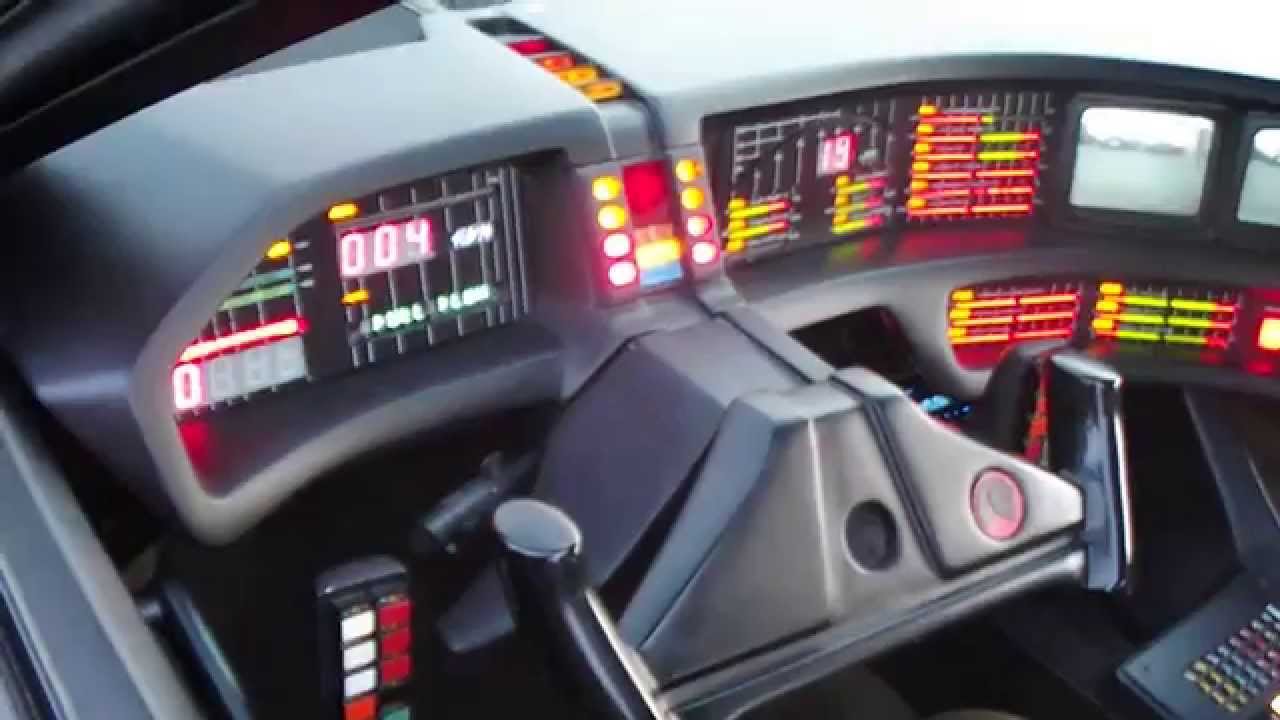
Things 2026 still can’t do (thank god, mostly)
Before anyone trades in their SUV expecting to fly over traffic on Sheikh Zayed Road, let’s be clear about what remains firmly fictional.
- Turbo boost. KITT could launch itself over trucks, trains and the occasional plot hole. Real cars have launch control, which gets you to 100 km/h very quickly but keeps all four wheels on the ground, as physics and your insurer intended.
- The molecular bonded shell. KITT shrugged off bullets and explosions. Modern cars have crumple zones, which are designed to do the opposite: fold so you don’t.
- The ejector seat. No automaker has offered one, and frankly, if your car decided to fire you out the roof because it disagreed with your driving, that would be a lawsuit, not a feature.
- Hacking the villain’s computer from the dashboard. Cars today mostly get hacked rather than doing the hacking. Not quite the same energy.
Then there’s KARR, KITT’s evil twin, built with the same brain but programmed to protect itself first. That one aged weirdly well. Half the AI safety debates of the 2020s are just people arguing about how not to accidentally build KARR.
One last reality check: KITT’s computer apparently had a “massive” 1,000 megabits of memory. That’s about 125 megabytes, or roughly one blurry vertical video of someone filming the Dubai Fountain.
The KITT scorecard
| KITT feature | where we are in 2026 | verdict |
|---|---|---|
| Talks back like a person | Gemini, Grok and friends now in dashboards | came true |
| Drives itself | Waymo in the US, WeRide and Apollo Go in Dubai | came true |
| Comes when called | Tesla Actually Smart Summon, car parks only | half true |
| Wrist comlink | Every smartwatch ever | came true |
| Dry, judgmental personality | Not shipping (yet) | pending |
| Turbo boost, ejector seat, bulletproof shell | Nope | still fiction |
The verdict
The 80s got the brain right and the stunts wrong. We built the car that listens, thinks and drives, then skipped the part where it jumps over trucks. Honestly, that’s the right order.
KITT wasn’t a prophecy so much as a wish list, and engineers have spent four decades quietly ticking it off. The only thing left to deliver is the scanner bar, and some aftermarket shop in Al Quoz can probably sort that out by Thursday.