
OpenAI has launched Dots, persistent AI agents that keep working on your behalf even when you aren’t typing into ChatGPT. It’s a direct response to Meta’s Muse, which has quickly become the benchmark for this kind of assistant. The race among AI companies is shifting from chatbots that answer questions to agents that stay with you and keep working.
Each Dot runs on OpenAI’s GPT-6 Astra model and gets its own cloud computer with a web browser, the same basic setup that powers Muse. OpenAI says a Dot can pursue a user’s goals around the clock, connect to more than 4,000 apps, and carry out research in the background without being asked. The company’s pitch rests heavily on personalisation. It claims a Dot gradually learns how its owner thinks, what they prefer and what a good result looks like to them, based on feedback over time.
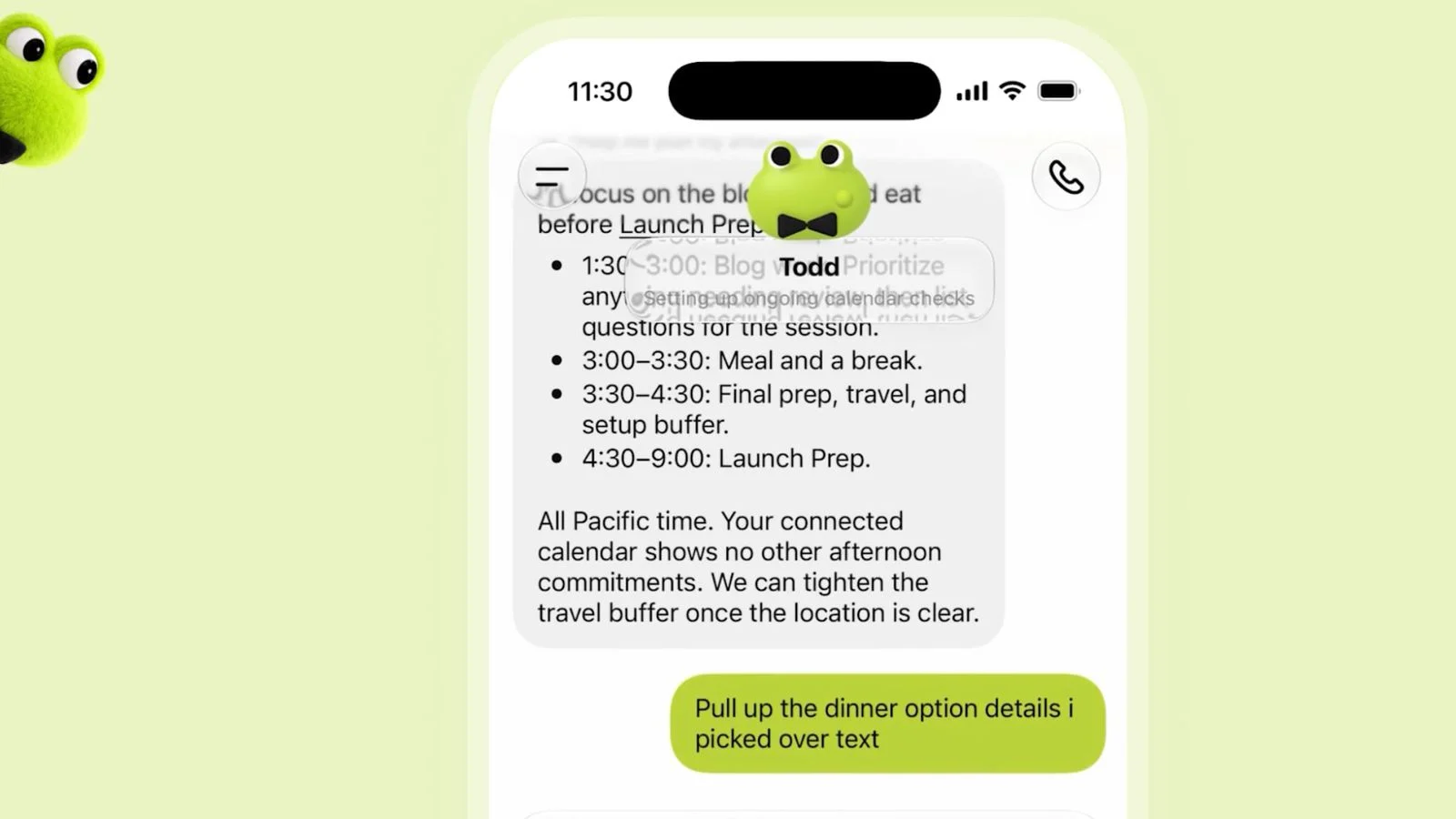
The more notable change is where these agents live. Dots aren’t limited to the ChatGPT window. You can reach them through Slack and Microsoft Teams, texting is planned, and there’s an option to talk through a problem on a voice call. OpenAI says context follows the agent across these channels, so a conversation started in Teams shouldn’t have to be repeated in ChatGPT. That’s the part that could make Dots feel like a colleague rather than a tool, if it works as promised.
An agent that is always on and connected to thousands of services raises obvious questions about control. Dots follow existing ChatGPT permissions, and users can set rules for which tasks need approval before the agent acts. How carefully people set those rules will matter more than any benchmark score, especially in workplaces where one wrong automated action can cause real problems.
Access is limited for now. Dots are rolling out to Pro, Business Premium and Enterprise subscribers in unnamed select markets, and OpenAI hasn’t said when other users will get them. Eligible users get one Dot at no extra charge. Chatting with it doesn’t count against ChatGPT usage limits, but the tasks it performs do draw from your plan’s allowance. Setup happens in the ChatGPT desktop app, and the mobile app works once your Dot exists. For now you get a single named “primary dot”; teams of multiple Dots will come later.
OpenAI also released GPT-6.1 Sol alongside Dots, an update it says improves agentic coding, computer use and professional tasks. The timing is pointed, coming days after Meta showed off Muse Charm, a pocketable hardware companion for its agent. OpenAI has matched Muse on software, but Meta already has a physical device for its agent, and OpenAI doesn’t yet.