
TL;DR: Brothers coasts on terrific McConaughey-Harrelson chemistry, a hilarious Holland Taylor and a wonderfully weird premise. The sitcom writing plays things frustratingly safe, but its eight short episodes make for an effortlessly entertaining binge.
There is a wonderfully strange alternate universe where Matthew McConaughey and Woody Harrelson reunite on television and spend eight episodes staring into the abyss while investigating some unspeakable crime. Brothers is absolutely not that universe. Instead, Apple TV takes one of Hollywood’s most entertaining real-life friendships, adds a long-running rumor about the actors potentially sharing a father, and turns the whole thing into a deliberately lightweight sitcom about family, friendship and two famous men playing ridiculous versions of themselves.
That premise is both the show’s greatest weapon and its biggest limitation. McConaughey and Harrelson have enough natural chemistry to make an argument over breakfast feel like an event, but Brothers sometimes seems so confident in that chemistry that it forgets a sitcom needs more than two charismatic leads bouncing off each other. The result is an eight-episode comedy that is frequently charming, occasionally very funny and almost aggressively easy to watch. It is also familiar enough that veteran sitcom fans will see many of its moves coming from several loading screens away.
Brothers turns a bizarre Hollywood rumor into sitcom fuel
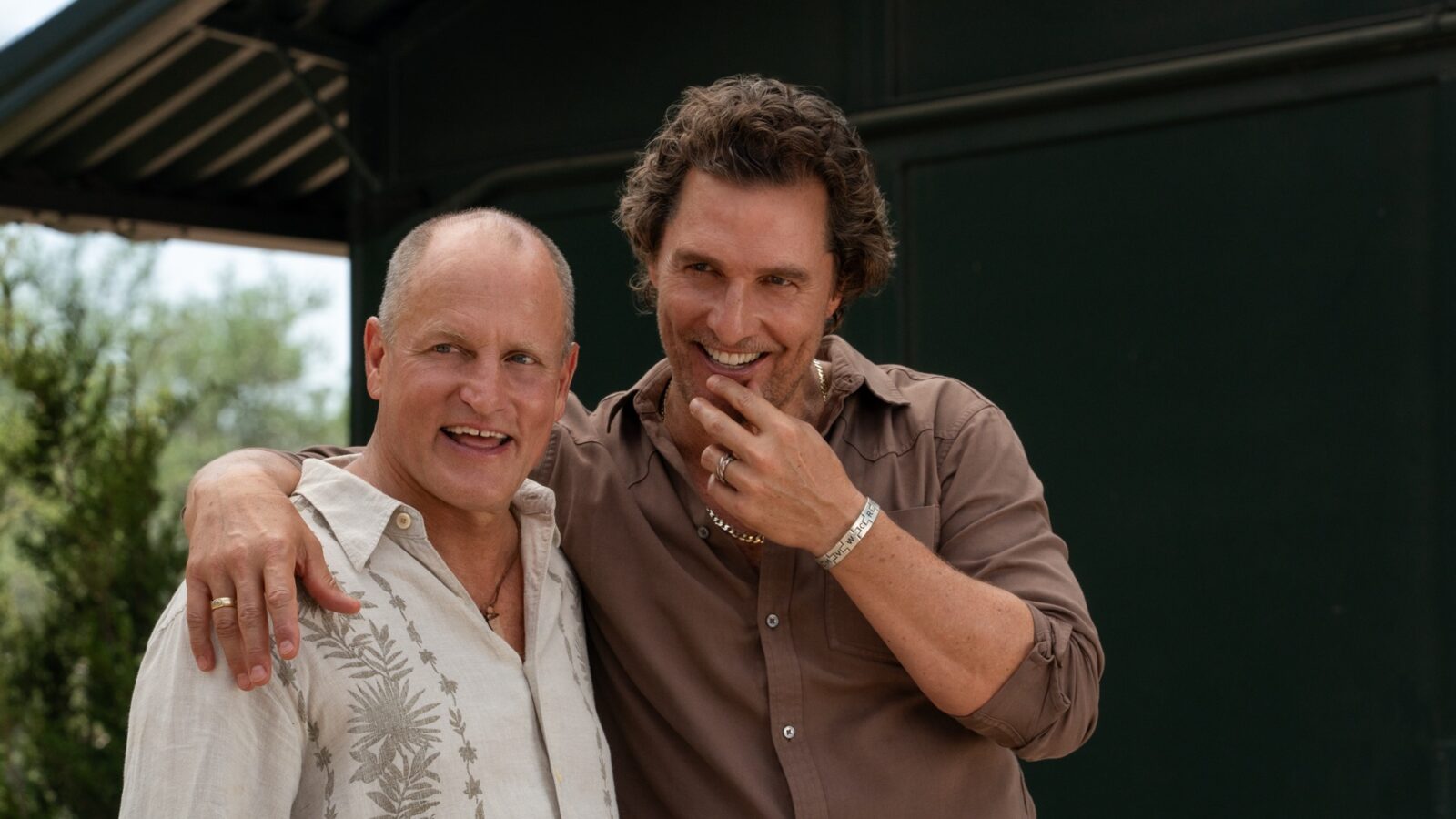
Brothers begins with an irresistible piece of celebrity mythology. Harrelson and McConaughey have publicly discussed the possibility that they could actually be half-brothers, and the series transforms that speculation into its central comic engine. Here, Holland Taylor’s “Ma Mac” casually drops information suggesting there might be something to the rumor, sending Harrelson down a rabbit hole while McConaughey is dealing with his own ambitions, including a run for political office.
That gives the series enough of a continuing mystery to connect its episodes without turning the show into True Detective: 23andMe. Harrelson becomes determined to discover the truth, including trying to get hold of McConaughey’s DNA, while his presence creates increasing chaos in his friend’s household. Creators McConaughey, Harrelson, David West Read and Lee Eisenberg understand that the biological question is ultimately less important than the relationship underneath it. Whether these two men share genetics is the hook; the fact that they already behave like brothers is where the comedy finds its heart.
McConaughey and Harrelson know exactly why we’re watching
The smartest decision Brothers makes is refusing to disguise its stars. These are exaggerated, knowingly ridiculous versions of Matthew McConaughey and Woody Harrelson, constructed partly from the public personas audiences already associate with them. Harrelson becomes the freewheeling trouble magnet whose lifestyle and impulses collide with McConaughey’s comparatively structured existence, while McConaughey embraces the philosophical cowboy image that has become almost inseparable from his celebrity.
It could easily have become a parade of celebrity in-jokes, but their friendship gives the performances something much warmer underneath the gimmick. They have the timing of people who know exactly how far they can push each other, and that makes even fairly conventional sitcom material more enjoyable than it has any right to be. After seeing them create such hypnotic dramatic tension together in True Detective, watching that chemistry redirected toward domestic disasters and petty arguments feels almost like somebody installed a comedy mod into the wrong game. The mechanics are different, but the character compatibility remains absurdly effective.
The comedy plays things safer than its premise deserves
Unfortunately, Brothers doesn’t always match the originality of its setup with equally adventurous comedy. Much of the series operates using an extremely recognizable sitcom formula: disruptive character enters an established household, creates a problem, responsible character attempts damage control, everybody learns something before another disaster arrives. Hunting trips, pets, drinking and family friction provide the machinery for various episodes, with Harrelson frequently serving as the human grenade tossed into McConaughey’s plans.
There is nothing inherently wrong with traditional sitcom construction, especially when the episodes hover around the half-hour mark and the season only runs eight installments. The problem is that these two stars are interesting enough to make me wish the writers had taken bigger swings. Brothers occasionally feels like it has unlocked two legendary characters but keeps selecting the safest dialogue options. The comedy remains breezy and accessible, yet anyone hoping for something structurally daring or as distinctive as its central pairing may come away wanting more.
Holland Taylor nearly steals the entire family circus
If anyone can walk into a McConaughey-Harrelson comedy and threaten to steal their show, apparently it is Holland Taylor. Her Ma Mac is gloriously abrasive, unpredictable and thoroughly uninterested in behaving like the respectable sitcom matriarch. The performance works because Taylor doesn’t treat the character merely as an eccentric older woman designed to fire off outrageous lines. She gives Ma Mac enough authority and mischief that every interaction feels capable of sending the episode sideways.
The rest of the ensemble has a harder time escaping the gravitational pull of the leads. Natalie Martinez and Brittany Ishibashi play the men’s wives, while Lisa Gilroy gets some enjoyable material as McConaughey’s brutally unsentimental campaign manager. The children also provide another angle on the contrasting parenting styles of the two households. Yet too many supporting characters remain functional rather than fully dimensional, which becomes especially noticeable whenever an episode attempts to move away from McConaughey and Harrelson. There is a much richer ensemble comedy hiding inside Brothers, but this first season doesn’t quite give everyone enough XP to unlock it.
Eight short episodes make Brothers dangerously bingeable
Where the show’s simplicity absolutely works in its favor is pacing. Eight roughly half-hour episodes make Brothers the television equivalent of opening a bag of snacks while promising yourself you’ll only have one. There is little narrative weight demanding intense concentration, and the continuing question surrounding the men’s possible biological connection provides just enough momentum to keep the season moving.
That also defines the audience most likely to enjoy the series. Viewers searching for an ambitious reinvention of television comedy probably won’t find it here, while anyone expecting another showcase for the dramatic ferocity of True Detectiveshould recalibrate immediately. This is comfort television powered by celebrity chemistry, familiar sitcom rhythms and the pleasure of watching two longtime friends enthusiastically make fools of fictionalized versions of themselves. Sometimes television doesn’t need to melt your brain; sometimes it just needs to make half an hour disappear pleasantly.
Verdict
Brothers works because Matthew McConaughey and Woody Harrelson are simply too entertaining together for the show’s conventional sitcom machinery to completely hold them back. Their friendship supplies warmth, timing and authenticity to a comedy built around an inherently funny real-world rumor, while Holland Taylor arrives as the supporting cast’s MVP and gives the series an extra dose of glorious chaos.
The frustrating part is how rarely Brothers pushes beyond those ingredients. Its supporting characters need more depth, its episodic stories lean heavily on established sitcom formulas, and a premise this bizarre deserves a little more creative recklessness. Still, as an easygoing Apple TV binge, it does exactly enough to justify the experiment. Come expecting True Detective and you’ll wonder what dimension you’ve fallen into; come expecting McConaughey and Harrelson having fun with their own mythology, and Brothers makes a considerably stronger case for itself.