


TL;DR: Fire Emblem: Fortune’s Weave combines excellent tactical battles with four interconnected campaigns, strategic exploration and deep army management. Its massive scope can overwhelm, but Blaze Arts and meaningful decision-making make this one of Fire Emblem’s boldest adventures.
Fire Emblem has always been about making difficult decisions, but Fire Emblem: Fortune’s Weave seems determined to make sure those decisions follow you everywhere. The battlefield is still the heart of the experience, yet what happens between fights now carries significantly more strategic weight. Exploration, recruitment, training and time management all influence the army you’re eventually taking into increasingly dangerous encounters.
It’s an ambitious expansion of the formula, built around four heroes, branching campaigns, time travel and a sprawling world beyond the traditional tactical maps. There’s an intimidating amount going on, but the impressive part is how frequently these systems connect rather than simply competing for attention. Fortune’s Weave feels less interested in giving Fire Emblem more things to do than in giving you more things to think about.
Four heroes weave together one much bigger story
Fortune’s Weave begins with an undead apocalypse already in progress. Custom protagonist Eshmel discovers that preventing catastrophe requires travelling into the past and ensuring four legendary heroes survive the events surrounding the Heroic Games, a gladiatorial competition held within the Dagdan Empire.
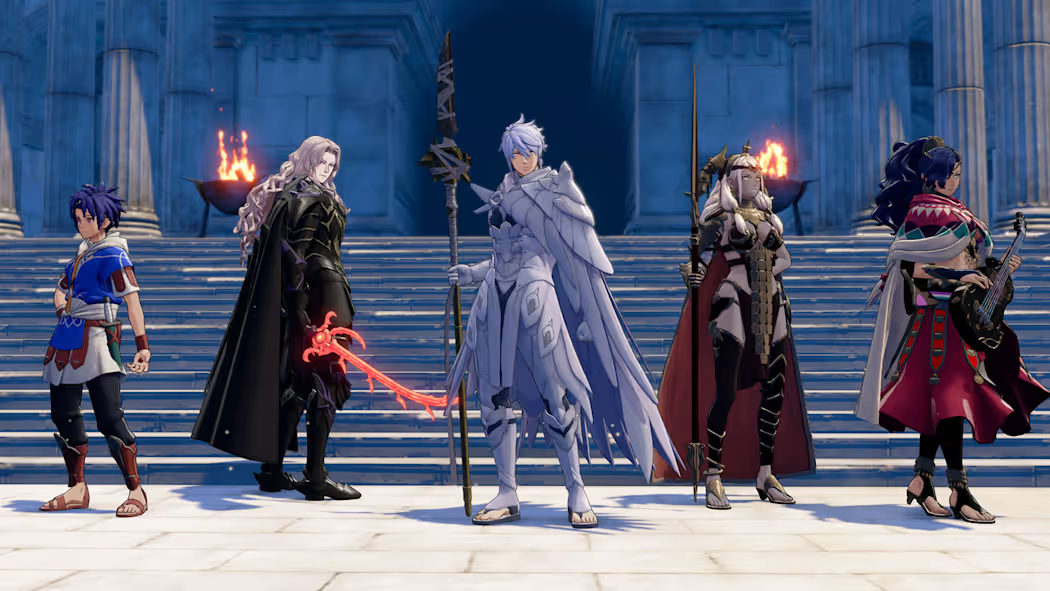
Cai, Dietrich, Theodora and Leda each approach those events from very different circumstances. Cai wants to save his father from execution, Dietrich searches for opponents worthy of his sword, Theodora fights for her people’s future, and Leda’s story revolves around revenge. Their individual journeys eventually lead toward the imperial capital of Dagsion, where seemingly separate conflicts begin revealing pieces of something much larger.
What works particularly well is that these routes aren’t merely alternate versions of the same campaign. Each hero provides different information and encounters, gradually changing your understanding of the wider conspiracy before the stories ultimately converge.
Eshmel takes more of a supporting role during much of this, allowing the four heroes to remain central to their own stories. That’s generally the right decision, although the protagonist’s limited dialogue can make them feel strangely passive beside a strongly voiced supporting cast.
Fortune’s Weave also handles replaying its branching story cleverly. A hub lets you return to completed chapters using snapshots of your army at different points in the timeline. Replaying earlier events can update subsequent progress without simply wiping everything that came afterwards, turning the game’s time-travel premise into a genuinely useful feature rather than narrative decoration.
Tactical battles refuse to let you get comfortable
All that ambition would mean very little if the battles weren’t good, and Fortune’s Weave clearly understands where Fire Emblem’s priorities should remain.
Instead of leaning heavily on the classic weapon triangle, weapons offer more specific advantages. Lances can be especially effective against cavalry, while fist weapons can increase evasion. Combat Arts and skills expand as characters develop, providing additional damage and effects such as stun or confusion while consuming weapon durability.
Undead enemies create another problem because many resist conventional attacks. Rare weapons capable of bypassing those defences become valuable tactical resources, forcing careful decisions over which characters should carry them and where those units should be positioned.
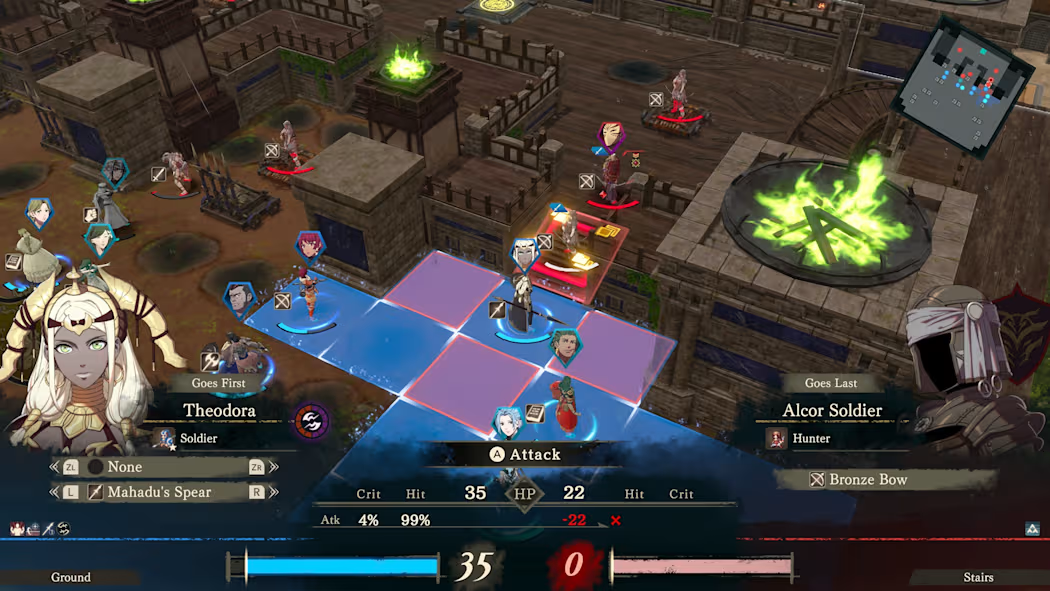
The maps themselves also become increasingly hostile. Objectives may include familiar tasks such as eliminating commanders or clearing enemy forces, but changing hazards and threats repeatedly disrupt straightforward strategies. You can’t always crawl forward behind your toughest unit and wait for everybody else to politely die.
Instead, Fortune’s Weave pushes you to divide forces, reposition quickly and occasionally make uncomfortable attacks into dangerous territory. The difficulty escalates considerably as the campaign develops, ensuring the growing collection of abilities isn’t simply there to make your army look impressive.
Blaze Arts are powerful enough to become dangerous
The most interesting new tactical wrinkle comes from cursed artifacts and their Blaze Arts.
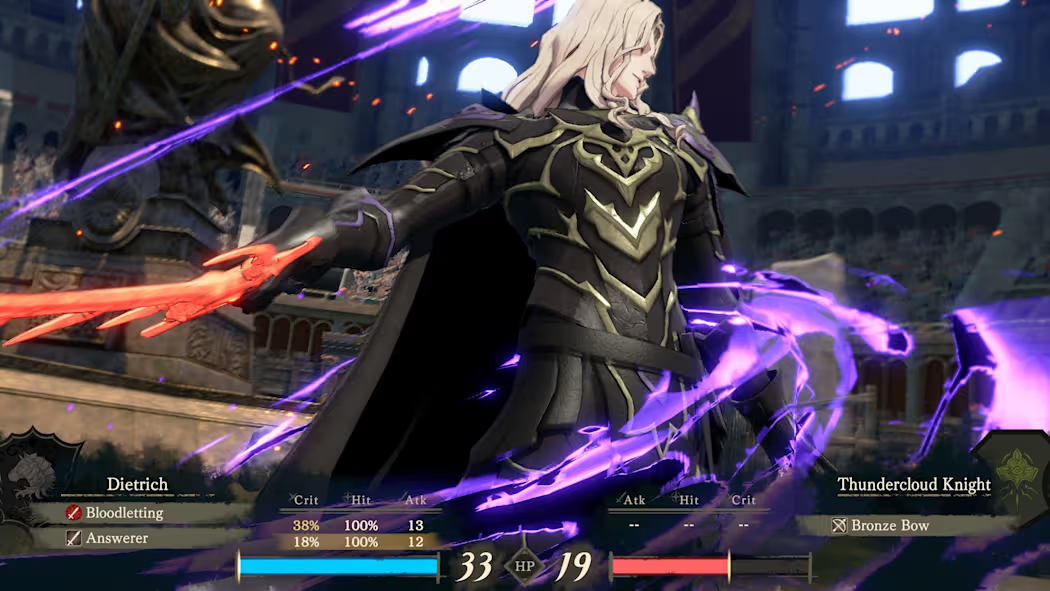
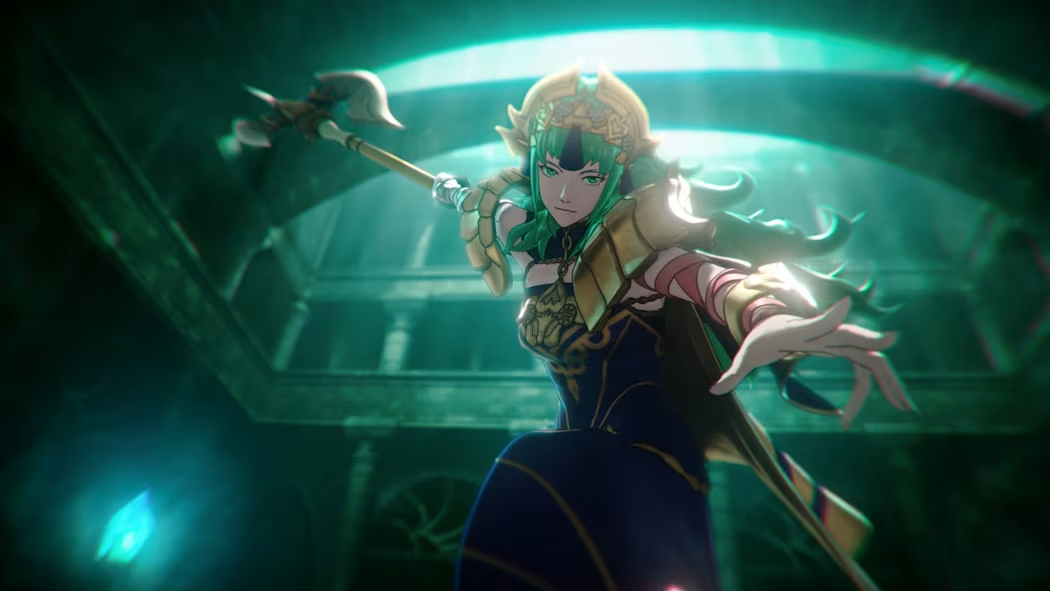
Major characters gain powerful abilities through these objects. Cai can unleash a flame attack capable of striking multiple enemies, Dietrich can teleport through barriers, and Leda can use her cursed instrument to provide significant support effects across multiple allies.
Naturally, Fire Emblem isn’t handing you that kind of power without attaching a bill.
Blaze Arts consume HP while also increasing a Blaze Gauge. Filling it halfway boosts the character’s stats, tempting you to keep exploiting the system. Completely filling the gauge, however, reduces that unit’s maximum HP for the rest of the battle.
It’s a wonderfully nasty risk-reward mechanic. Blaze Arts can rescue a collapsing strategy, but overusing them can leave one of your most important characters dangerously fragile when the battle gets worse. And because this is Fire Emblem, the battle will absolutely find an opportunity to get worse.
Divine blessings provide another tactical safety net. Alongside the ability to rewind time, blessings can temporarily improve attributes such as accuracy, evasion or damage absorption. Their limited resources and one-per-turn restriction prevent them from becoming an unlimited escape hatch, so choosing when divine intervention is actually worth spending remains another strategic decision.
Dagsion turns downtime into strategy
The biggest change may actually happen away from the battlefield.
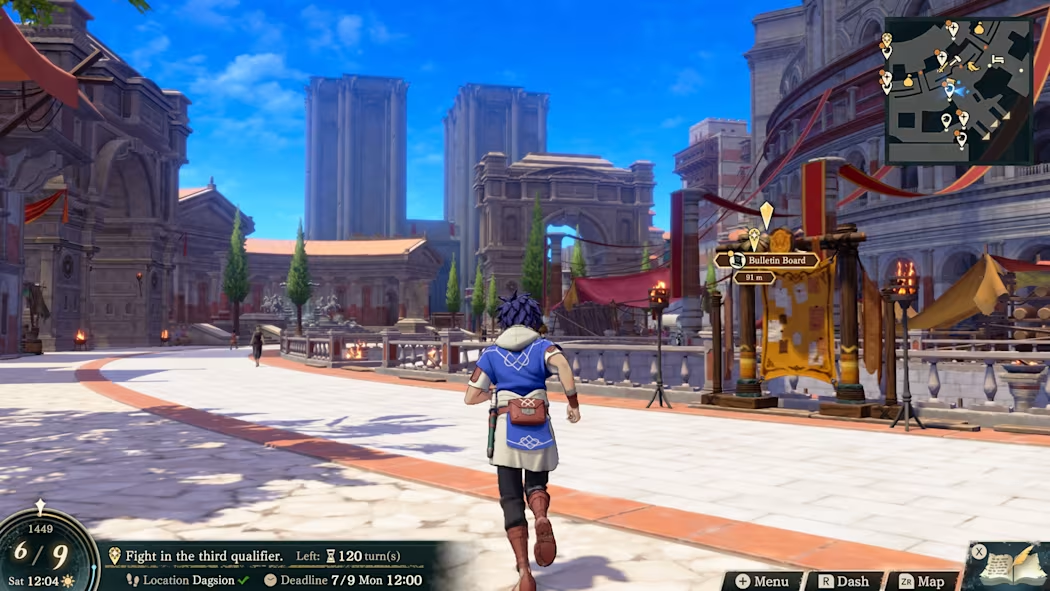
Dagsion serves as a central hub where you can train, build relationships and pursue potential recruits. Unlike the more restrictive calendar structure associated with Three Houses, Fortune’s Weave provides greater freedom over how individual days are spent.
Beyond the capital lies a continent map filled with towns, resources, quests, enemies and optional dungeons. Travelling consumes time, with every four steps costing a quarter of a day. Since there’s only a limited period between rounds of the Heroic Games, exploration quickly becomes its own planning exercise.
That simple limitation makes a huge difference. Finding another interesting destination isn’t automatically an invitation to visit it. You have to decide whether reaching it is worth sacrificing time that could have been spent recruiting someone, training your army or completing another objective.
Different heroes also affect exploration. Theodora can recruit battalions from towns for use in battle, while Cai can tame animals that become personalised mounts. These differences give alternate routes mechanical value beyond simply revealing new story scenes.
Optional dungeons change the pace again. A smaller party of five explores these areas and enters simplified JRPG-style encounters rather than traditional tactical battles. They’re less complex than the main combat system, but provide a useful diversion and another opportunity to uncover valuable equipment, including cursed weapons.
Building your army takes more than finding people
Recruitment has also become a surprisingly involved process.
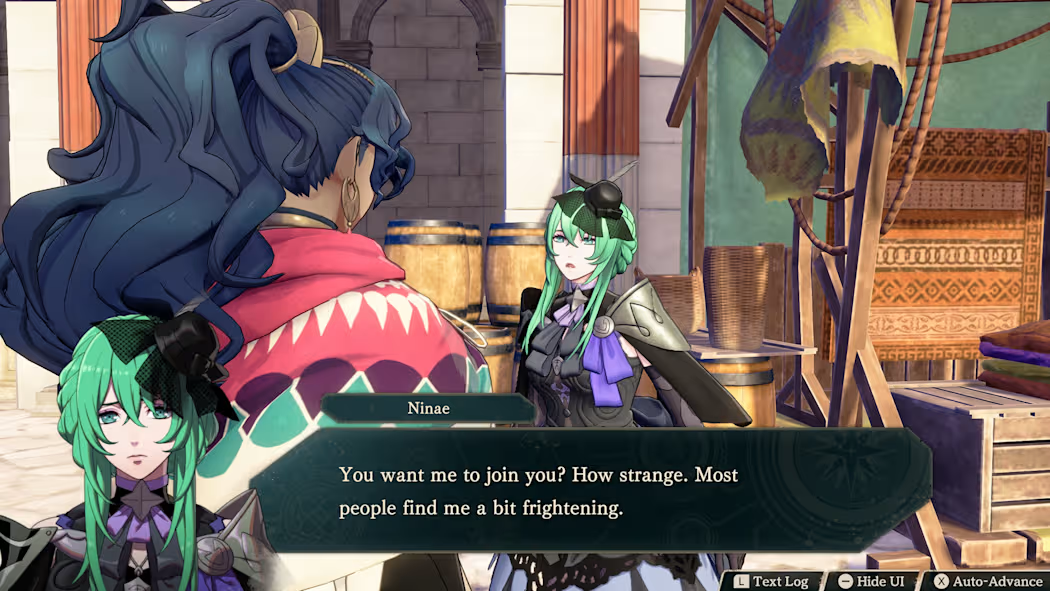
Potential allies can require specific levels of renown or stronger personal relationships before joining. Some expect gifts, money or particular items, while others have conditions that change depending on which protagonist you’re following. Certain characters may not be willing to join particular heroes at all.
It turns assembling an army into another form of resource management. Spending time convincing one promising fighter to join could mean sacrificing another activity elsewhere.
The trade-off is that optional recruits aren’t always able to contribute meaningfully to major story scenes because the game can’t guarantee who you’ve recruited. Fortune’s Weave compensates by keeping each protagonist surrounded by a smaller core cast while giving the Heroic Games’ rival teams more room to develop.
Some rival leaders can temporarily join your forces before eventually becoming opponents, while certain characters unlock challenging paralogues with consequences for the wider story. These missions give the competition more personality and make rival teams feel like actual participants rather than disposable names waiting to become another objective marker.
A massive Fire Emblem that doesn’t demand everything
Fortune’s Weave could easily have collapsed under its own checklist. There are characters to recruit, relationships to build, units to train, dungeons to explore, quests to complete and an entire continent tempting you away from whatever you originally planned to do.
Smartly, the game doesn’t expect everything to happen on one route.
Characters you miss can become targets for another storyline. Unexplored locations provide reasons to return later. Even the campaign’s more concentrated second act can be skipped, with the game adjusting unit levels and summarising relevant events before continuing.
That option feels unusual during an initial run because those difficult battles represent a significant part of the experience, but it makes much more sense when considering subsequent routes. Fortune’s Weave knows it’s enormous and provides ways to explore its branching structure without demanding the same commitment every single time.
Eventually, all those systems begin converging. The world map takes on greater strategic importance, the army you’ve spent hours developing gains broader purpose, and the separate character stories feed into a larger final conflict. It’s here that the scale stops feeling like excess and starts feeling like preparation paying off.
Final Verdict
Fire Emblem: Fortune’s Weave takes the series’ growing fascination with life outside tactical battles and turns it into something far more substantial. Exploration, recruitment and time management aren’t distractions from the strategy; they’re extensions of it.
The battles remain the star, particularly once Fortune’s Weave starts throwing tougher enemies, changing battlefield conditions and increasingly unpleasant tactical problems at your army. Blaze Arts are the standout addition, providing enough power to completely change a situation while carrying consequences serious enough to prevent careless abuse.
Its scale won’t work for everybody. Eshmel’s limited dialogue can feel awkward, optional recruits inevitably have less narrative importance, and players who primarily want classic Fire Emblem battles may find the surrounding management overwhelming.
But for anyone who enjoyed the direction Three Houses took between missions, Fortune’s Weave pushes that philosophy much further. It’s ambitious, demanding and packed with interconnected systems that constantly give you another decision to obsess over.