

Arabic music had a particularly competitive summer on Anghami in 2026, with new releases from established stars and younger artists repeatedly trading places at the top of the streaming platform’s charts.
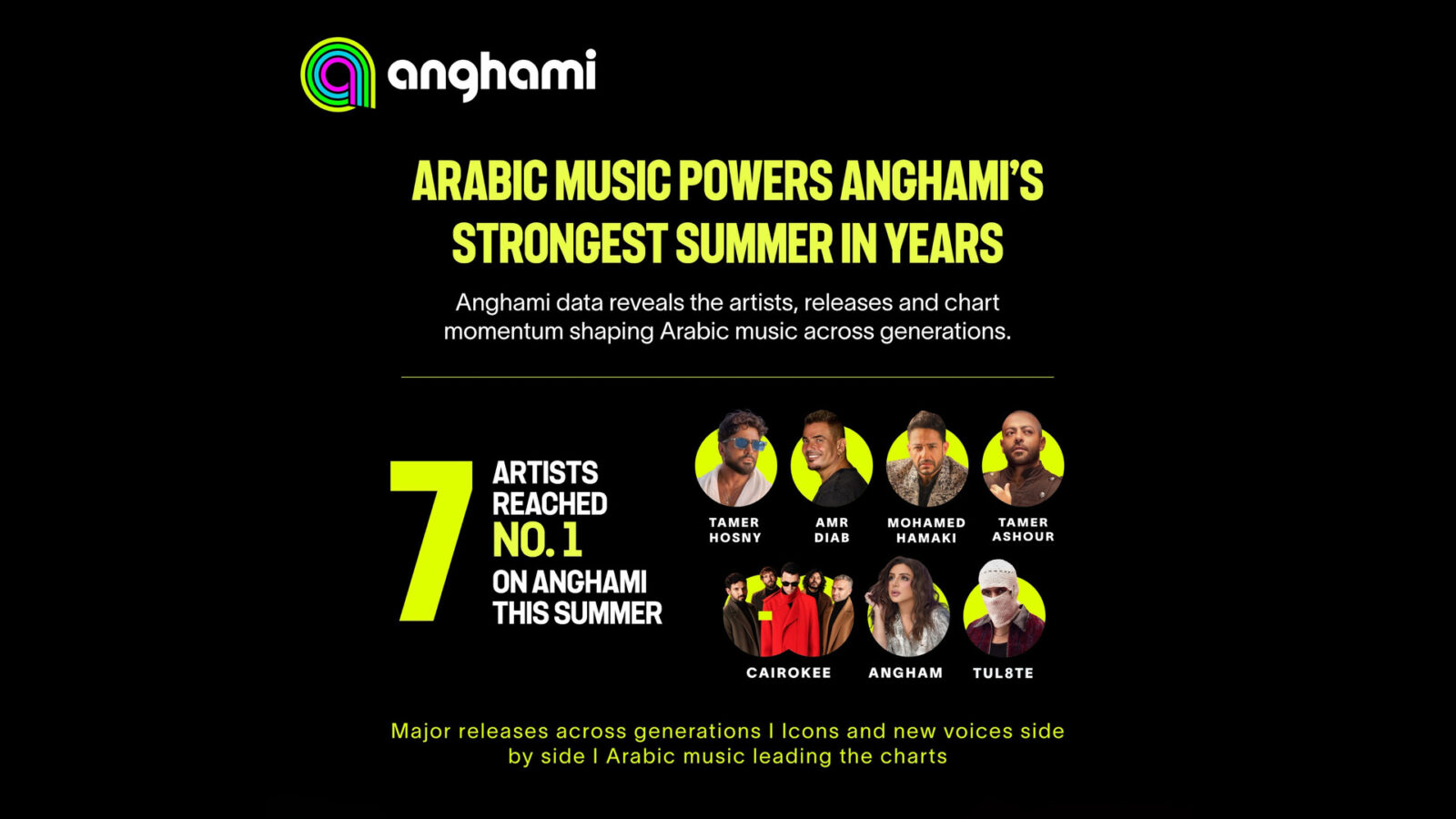
New data released by Anghami shows seven artists reached number one during the season: Amr Diab, Tamer Hosny, Mohamed Hamaki, Tamer Ashour, Cairokee, Angham and Tul8te. While the figures offer only a view of listening activity within Anghami rather than the wider streaming market, they point to a summer where major legacy names did not have the charts entirely to themselves.
Mohamed Hamaki delivered the biggest streaming total highlighted by Anghami, with his latest album generating 71 million streams. The release also occupied 18 of the platform’s Top 20 chart positions shortly after arriving, according to the company, demonstrating how heavily album launches can dominate streaming charts when listeners move through an entire tracklist rather than concentrating on a lead single.
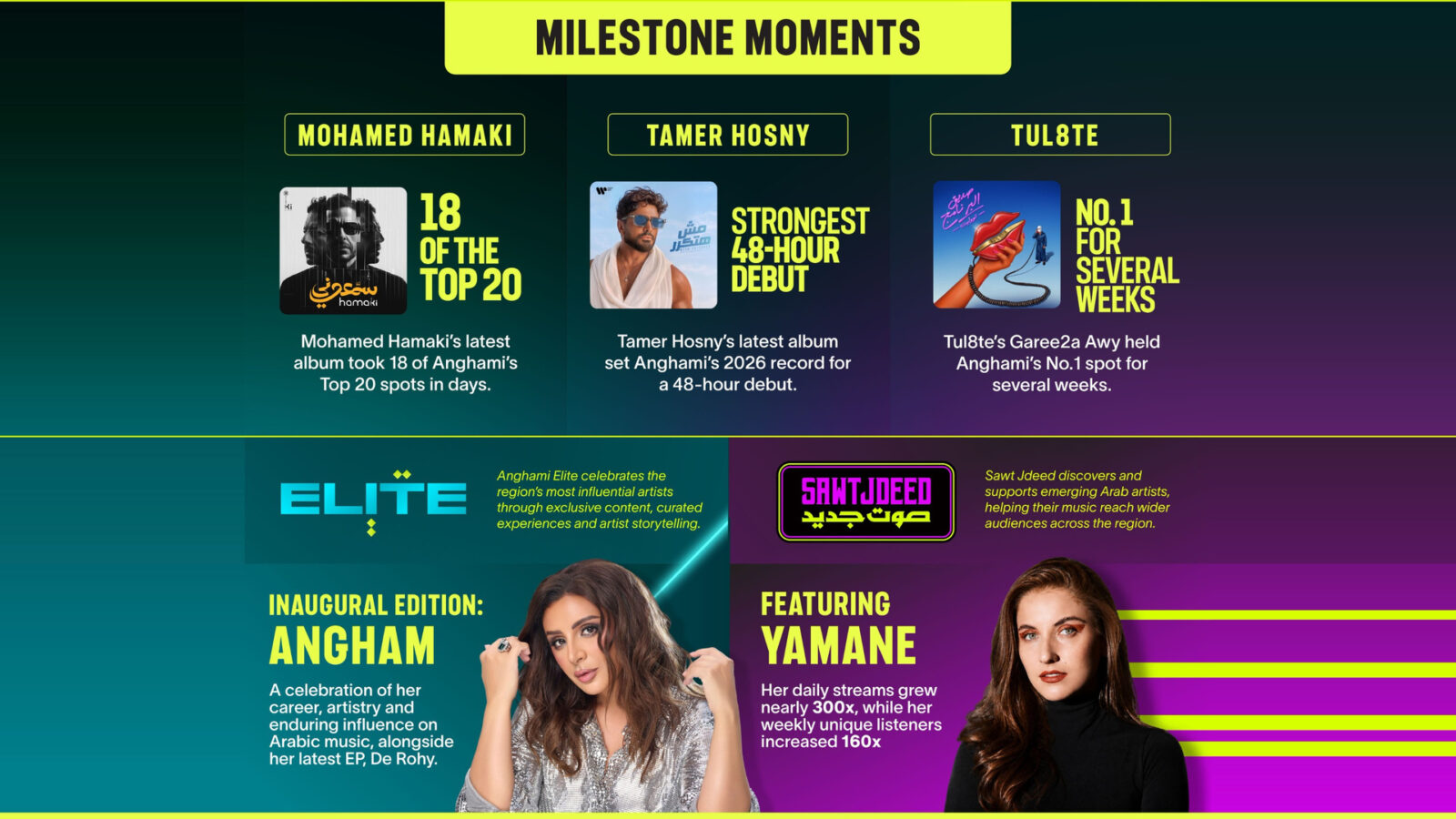
Amr Diab followed with 53 million streams for his latest album, while Tamer Hosny reached 44 million. Anghami says Hosny’s release recorded the platform’s strongest 48-hour album debut of 2026. Tamer Ashour generated another 30 million streams, while Cairokee reached 28 million.
Those numbers reinforce the enduring streaming power of some of Arabic music’s most recognisable names, but the younger end of the chart may be the more interesting part of the story.
Tul8te generated 23 million streams across recent album and single releases, while “Garee2a Awy” remained at number one on Anghami for several weeks. Maintaining that position during a period crowded with releases from artists such as Diab, Hamaki and Hosny suggests newer Arabic acts are increasingly capable of competing for the same listener attention rather than operating in a separate emerging-artist category.
Yamane also appeared in Anghami’s summer campaign through an exclusive single, highlighting another part of the platform’s strategy: using exclusive releases and artist programmes to differentiate itself in a market where listeners can access much of the same mainstream catalogue through competing streaming services.
That approach is also visible in Anghami Elite, a new artist-focused programme launched this month. Its first edition centres on Angham and combines curated listening experiences with stories from her three-decade career and her latest EP, “De Rohy.” The initiative gives Anghami another way to package artist catalogues beyond conventional albums, playlists and recommendation feeds.
The company naturally frames the summer figures as evidence of momentum for Arabic music and its artist partnerships. The more useful takeaway is the breadth of artists finding substantial audiences simultaneously. Long-established performers continue to generate tens of millions of streams, but artists such as Tul8te are increasingly appearing alongside them at the top of the same charts.
Anghami plans to publish a broader report covering Arabic music listening trends and audience behaviour later this year. That data should provide a clearer picture of whether this unusually busy summer represents a seasonal surge or part of a longer shift in how audiences across the region discover and consume Arabic music.