

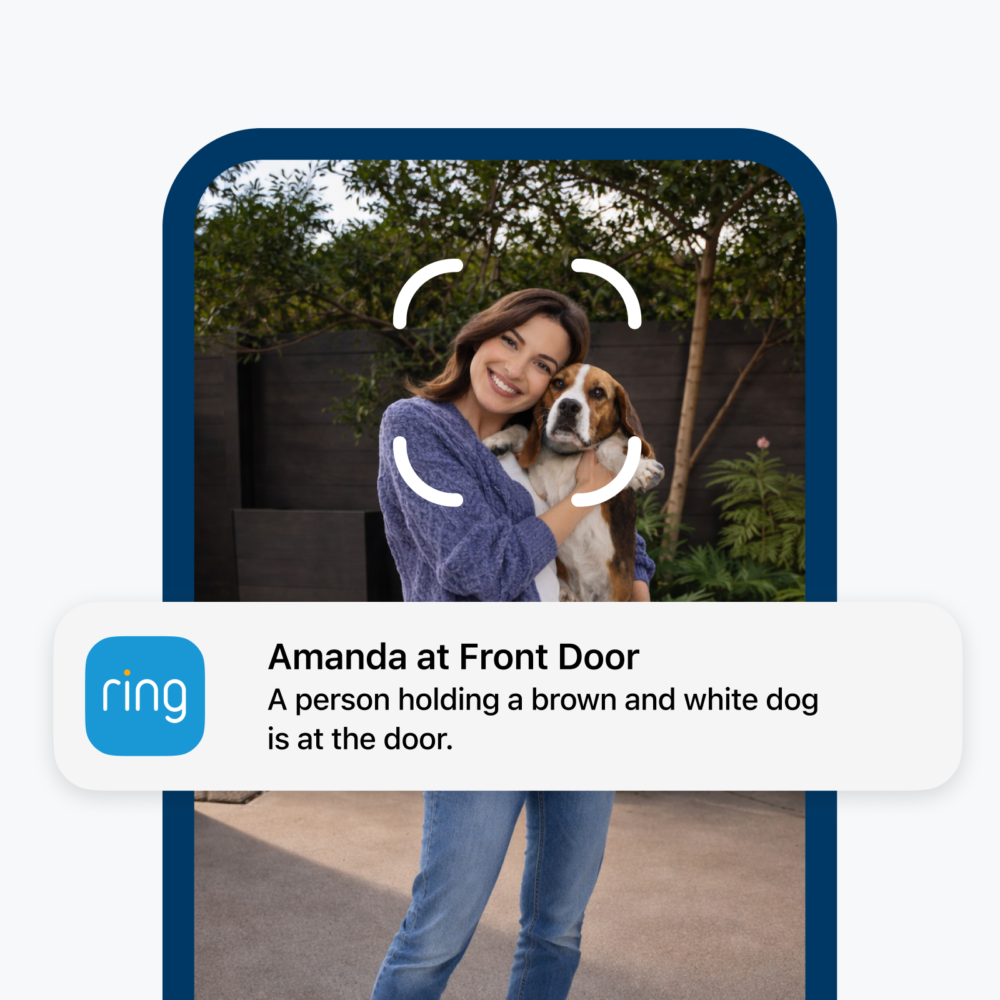
Ring is expanding its smart doorbell features in the UAE with the rollout of Familiar Faces, an optional facial recognition-style feature designed to identify people a household already knows and make Ring notifications more specific.
Rather than receiving the usual alert that someone has been detected at the door, users who enable Familiar Faces can label recognised visitors and receive notifications identifying them by name. That could mean seeing “Mom at Front Door,” for example, without having to open the Ring app and check the camera feed.
The feature is being introduced for customers with an eligible Ring Pro subscription and compatible Ring 2K, 4K and selected HD devices. Ring says users will receive an in-app notification when Familiar Faces becomes available for their hardware.
Its practical appeal is largely about reducing unnecessary alerts. Someone can choose to suppress notifications triggered by their own movements while keeping alerts enabled for other household members or regular visitors. For families, it could also provide immediate confirmation that someone has arrived home without requiring a separate message or call.
Users build their own Familiar Faces directory rather than receiving a predetermined database. After enabling the feature, faces detected by compatible cameras can be assigned names through Event History or the Familiar Faces library. Up to 50 profiles can be maintained, with options to rename entries, merge duplicates and delete people. Unnamed profiles are automatically removed after 30 days.
There is an obvious privacy dimension whenever cameras begin identifying individuals rather than simply detecting people. Ring has consequently made Familiar Faces opt-in rather than activating it automatically. The company says facial data is encrypted, remains associated with the customer’s account and is not shared with others. Shared users on an account can, however, see assigned names in notifications and Event History.

Ring also provides prompts concerning consent during setup, including information about obtaining explicit permission from visitors where applicable. That is particularly important because rules governing biometric and facial information vary between jurisdictions, and recognising a regular visitor is considerably more sensitive than detecting generic motion.
The UAE launch arrives alongside a broader change to how Ring plans to protect customer video. The company is introducing TAKE, short for Throw Away the Key Encryption, which will eventually become its default encryption system worldwide.
TAKE temporarily makes encryption keys available inside a secure cloud enclave so enabled intelligent features can operate, after which Ring says those keys are deleted from its side. Customers and authorised shared users retain keys on enrolled devices. The system is intended to provide stronger default protection without sacrificing cloud-dependent features.
Ring’s existing end-to-end encryption remains available for customers wanting stricter separation. With E2EE enabled, encryption keys are accessible only to enrolled devices, although that also means giving up Shared Users and some cloud-based functionality.
Together, Familiar Faces and TAKE illustrate the tension facing increasingly intelligent home cameras: consumers want devices that understand more about what they see, while expecting tighter control over increasingly sensitive data. Ring’s challenge will be demonstrating that those two ambitions can coexist as its cameras become capable of recognising not just that somebody is outside, but potentially exactly who they are.