

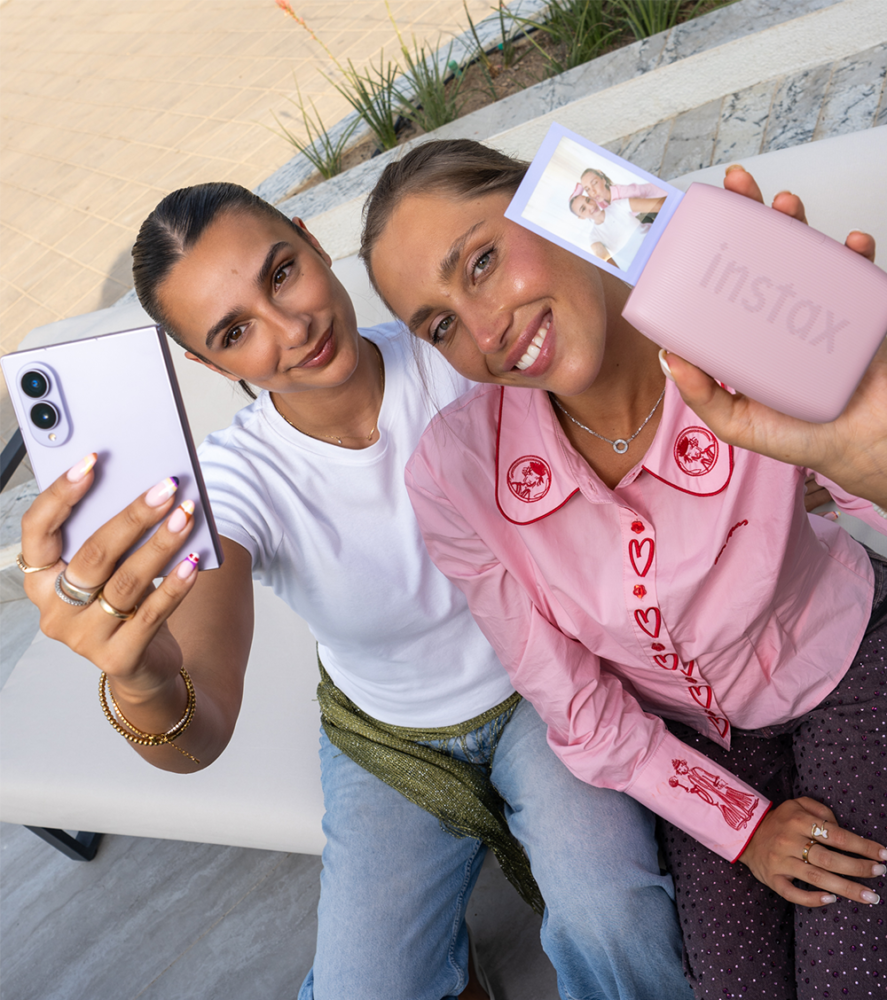
Samsung is leaning into the appeal of physical photos with an unusual Galaxy Z Fold8 collaboration, pairing its latest foldable smartphone with Fujifilm’s Instax Mini Link 3 printer. The idea is straightforward: take and edit photos on the Fold8, then turn selected shots into Instax prints without leaving them trapped indefinitely in a camera roll.
The collaboration, dubbed “Twice the Joy – Unfold. Capture. Print.”, puts two very different approaches to photography side by side. Samsung’s Galaxy Z Fold8 represents the increasingly computational side of smartphone imaging, where large displays, software editing and AI tools shape the final image. Fujifilm’s Instax ecosystem goes in almost the opposite direction, taking those digital files and giving them the permanence — and limitations — of a small physical print.
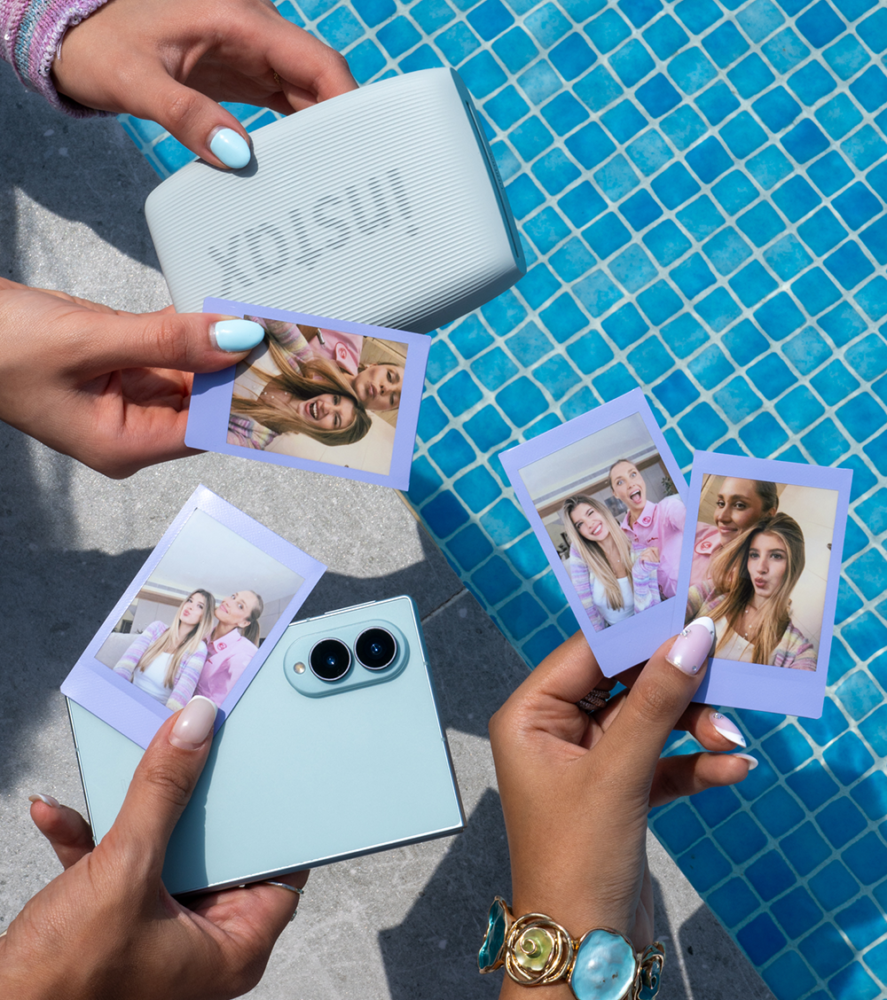
Samsung says the Galaxy Z Fold8’s wider design is part of that workflow. The foldable features a 10:16 cover display alongside a 4:3 main screen, giving users a larger canvas for reviewing and editing photographs once the device is unfolded. Galaxy AI editing features can also be used to modify or personalise images before they are sent to the Instax Mini Link 3.
The Mini Link 3 is a portable smartphone printer rather than an instant camera, meaning users can choose an existing image from their phone before committing it to film. That distinction matters when every print is a physical object and therefore considerably less disposable than another photograph sitting among thousands in cloud storage.
There is also something appropriately circular about Samsung and Fujifilm pushing physical photographs at a time when smartphone cameras have made taking pictures almost frictionless. Digital photography removed the cost and inconvenience associated with shooting film, but it also created enormous photo libraries that can be easy to capture and surprisingly easy to forget. Small instant prints have found a niche precisely because they introduce some physicality back into that experience.

The Galaxy Z Fold8 arguably makes an interesting partner for that process because its foldable screen gives photo selection and editing more room than a conventional smartphone. Whether that meaningfully improves the experience will depend on how much users actually edit their photographs before printing them, rather than simply selecting a favourite and hitting print.
This is ultimately more of an ecosystem collaboration than a new technological integration. Samsung hasn’t announced a special printing technology exclusive to the Fold8, and the Instax Mini Link 3 remains a separate device. Instead, the partnership is selling the contrast between an increasingly sophisticated digital photography workflow and the deliberately simple pleasure of ending up with a photograph you can stick on a fridge, slip into a wallet or hand to somebody else.