

Sonos is upgrading one of the most important products in its home-theater lineup with the Sonos Beam Ultra, a new compact soundbar that significantly expands what the Beam formula can do without turning it into an enormous slab beneath your television.
The headline upgrade is true 7.1.2 Dolby Atmos, backed by a completely reworked nine-driver acoustic architecture that includes dedicated upward-firing drivers. Sonos is also promising deeper bass, clearer dialogue, four levels of AI-powered Speech Enhancement and more flexibility when building a surround system. All of that arrives while Beam Ultra maintains the relatively compact dimensions that made the Beam attractive in the first place.
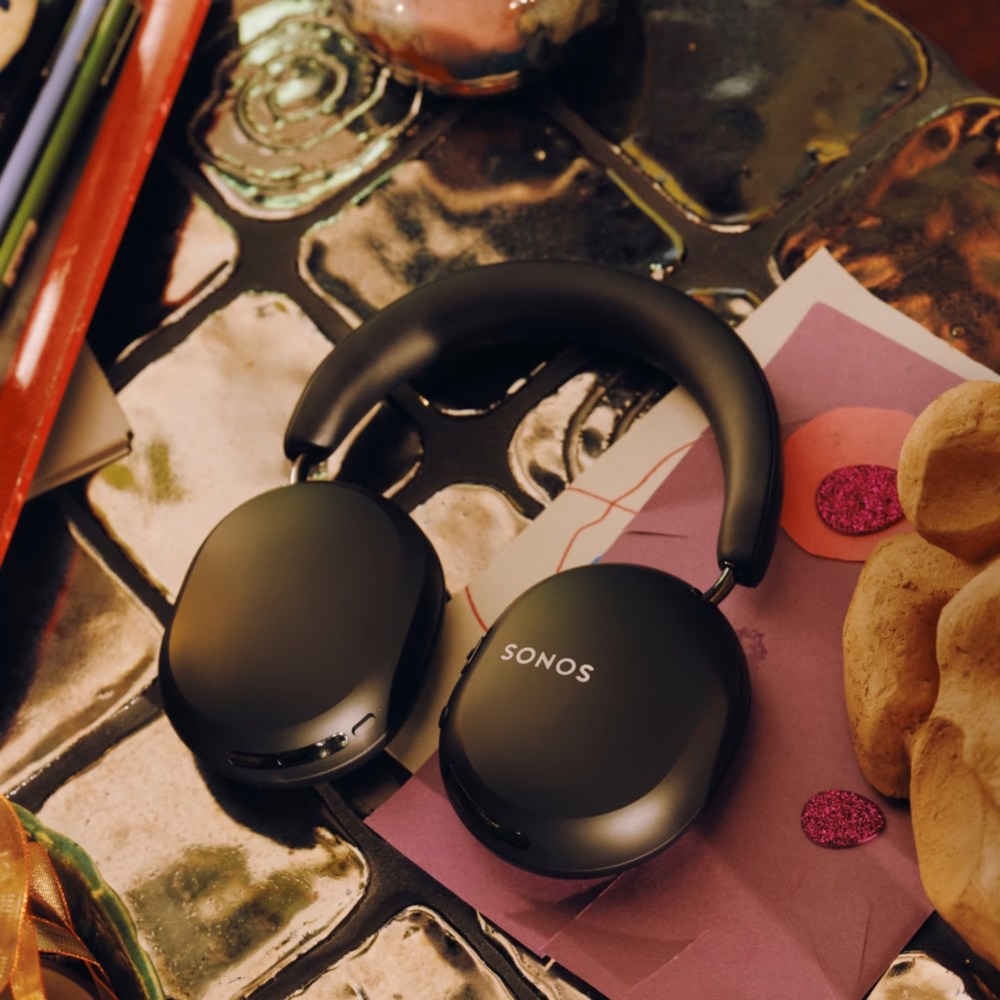
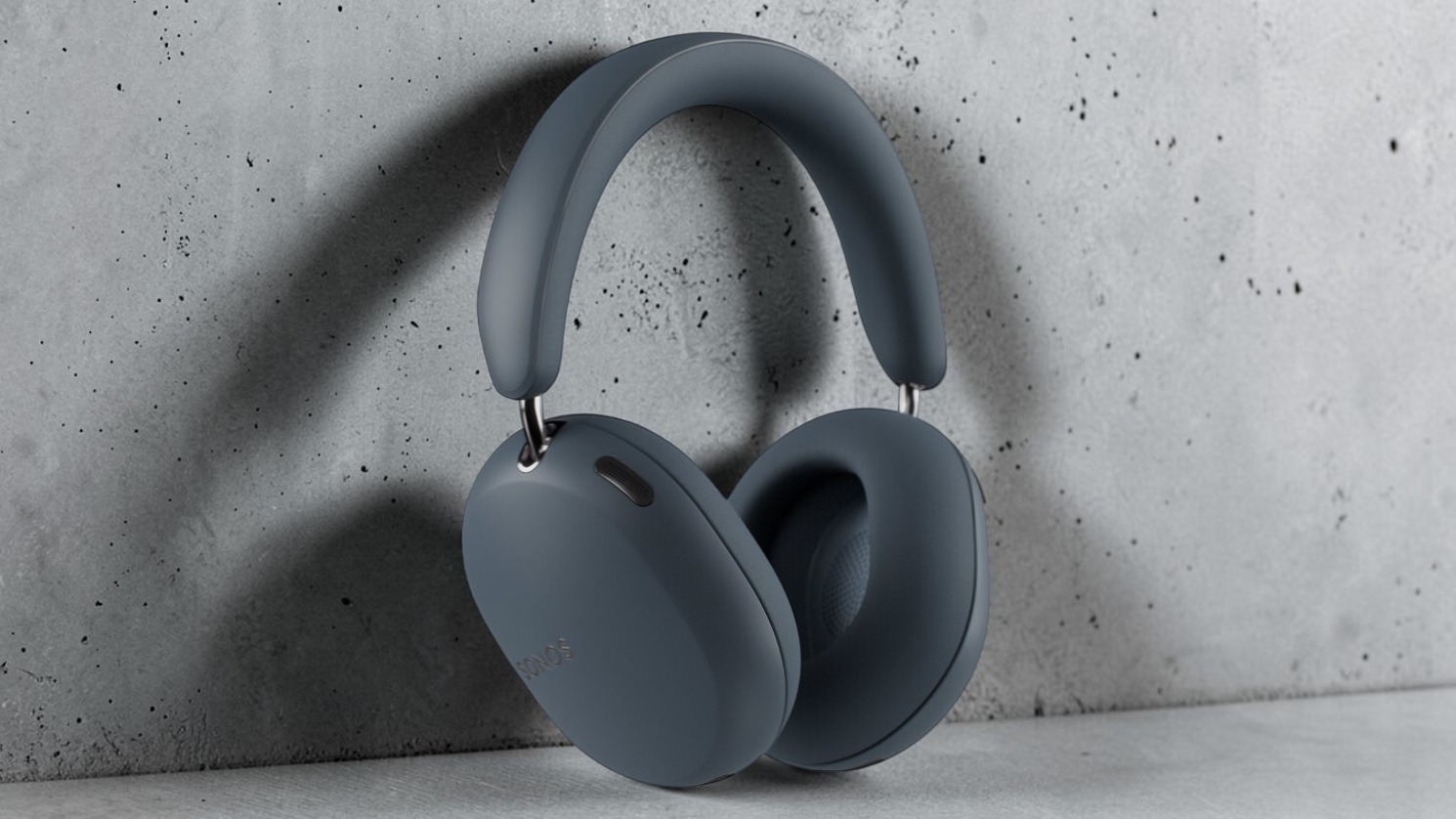
The Sonos Beam Ultra will be available globally from September 29, 2026, priced at $699 in the US. It launches alongside Sonos Ace Ultra and the company’s updated Sonos 27 audio operating system.
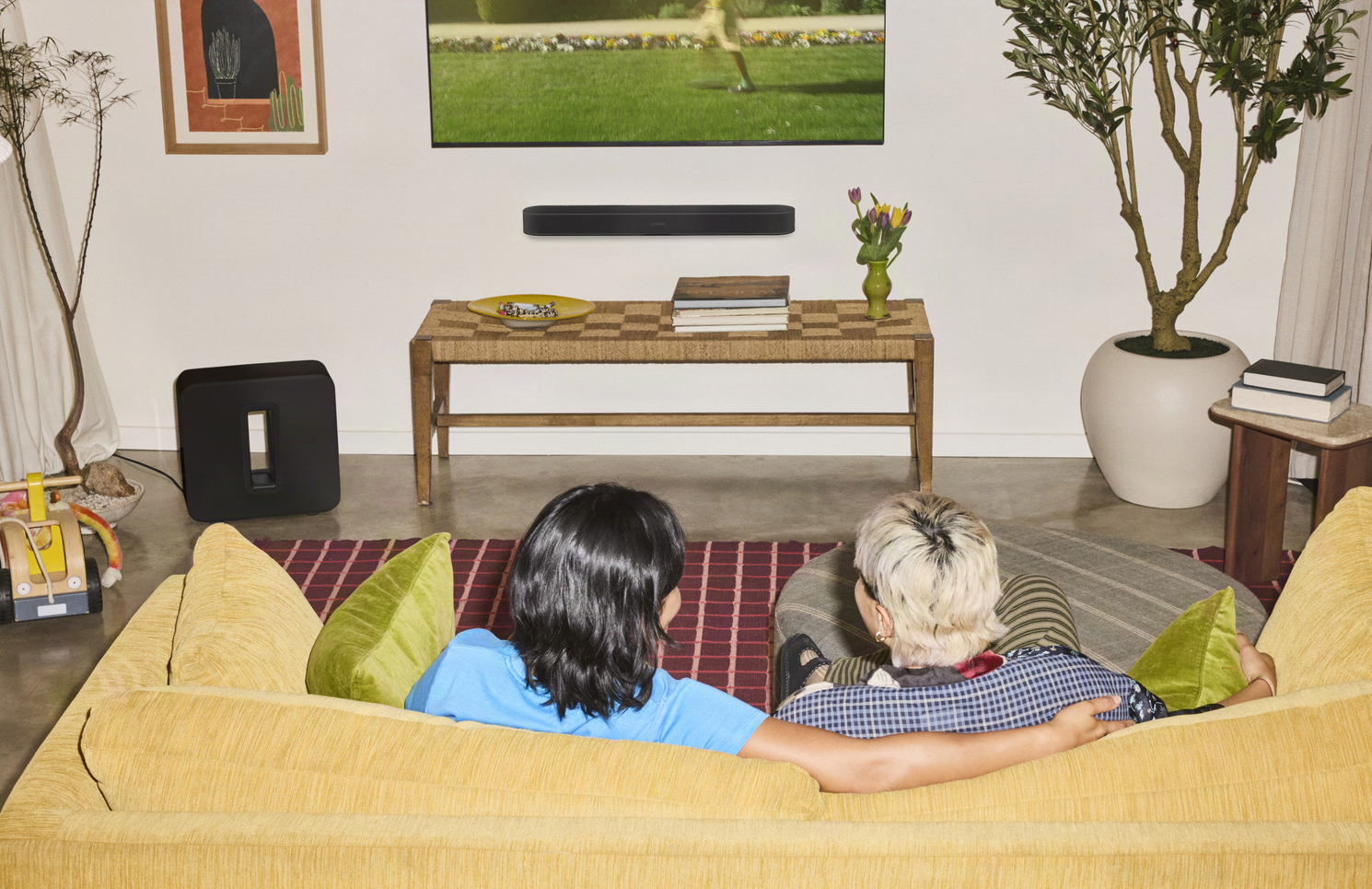
What’s new with the Sonos Beam Ultra?
The biggest change is hiding behind the grille. Beam Ultra contains nine Class-D digital amplifiers driving five tweeters and four low-profile woofers, giving it four more drivers than the Beam. Sonos has used that additional hardware to increase separation, improve dialogue reproduction, add more substantial bass and, crucially, introduce real height channels.
The driver arrangement is more interesting than simply having nine things making noise. A forward-firing mid tweeter handles the center image, while two side-firing horn-loaded mid tweeters increase stereo separation. Two dedicated upward-firing tweeters then provide the height information needed for the soundbar’s Dolby Atmos presentation.
The result is a 7.1.2-channel Dolby Atmos configuration from a single soundbar. That’s a significant jump for the Beam family because the Ultra now has physical drivers specifically responsible for bouncing height effects into the room rather than relying exclusively on psychoacoustic wizardry to make your ceiling sound involved in the movie.
Beam Ultra now delivers true 7.1.2 Dolby Atmos
Dolby Atmos is inevitably one of the stars of the show. Sonos describes Beam Ultra as capable of producing true 7.1.2 surround sound, with its upward-firing drivers allowing compatible Atmos mixes to place effects above the listener as well as across the room.
That’s an important distinction for a compact soundbar. Atmos badges have become almost comically common, appearing on everything from huge multi-speaker systems to tiny devices attempting to bend the laws of acoustics through sheer optimism. Dedicated upward-firing drivers give Beam Ultra actual hardware with which to reproduce those height channels.
You’ll still need the rest of the chain to cooperate. Dolby Atmos playback requires Atmos-encoded content and a compatible HDMI eARC connection. Room geometry also matters with upward-firing sound because those drivers depend on reflected audio to help create the perception of height.
Beam Ultra therefore isn’t magically replacing a room full of perfectly positioned discrete speakers. What it is doing is squeezing a much more sophisticated Atmos configuration into the sort of footprint normally associated with smaller, simpler soundbars.
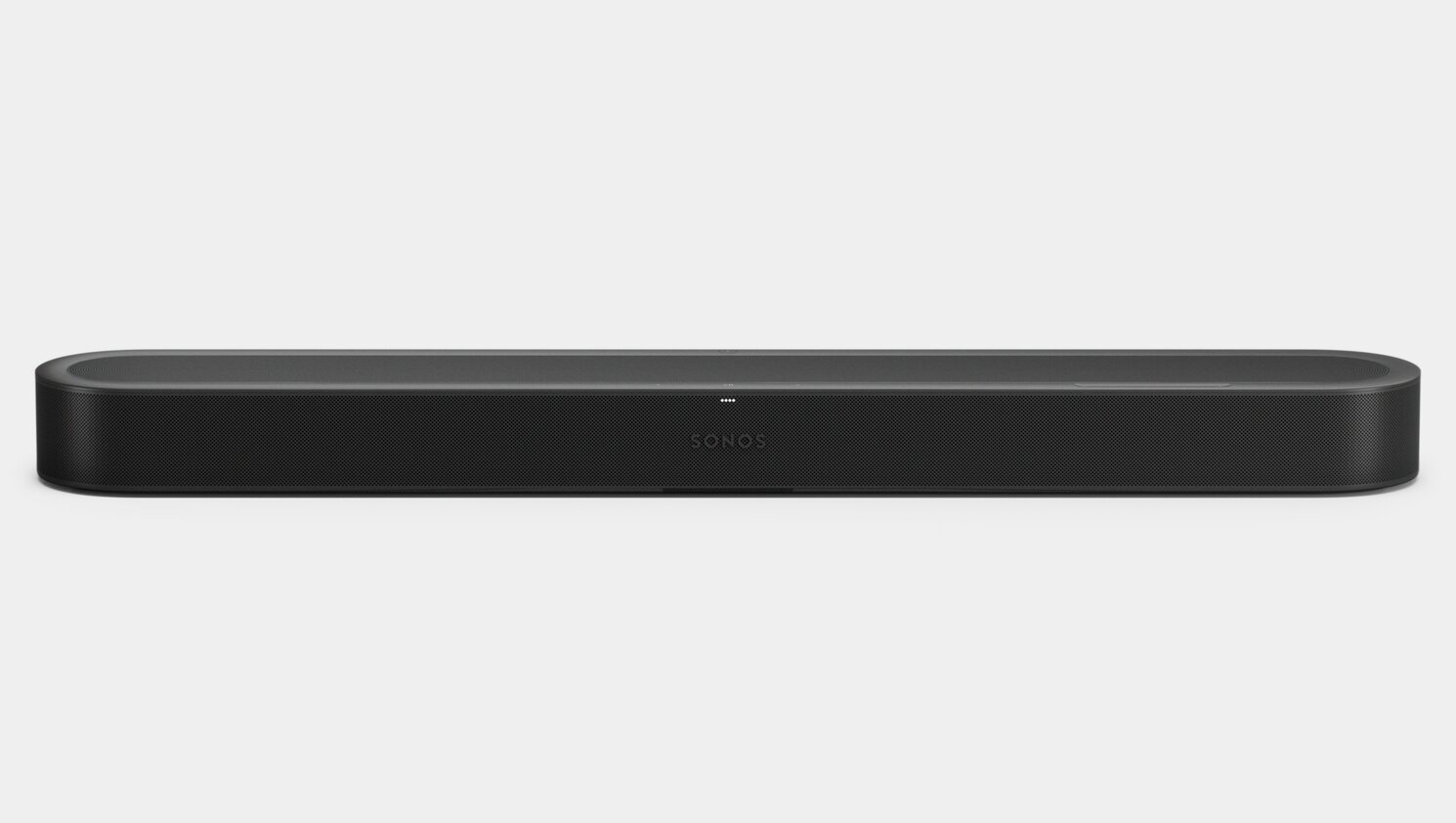
Nine drivers give the Beam more room to breathe
The jump from five drivers in Beam to nine in Beam Ultra isn’t just about Atmos. Sonos is using the additional hardware to create a wider soundstage and improve separation across movies, television and music.
Four low-profile woofers handle the lower frequencies, while the five tweeters divide responsibilities across the front, sides and height channels. Sonos says the new arrangement provides warmer, weightier bass than Beam while revealing more detail throughout the mix.
The side-firing horn-loaded mid tweeters are particularly notable because they are intended to push the presentation beyond the physical width of the soundbar. That’s useful when you’re asking a 29.53-inch-wide enclosure to convince your ears that things are happening across a considerably larger television and room.
Music hasn’t been treated as an afterthought either. Beam Ultra was tuned with input from creators across music and film through the Sonos Soundboard, with Sonos positioning the soundbar as equally capable of handling music when the TV isn’t demanding explosions and dramatic orchestral scores.
Dialogue gets dedicated hardware and AI assistance
Dialogue clarity receives a substantial amount of attention on Beam Ultra. Sonos has redesigned the center channel, with its forward-facing mid tweeter creating a focused center image intended to keep voices intelligible when the rest of a soundtrack gets busy.
Then there’s AI Speech Enhancement. The system identifies human voices and emphasizes dialogue, with four selectable levels available through the Sonos app. That gives users some control over how aggressively the processing intervenes instead of reducing the feature to a simple on/off switch.
This is one of those upgrades that may sound less exciting than another row of Dolby logos but addresses an extremely common home-theater problem. Modern film and television mixes can have huge dynamic range, and dialogue sometimes seems to have been mixed specifically for Kryptonian hearing.
Night Sound remains available as well. It reduces the intensity of louder moments while enhancing quieter sounds, making it useful for late-night viewing when you’d rather not announce every cinematic explosion to the rest of the building.
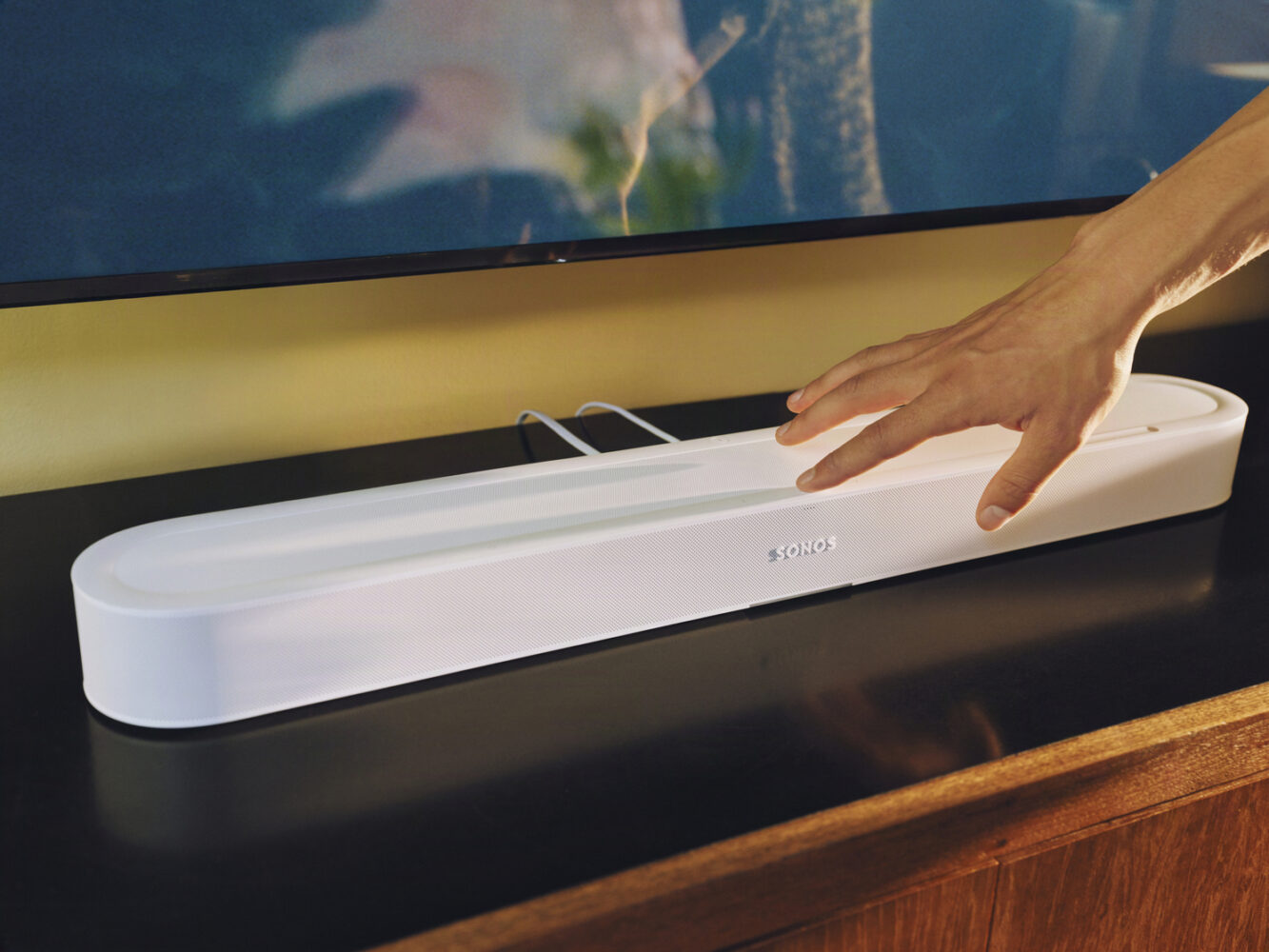
Trueplay now works with Android too
Beam Ultra includes Trueplay, Sonos’ room-tuning system that measures the acoustic characteristics of the listening environment and adjusts the soundbar’s EQ accordingly.
One particularly useful change is broader device support: the Beam Ultra fact sheet specifies Trueplay compatibility with both iOS and Android devices.
Room correction matters because the room itself is effectively another component in any audio system. Walls, furniture, floors and positioning can all affect what reaches your ears, and moving the same soundbar between two rooms can produce surprisingly different results.
Manual adjustment hasn’t disappeared in the name of automation. Bass, treble and Loudness can still be adjusted through the Sonos app, giving users the option to tweak the final presentation after Trueplay has done its thing.
You can now use select portable Sonos speakers as surrounds
Beam Ultra is designed to work as a standalone soundbar, but Sonos is naturally leaning heavily into the fact that it can become the foundation of a larger system.
Users can add a compatible Sonos Sub for additional low-frequency output and pair rear speakers for a more complete surround setup. The interesting addition this generation is support for select Sonos portable speakers as rear surrounds, expanding the hardware that can participate in a home-theater configuration.
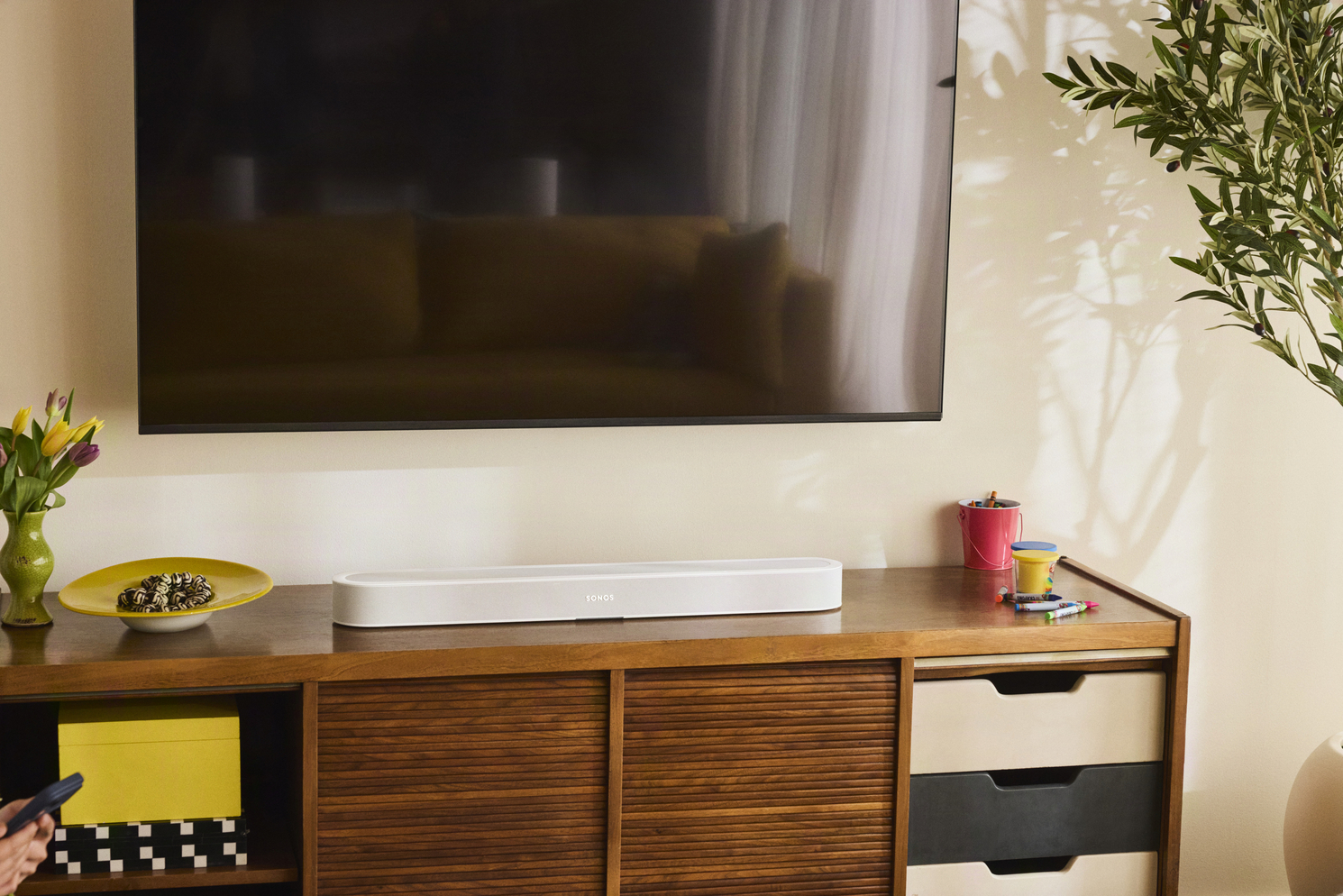
The Beam Ultra’s far-field microphone array plays a role here as well. According to Sonos, its beamforming and multichannel echo-cancellation system supports connecting compatible portable products such as Sonos Play or Move 2 as portable surrounds, in addition to handling voice control and Trueplay tuning.
That flexibility fits the wider philosophy behind Sonos 27. Beam Ultra can begin life as the only speaker beneath a television and gradually become part of a larger surround and multi-room system rather than requiring buyers to commit to the entire home-theater boss fight on day one.
Beam Ultra remains surprisingly compact
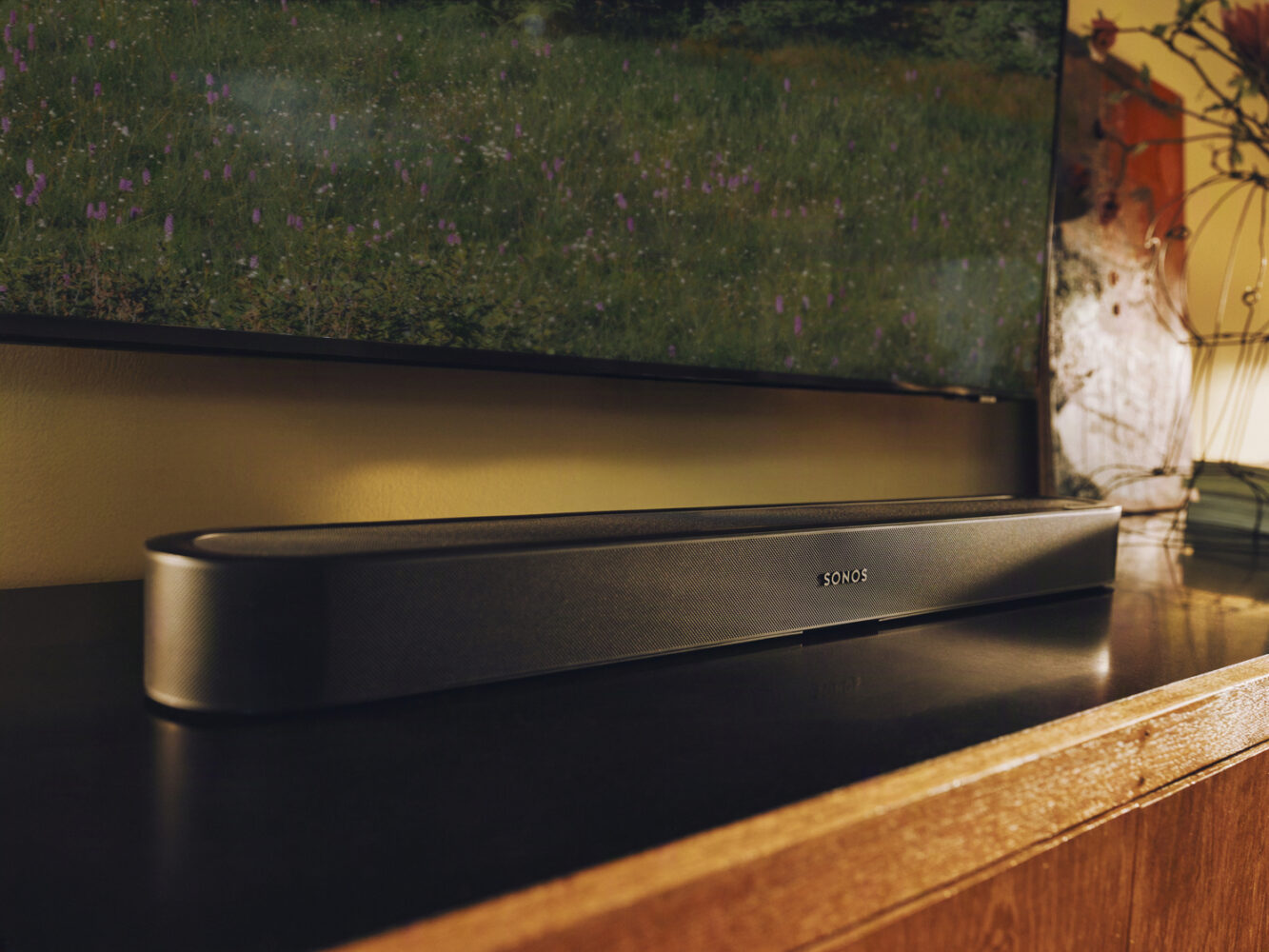
Despite the additional drivers and more ambitious spatial-audio system, Sonos hasn’t transformed Beam Ultra into an Arc-sized monster.
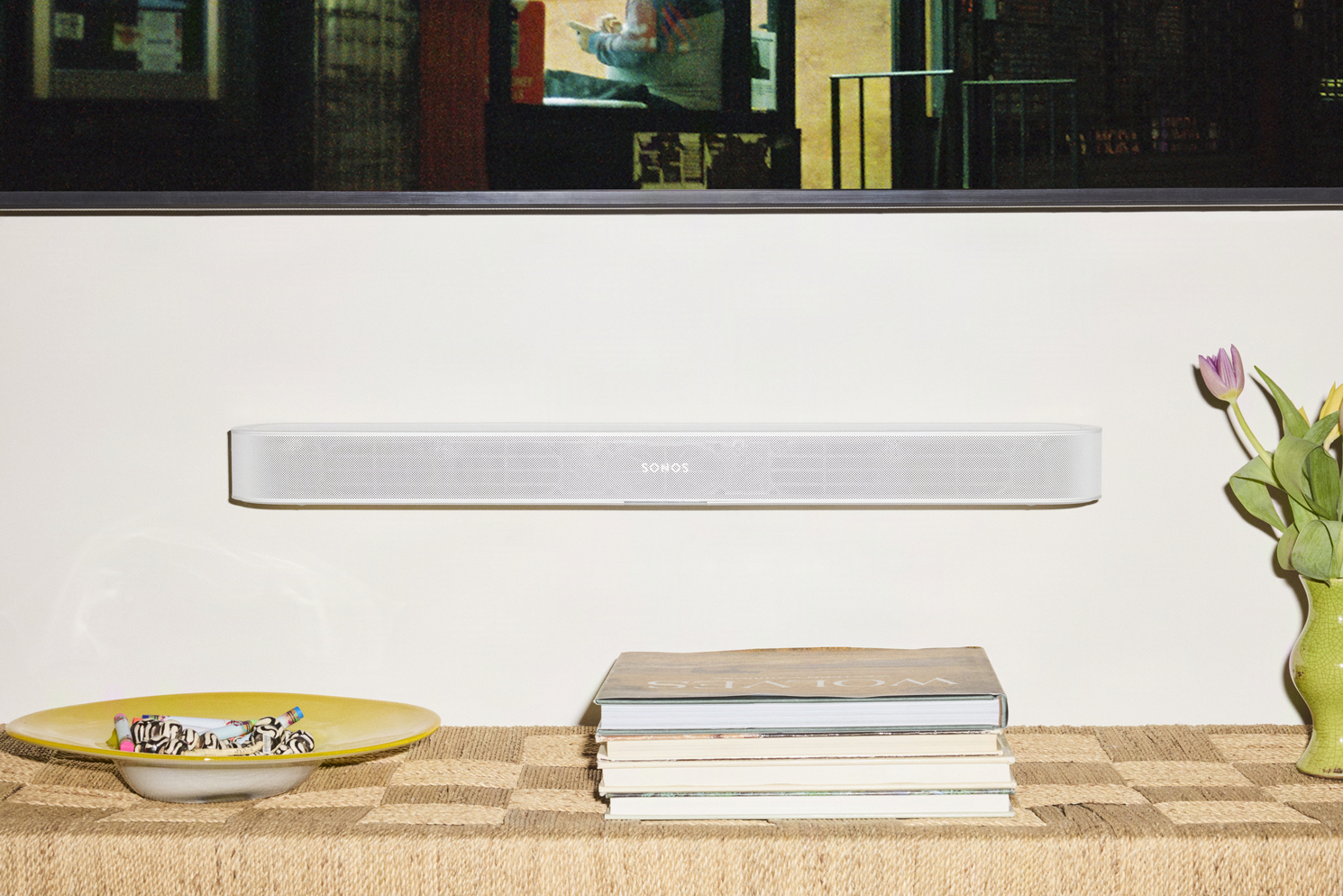
The soundbar measures 29.53 inches wide, 2.56 inches high and 4.1 inches deep, weighing 6.35 pounds. It will be available in matte Black or White.
The relatively low 2.56-inch height is important for practical reasons. Soundbars frequently sit directly in front of a television, where an overly tall enclosure can block the bottom of the display or interfere with an infrared receiver.
Beam Ultra can sit directly on furniture or be installed using the dedicated Beam Ultra Wall Mount for a more integrated setup. The basic philosophy therefore remains recognizably Beam: pack serious home-theater hardware into something that doesn’t demand an aircraft hangar beneath the TV.
HDMI eARC handles TV duties, but there’s more connectivity
An included HDMI cable connects Beam Ultra to a television through HDMI eARC or ARC, with an optical adapter available separately. A USB-C port can also accept an audio source using the Sonos Line-In Adapter or provide wired network connectivity through the Sonos Combo Adapter, both sold separately.
Wireless connectivity gets modernized with Wi-Fi 6, supporting compatible 2.4GHz and 5GHz networks. There’s also Bluetooth 5.3, allowing audio to be streamed directly from Bluetooth devices without routing everything through the Sonos ecosystem.
Apple AirPlay 2 and Sonos Voice Control are supported as well. A far-field microphone array handles voice commands, but Sonos has retained a physical microphone switch on the rear that actually disconnects power from the microphones.
That’s an important distinction from simply muting them in software. When the switch is off, the microphone hardware isn’t sitting there politely promising not to listen; its power has been physically cut.
The familiar Sonos touch controls remain
Capacitive controls on the soundbar handle the everyday basics, including playback, volume, track skipping and replay. They can also disable the voice assistant and group or ungroup Sonos products.
There’s a dedicated Bluetooth button for pairing, while status LEDs communicate connection, microphone and mute information. Nothing here attempts to reinvent basic soundbar operation, which is probably for the best. Nobody has ever looked at a movie paused halfway through and thought, “You know what this situation needs? A completely new gesture language.”
Most of the deeper controls live inside the Sonos app, including the adjustable EQ, four AI Speech Enhancement levels and Night Sound.
Beam Ultra also gets greener under the hood
Not every Beam Ultra change involves adding another driver or teaching an algorithm to find dialogue. Sonos has also made several changes to materials, energy consumption and packaging.
Beam Ultra is made with 24% recycled materials, with nearly half of its plastic replaced by recycled alternatives. Sonos says that’s more recycled material than any comparable soundbar. The company also claims Beam Ultra consumes 25% less energy while idle than Beam.
Packaging is made from 96% renewable, FSC-certified materials and has been designed for reuse. Those numbers won’t make Dolby Atmos sound any taller, obviously, but efficiency matters for something likely to remain plugged into the wall for years.
Sonos Beam Ultra price and release date
The Sonos Beam Ultra costs $699 and will be available beginning September 29, 2026.
It launches in Black and White matte finishes and joins the Sonos lineup alongside the new Ace Ultra headphones and Sonos 27 platform update. The Beam Ultra can operate independently or form the center of an expandable Sonos home-theater system with compatible subwoofers and surround speakers.
At $699, Sonos is clearly positioning Beam Ultra as considerably more than an entry-level TV speaker. The combination of nine drivers, physical height channels and system expandability pushes the Beam concept into much more ambitious home-theater territory.
Final Verdict
Beam Ultra is a major rethink of what Sonos can squeeze into its compact Beam format. The move to nine drivers and true 7.1.2 Dolby Atmos is the headline upgrade, but the redesigned center channel, four-level AI Speech Enhancement, stronger bass architecture, Android-compatible Trueplay and support for select portable speakers as surrounds arguably make the overall package more interesting.
More importantly, Sonos hasn’t achieved those additions by turning Beam Ultra into a giant soundbar. At just under 30 inches wide, it remains aimed at people who want immersive home-theater audio without dedicating half the living room to audio hardware.
The broader Sonos ecosystem remains a major part of the proposition, but Beam Ultra looks considerably more capable on its own than the Beam generation before it. This isn’t simply Beam with “Ultra” slapped onto the box like a video-game graphics preset. The hardware underneath has changed substantially.