


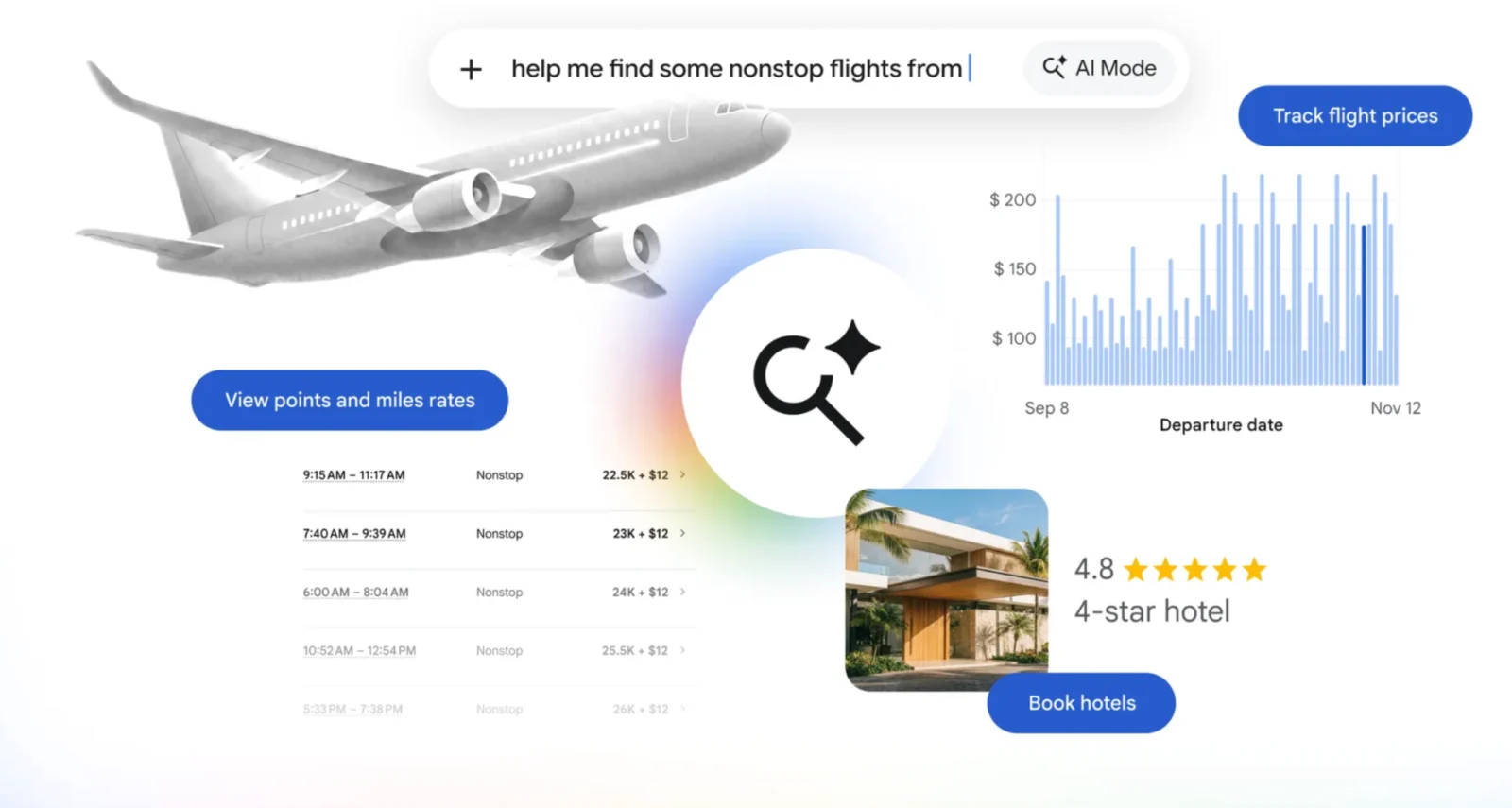
Google wants to turn Search into something closer to a travel agent. Its latest expansion of AI Mode moves beyond simply suggesting destinations or answering itinerary questions, adding tools that can track flight prices, help book hotels and even work out what trips might cost using loyalty points and miles.
The three new travel features push Google’s AI-powered search experience further into territory traditionally occupied by dedicated booking platforms. Instead of bouncing between search results, airline websites, hotel comparison services and rewards portals, Google’s pitch is that more of that process can happen through a conversation with AI Mode.
Flight tracking is perhaps the most immediately useful addition. Travellers can describe where and when they want to fly using conversational prompts, review available options and then ask AI Mode to monitor fares. Google can subsequently send email notifications when prices change.
Price tracking itself isn’t new territory for Google — Google Flights has offered fare monitoring for years — but bringing the feature directly into AI Mode changes how people can start a search. Rather than manually configuring every filter, travellers can describe the journey they have in mind and refine it conversationally.
Hotels are getting similar treatment. AI Mode can search properties using dates, location and personal preferences, compare potential stays and then move users into booking. Google is working with services and hotel groups including Booking.com, Choice Hotels, Expedia, Hilton, Hotels.com, IHG, Marriott, Priceline, Trip.com and Wyndham for the feature.
Hotel booking through AI Mode is currently available in English in the US, with Google planning a wider international expansion.
The third addition tackles one of travel’s more frustrating spreadsheets-in-disguise: loyalty rewards. Users can ask AI Mode to search for flights and accommodation while factoring in points or miles, making it easier to see potential redemption costs without manually digging through individual rewards programmes.
For example, someone could request nonstop flights between two cities during a particular period while specifying the airline miles they want to spend. Google says the feature currently works with rewards programmes from Alaska Airlines/Hawaiian Airlines, American Airlines, Choice Hotels International, Hilton and Wyndham Hotels & Resorts, with additional programmes expected later.
There are obvious conveniences here, particularly for travellers who know what they want but don’t want to spend an evening juggling a dozen browser tabs. The bigger story, however, is Google’s increasingly ambitious idea of what Search should become.
AI Mode is gradually moving from answering questions toward helping users complete transactions. Travel is an obvious testing ground because planning a trip involves precisely the kind of messy combination of research, comparison, pricing and personal preferences that conversational AI is designed to simplify.
Whether travellers will trust an AI interface with the final booking decision is another question. But if Google can reliably combine discovery, price monitoring, rewards calculations and purchasing into one conversation, the traditional ritual of opening 15 travel tabs may finally have a serious competitor.