
Whoop has spent years making the case that a fitness tracker becomes more useful the less you remove it. Its latest product tackles one surprisingly mundane obstacle to that goal: sometimes a fabric fitness band simply doesn’t look right.
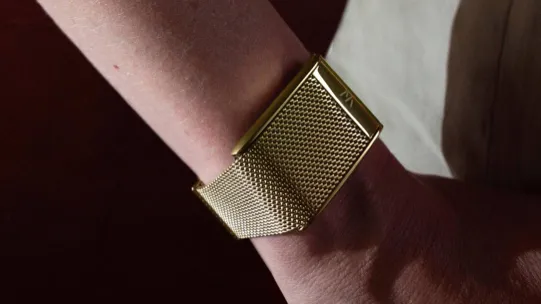
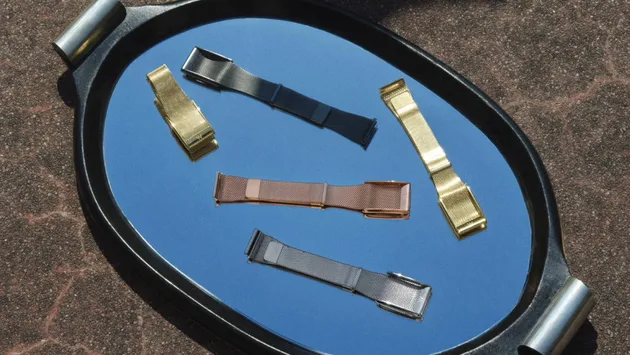
The new Whoop Meridian takes the company’s existing Whoop 5.0 technology and packages it in a more jewellery-like design, using a Milanese-style metal mesh band and metallic finishes intended to blend into situations where conventional fitness hardware might stand out. It launches today, August 27, priced at $149 in the US, £119 in the UK and AU$219 in Australia.
Meridian is available in Gold, Rose Gold, Alloy and Black. Rather than introducing a new generation of health sensors, Whoop says the device retains the same sensor array and tracking accuracy as the regular Whoop 5.0. Existing members can also buy Meridian as an additional accessory, allowing them to switch between their usual Whoop and the metal version without abandoning the company’s continuous-tracking approach.
That makes Meridian less of a technological upgrade and more of an attempt to solve a behavioural problem. Fitness trackers are increasingly designed around collecting uninterrupted streams of information covering sleep, recovery, activity and stress. Missing several hours because a wearable was removed for a wedding, dinner or another social occasion can leave gaps in that picture.
Whoop already takes continuous wear seriously. Its charging system allows compatible trackers to remain on the wrist while being topped up, avoiding the regular charging breaks required by many smartwatches. The company’s app can also notify users when the sensor has been taken off.
Meridian extends that philosophy into fashion. Whoop argues that people frequently remove wearables precisely during periods that could still produce useful health data, such as irregular sleep schedules, rest days and social events. A tracker that looks more like a bracelet potentially gives users fewer reasons to do so.
The idea isn’t entirely new. Wearable manufacturers have repeatedly experimented with making health technology less conspicuous. Fitbit’s Luxe pushed fitness tracking toward jewellery, while Apple has long offered more fashion-focused Apple Watch combinations, including its Hermès collaborations. Smart rings have taken the concept further by moving health tracking away from the smartwatch form altogether.
Whoop’s approach is slightly different because Meridian doesn’t try to add a screen, notifications or traditional smartwatch functionality. The company’s screenless hardware remains focused on passive data collection, with analysis handled through the Whoop app.
At $149, however, Meridian is a relatively expensive answer to an aesthetic problem, particularly for existing members who already own compatible hardware. Its appeal will depend heavily on whether users see uninterrupted tracking as valuable enough to justify owning another way to wear essentially the same sensor.
Still, Meridian highlights an interesting direction for wearables. As sensors become increasingly capable of running around the clock, manufacturers aren’t only competing over what their devices can measure. They’re also trying to make sure people actually keep wearing them.