
TL;DR: ChatGPT for Teens adds useful safeguards and learning tools, but parents still need to stay involved. Encourage teenagers to use AI for explanations, feedback and practice rather than outsourcing schoolwork, and keep an eye on accuracy, privacy, emotional dependency and whether they can still work independently.

Artificial intelligence has already found its way into homework, revision sessions and those late-night “I completely forgot this assignment existed” emergencies. So OpenAI launching a version of ChatGPT specifically designed for teenagers feels less like a surprise and more like an acknowledgement of reality.
ChatGPT for Teens aims to provide younger users with stronger safeguards, parental controls and a greater emphasis on learning. That’s a sensible direction. Teenagers are going to encounter generative AI whether parents love the idea or would rather launch every chatbot into deep space.
But parents shouldn’t interpret “for Teens” as “problem solved.”
The bigger question isn’t whether ChatGPT can help with schoolwork. It absolutely can. The challenge is making sure AI helps teenagers develop skills rather than quietly becoming the machine that does the difficult thinking for them.
ChatGPT for Teens is a guardrail, not a force field
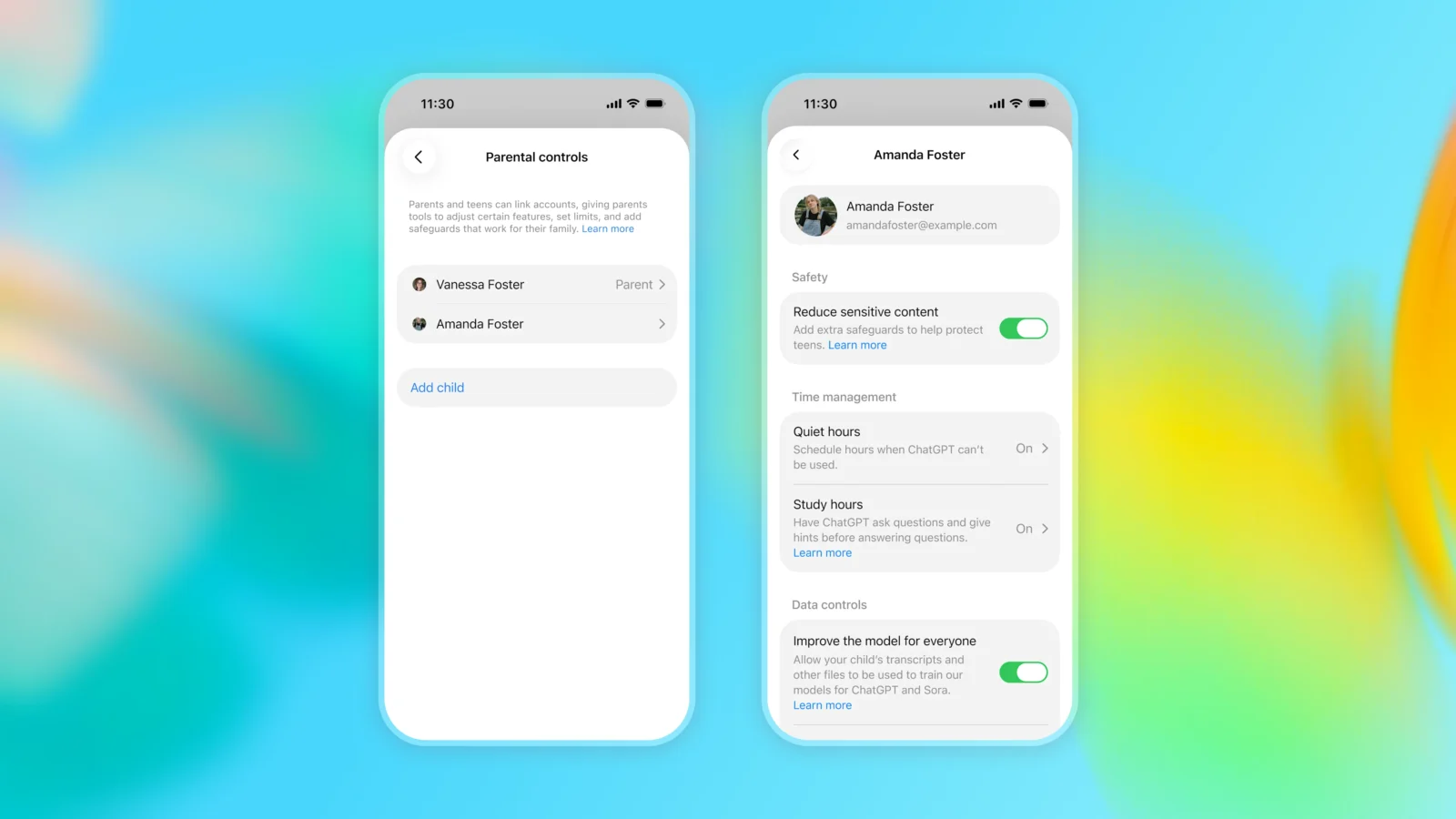
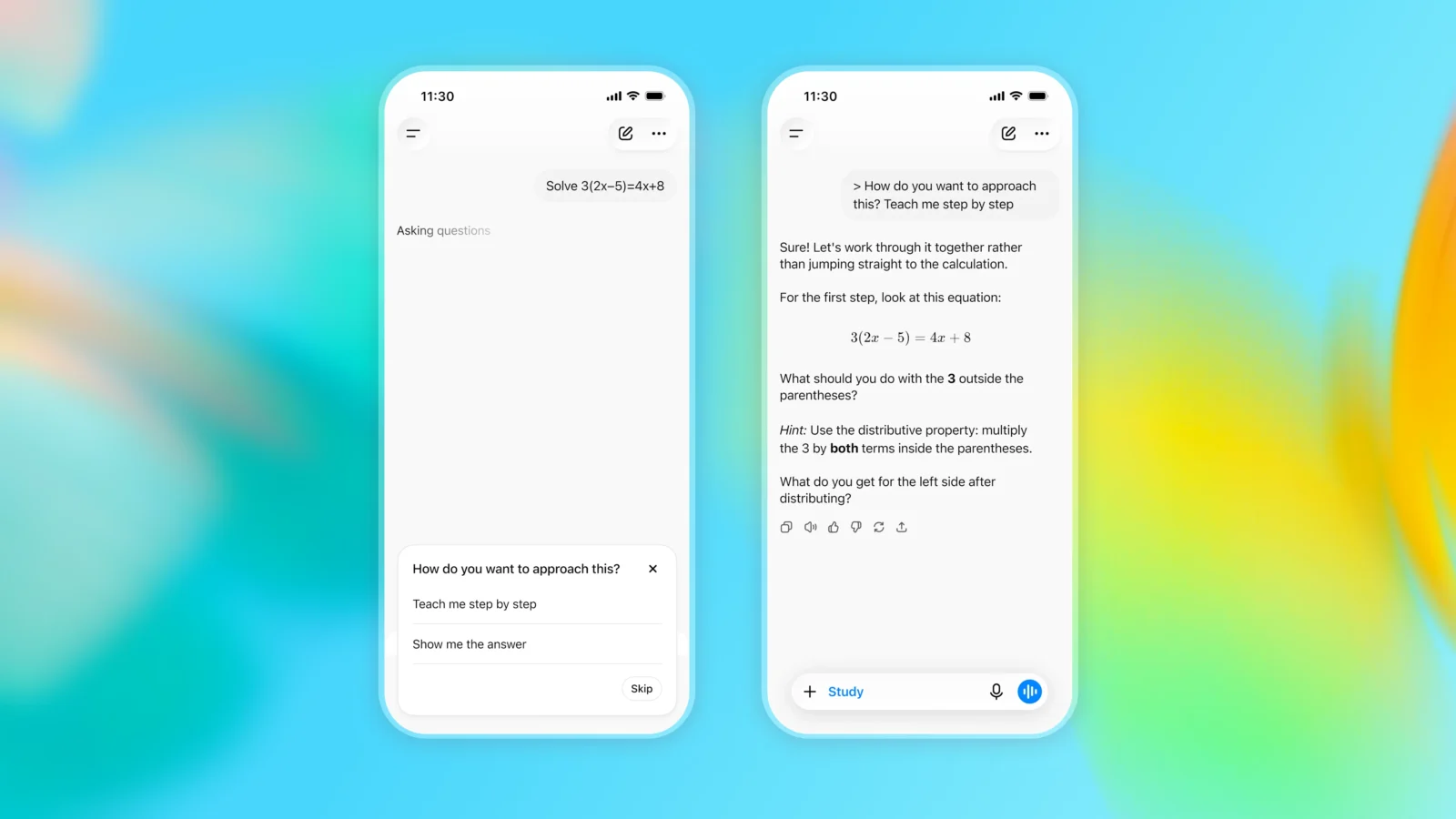
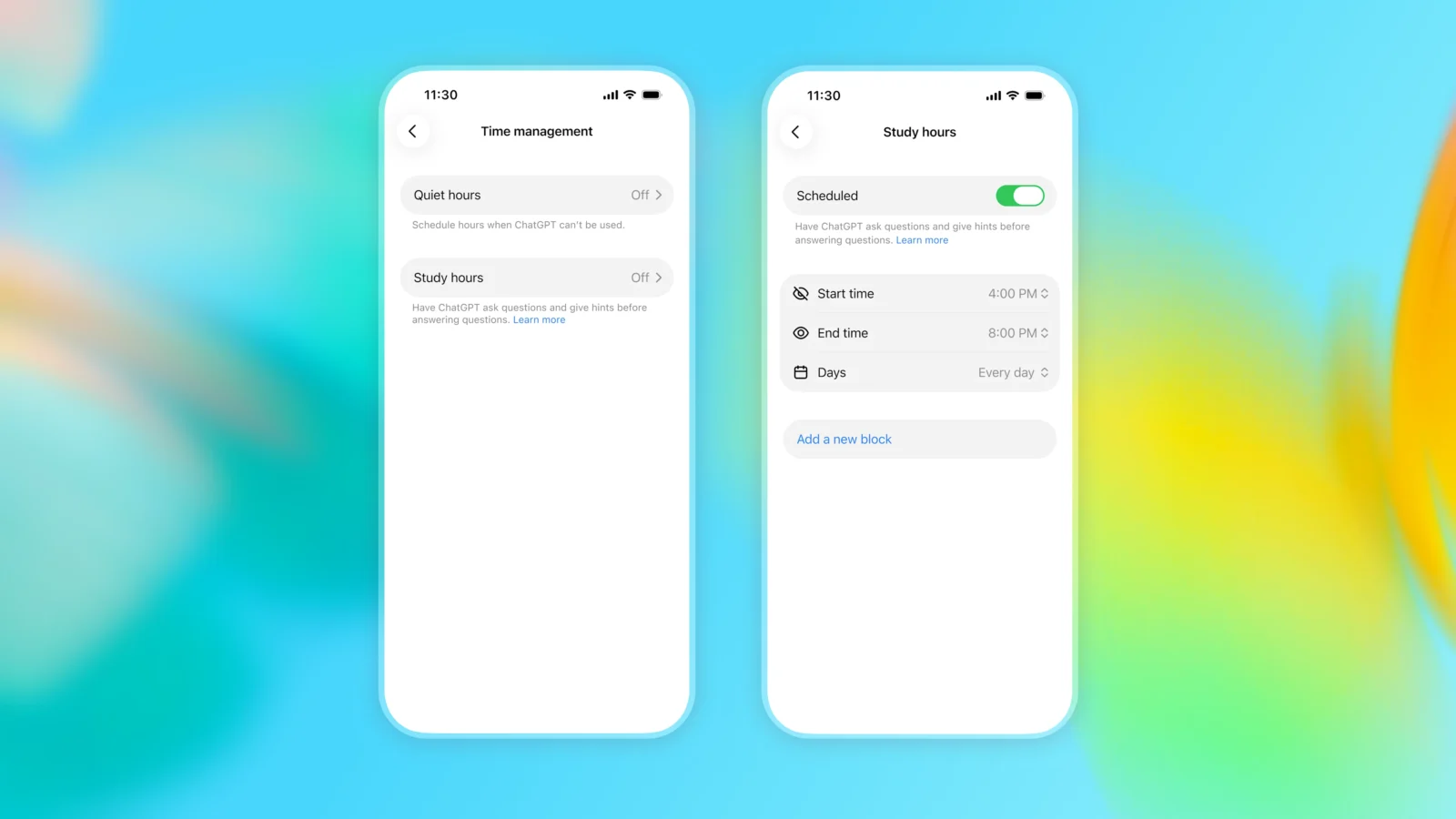
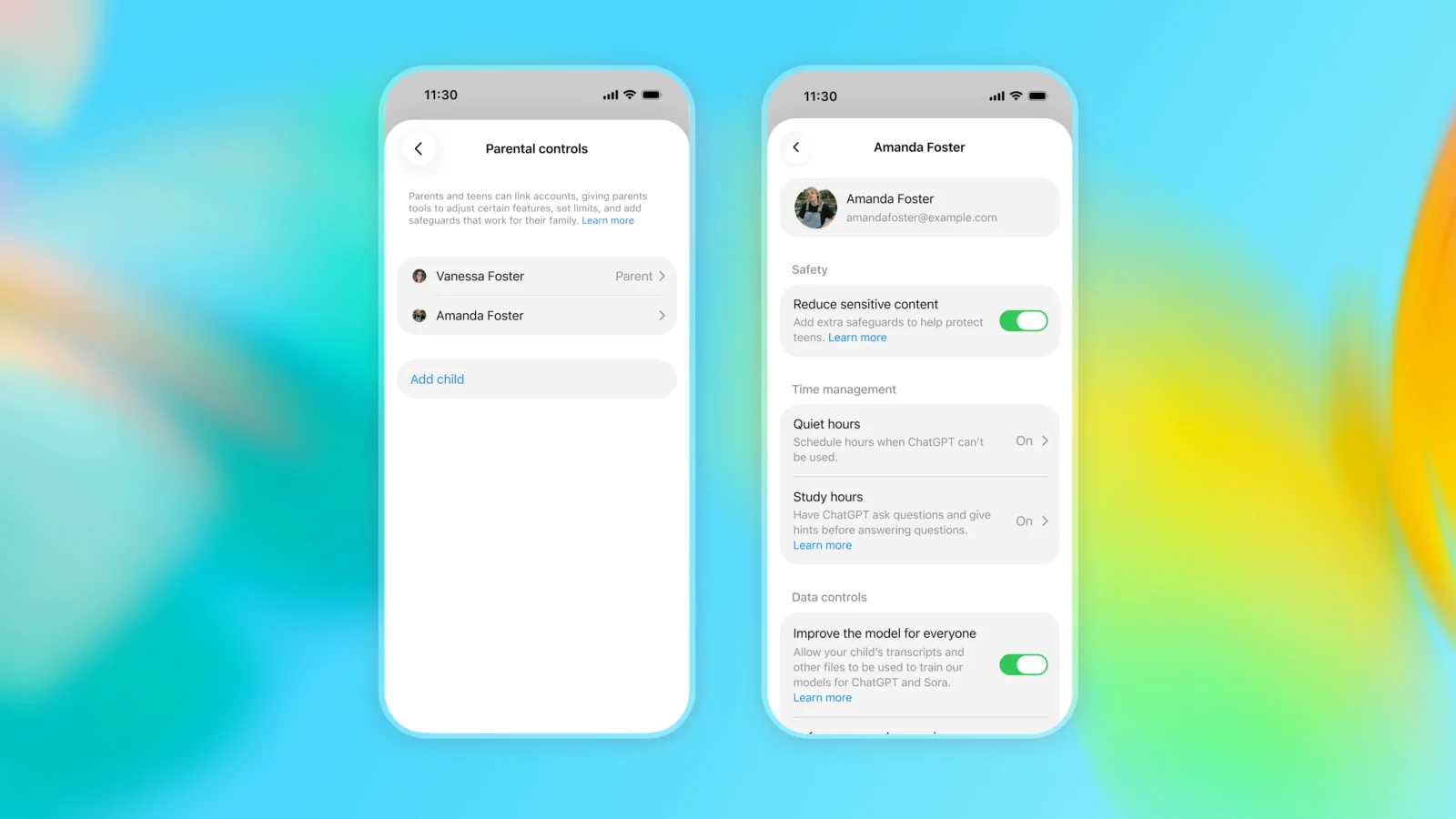
OpenAI’s teen-focused experience is designed around age-appropriate protections and learning. The supplied reporting describes features including parental controls, Study Mode and Quiet Hours, alongside restrictions intended to make sensitive conversations safer for younger users.
Parents can also link their account with their teenager’s account, which is worth doing rather than assuming the system will automatically put every young user into the correct experience.
That’s because OpenAI uses age estimation, and estimation isn’t certainty. The source notes that users can potentially be identified as older than they really are, particularly when someone has previously provided an inaccurate age.
These safeguards are valuable, but I’d treat them like driver-assistance features in a modern car. Lane keeping and automatic braking can make driving safer. They don’t mean you climb into the back seat and let the vehicle figure everything out.
Parental controls are backup. Parenting remains the main system.
The biggest risk is that ChatGPT is incredibly convenient
ChatGPT’s greatest strength can also become its educational weakness: it removes friction.
Don’t understand the question? Ask ChatGPT.
Can’t think of an introduction? Ask ChatGPT.
Need to solve an equation? Ask ChatGPT.
Forgot what mitochondria do? The powerhouse-of-the-cell meme army stands ready, but ChatGPT can handle that too.
For adults trying to finish work, removing friction is wonderful. For students, however, some friction is the point.
Struggling with an equation, reorganising an essay and debugging broken code aren’t annoying obstacles accidentally inserted into education. They’re part of how people learn.
The reference material highlights research concerns around students becoming overly reliant on AI assistance, including situations where learners continue requesting help despite recognising that doing so could harm their learning.
That’s why parents shouldn’t only ask whether ChatGPT helped finish the homework.
Ask whether the teenager understands the homework afterward.
Make ChatGPT the tutor, not the student
There is a simple way to tell whether educational AI is being used well: look at who is doing most of the thinking.
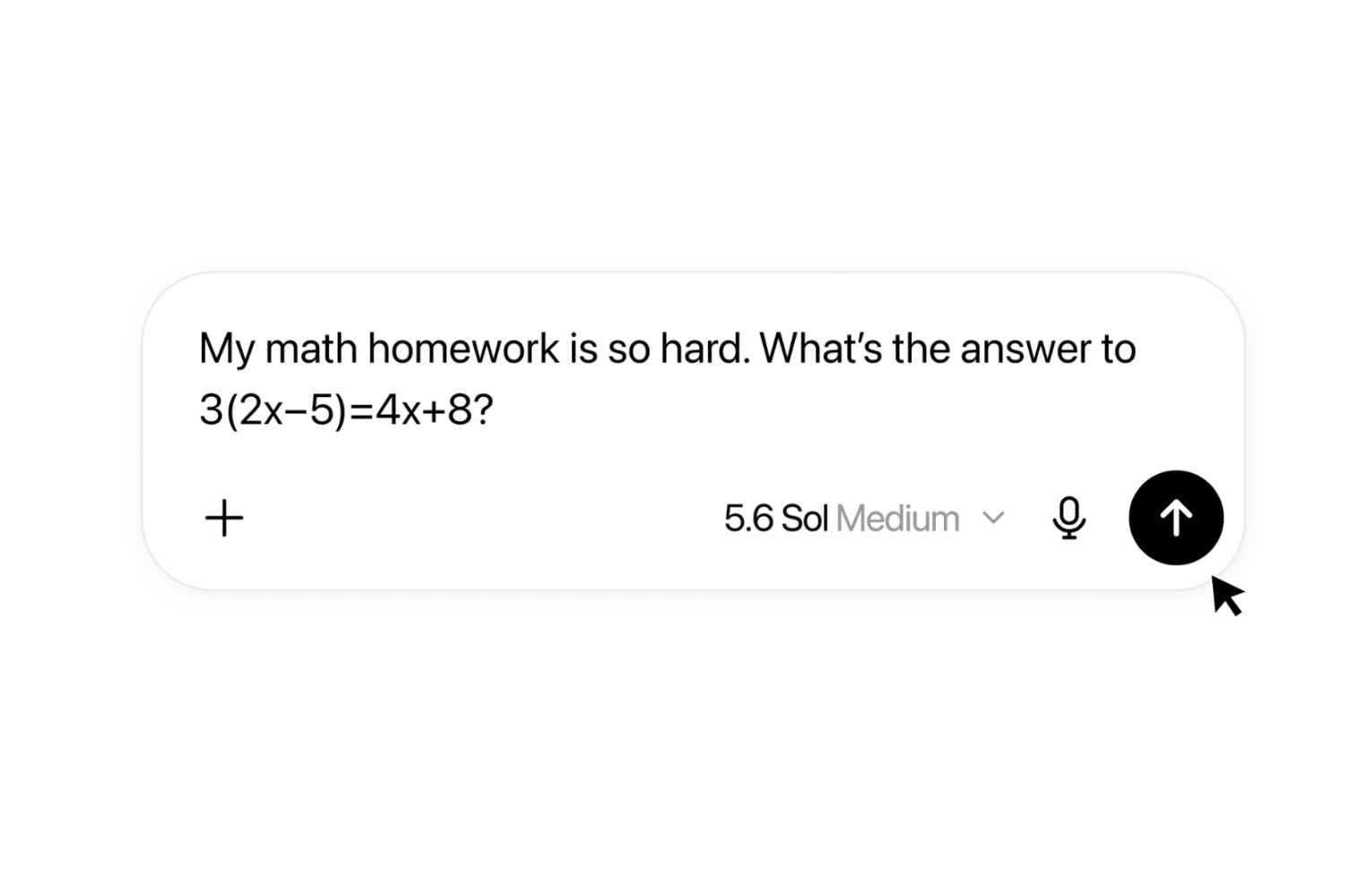
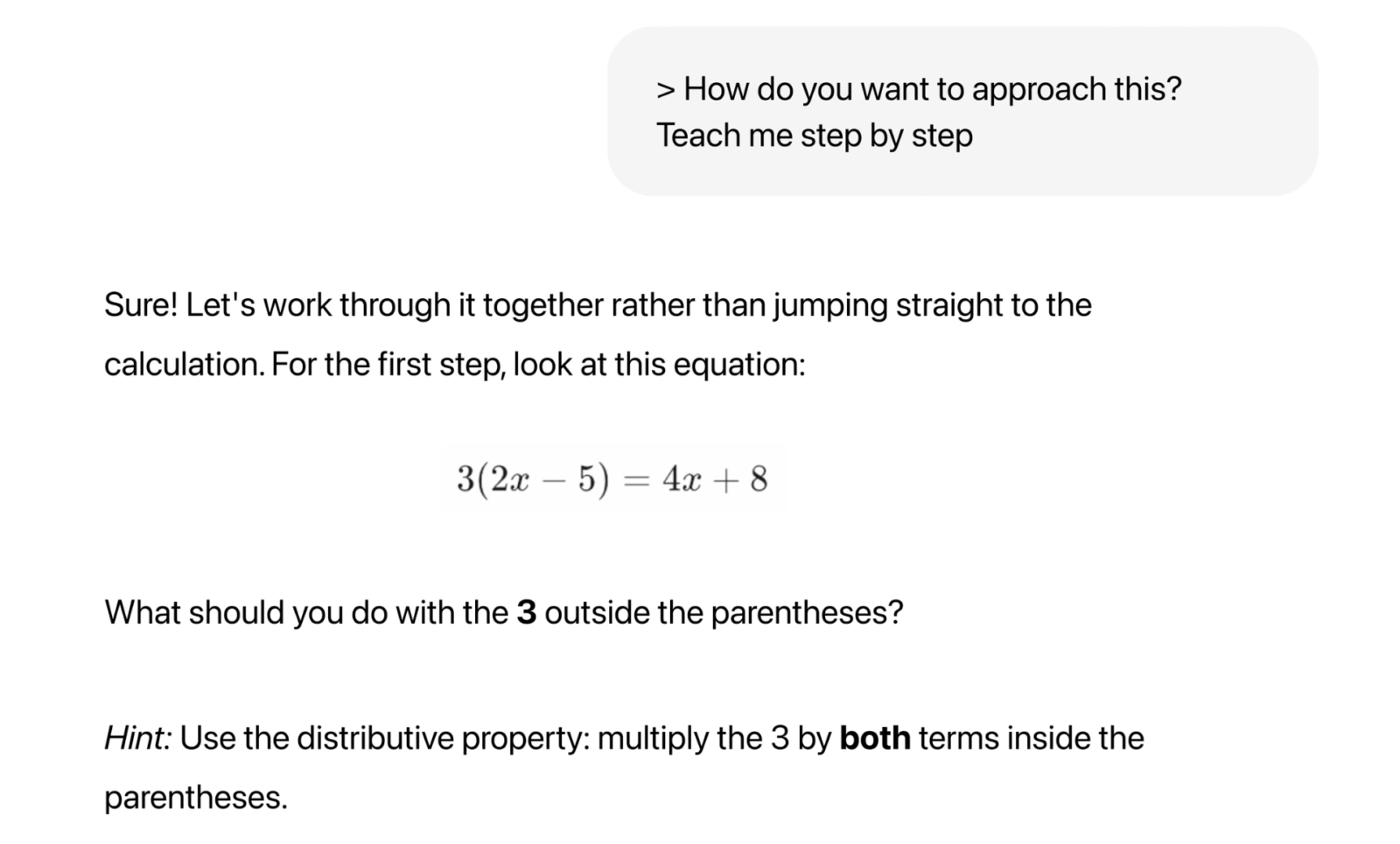
Imagine a teenager pastes a maths problem into ChatGPT and receives every calculation plus the final answer. Assignment completed. Learning potentially close to zero.
Now change the prompt.
The student asks ChatGPT not to reveal the answer but to provide one hint. They attempt the problem, explain their reasoning and ask the AI to identify where they went wrong.
Same chatbot. Completely different educational value.
This is where ChatGPT can genuinely shine.
Students can ask it to create revision quizzes, explain difficult concepts in different ways, challenge an argument, generate practice problems or identify weaknesses in something they’ve already written.
The golden rule should be wonderfully simple: use AI to help you think, not to avoid thinking.
If the student can’t explain the answer once ChatGPT disappears, the chatbot probably did too much of the work.
Study Mode doesn’t automatically make ChatGPT a perfect teacher
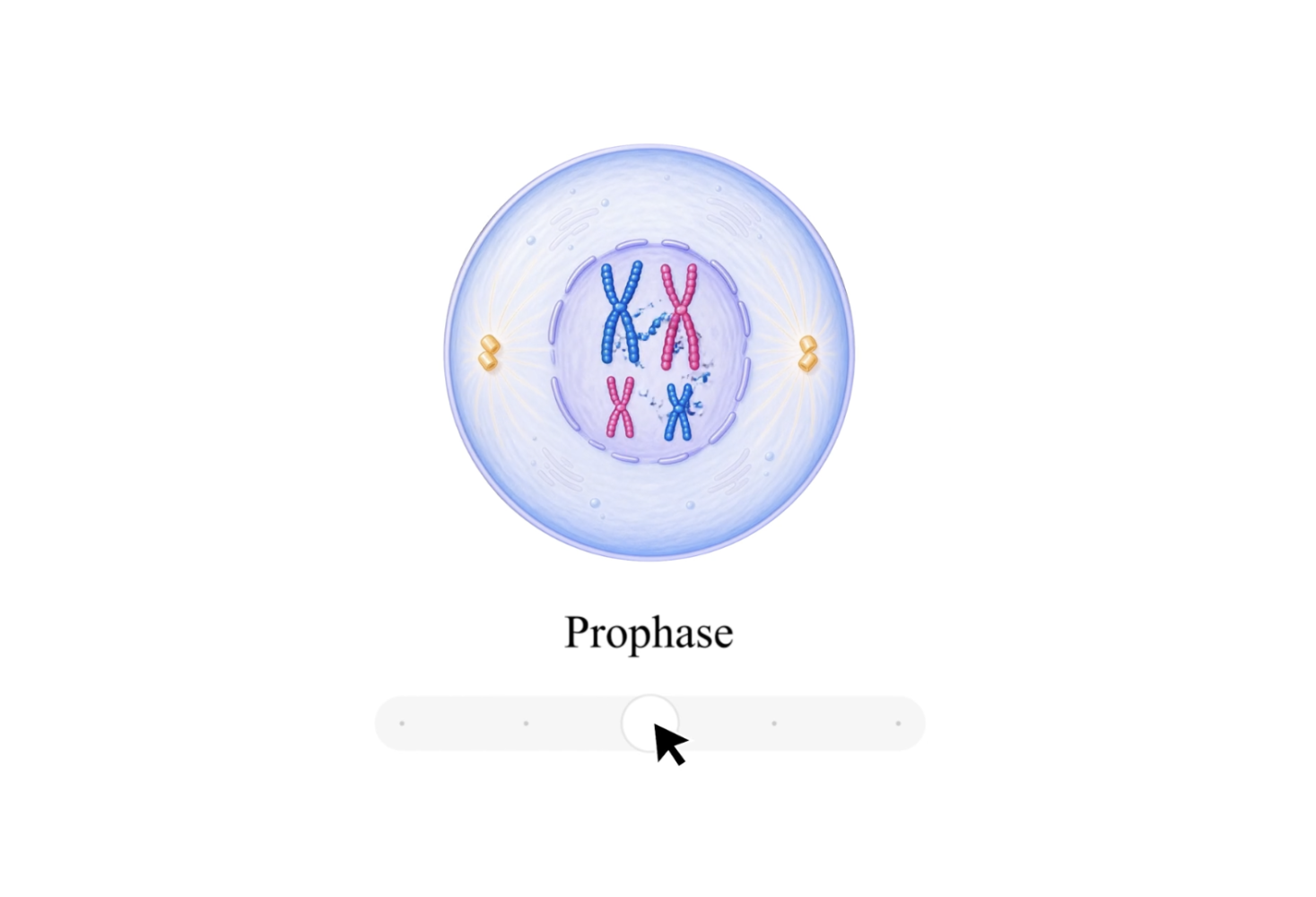
OpenAI has increasingly pushed ChatGPT toward education, with Study Mode forming an important part of that effort.
Parents should still separate an educational feature from proven educational effectiveness.
The supplied reporting notes that previous evaluations of AI learning modes raised questions about whether students could still obtain direct answers when they pushed for them. It also highlights ongoing research into whether generative AI actually improves learning outcomes rather than simply making schoolwork faster to complete. OpenAI, according to the source, is conducting controlled studies around Study Mode.
That research matters.
A beautifully explained answer doesn’t necessarily mean learning occurred. The real test happens tomorrow, when the AI isn’t providing hints and the student encounters a slightly different version of the problem.
Can they solve it independently?
If yes, ChatGPT probably helped.
If not, we’ve created an impressively sophisticated homework completion button.
Accuracy still matters
Teenagers also need to learn one of the golden rules of generative AI: confidence isn’t evidence.
ChatGPT can produce wonderfully organised explanations with headings, examples and the linguistic confidence of someone who has never once questioned themselves.
It can also be wrong.
Important claims should therefore be checked against reliable sources, particularly for school assignments. Textbooks, teacher-provided resources, primary documents and reputable academic material don’t become obsolete because a chatbot can answer faster.
In some ways, AI makes information literacy more important.
For years, parents and teachers told children not to believe everything they read on the internet. Now we need the upgraded version: don’t believe something merely because a computer explains it beautifully.
Learning when to verify AI-generated information may ultimately be more valuable than mastering any particular prompt trick.
Parents should watch for emotional dependency too
Homework isn’t the only reason teenagers might talk to an AI.
ChatGPT is available at practically any hour. It responds immediately, doesn’t interrupt and can maintain a remarkably natural conversation.
Those qualities are useful when you’re learning algebra. They become more complicated when the conversation turns personal.
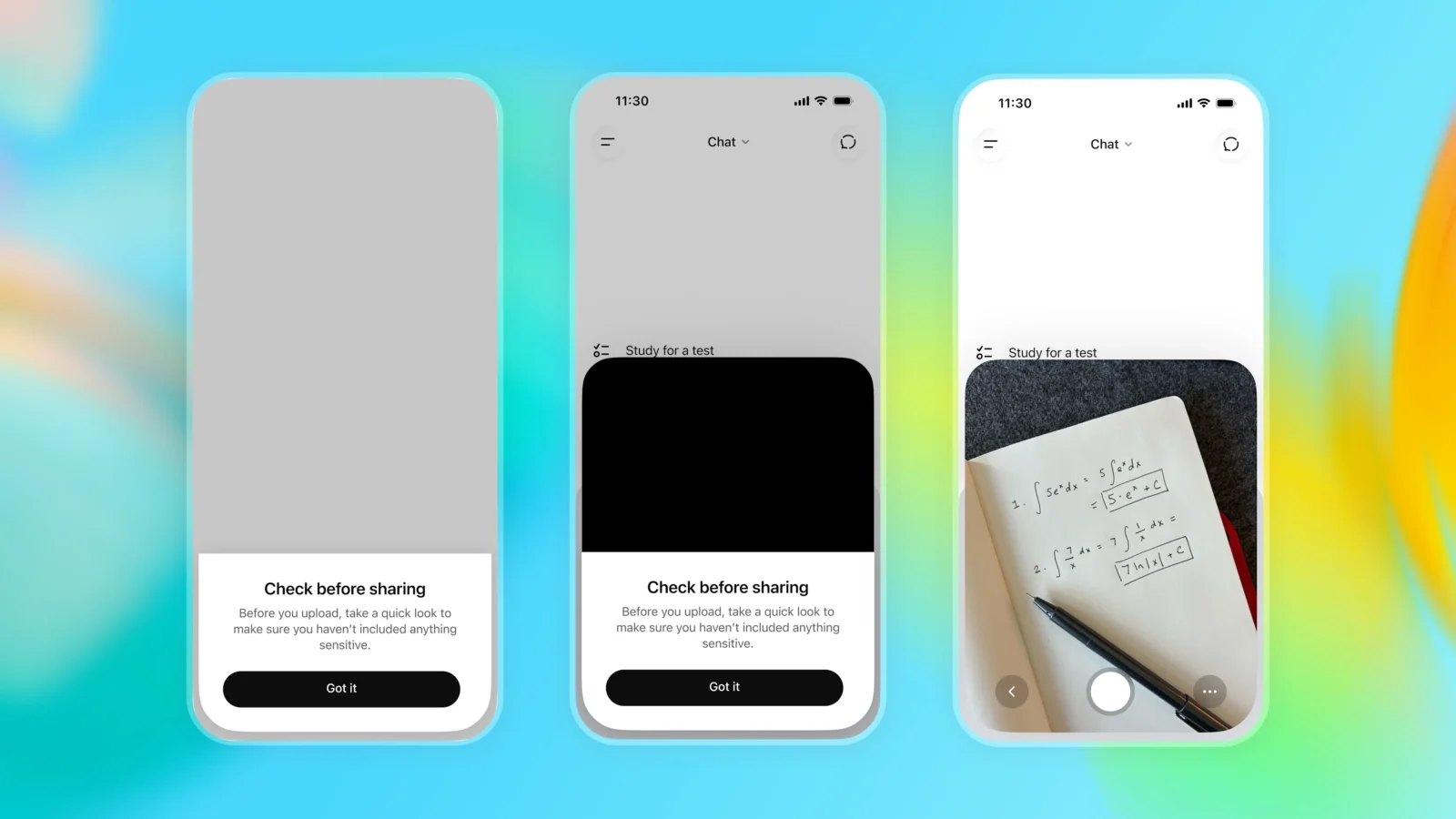
OpenAI says its teen experience is intended to restrict inappropriate emotional and intimate interactions and steer users toward healthier behavior. However, the supplied reporting describes preliminary testing in which researchers were still able to conduct personal-support conversations outside a purely educational context.
That doesn’t mean teenagers should never ask ChatGPT for advice.
The more useful distinction is whether AI supplements human relationships or starts replacing them.
Using ChatGPT to rehearse how you might approach a difficult conversation with a teacher is one thing. Treating a chatbot as your closest confidant is something else.
Parents should pay attention to that difference rather than assuming software safeguards can recognise every unhealthy pattern.
Safety notifications aren’t a replacement for human involvement
Some parental features address much more serious situations.
According to the supplied material, linked parental controls can enable notifications around certain conversations involving suicide, self-harm or dangerous violence. The same reporting notes concerns from previous independent testing about the reliability and timing of notifications, while OpenAI says notifications are reviewed by trained humans and that it aims to review them quickly.
Parents should think of this as another layer of protection rather than an emergency monitoring service that cannot fail.
That’s an important distinction.
Technology is particularly good at making us feel that because a safety mechanism exists, the underlying problem has been handled.
It hasn’t.
For serious personal or safety concerns, trusted adults and appropriate professional support remain far more important than whatever an automated system might detect.
AI-free homework still matters
One of the healthiest habits families can establish is occasionally removing ChatGPT altogether.
Students should still write without AI rewriting every sentence. They should solve problems without hints, brainstorm ideas independently and read material without immediately asking a machine to summarise it.
This isn’t technological nostalgia.
It’s maintenance.
GPS is incredibly useful, but it has also given some of us the navigational abilities of a malfunctioning Roomba. Autocorrect saves enormous amounts of time while simultaneously convincing us that spelling is somebody else’s problem.
AI can potentially do the same thing to reasoning.
The goal isn’t to stop teenagers using modern technology. It’s making sure the underlying skills continue working when the technology isn’t available.
A useful test is simple: after using ChatGPT to learn something, can the student perform the task alone?
That’s the educational benchmark that actually matters.
Parents should use ChatGPT themselves
One of the smartest things parents can do is spend some time using the same technology they’re trying to regulate.
You don’t need to understand neural networks or become a prompt-engineering wizard.
Ask ChatGPT to explain something unfamiliar. Try Study Mode. Request a quiz. Ask questions where you already know the correct answer. See how useful it can be and how convincing it can sound when its response deserves more scrutiny.
That experience makes conversations with teenagers considerably easier.
Instead of “AI is bad, don’t use it,” parents can explain where the technology is genuinely useful and where they don’t trust it.
Teenagers are also much more likely to respect technology rules when the person creating them understands the technology.
The objective shouldn’t be banning AI from their lives. That increasingly looks unrealistic.
It should be teaching them how to remain in control of it.
The family AI rule can be surprisingly simple
Parents don’t need a 38-page ChatGPT constitution stuck to the refrigerator.
A few principles cover most situations.
Try the task yourself before asking AI to rescue you. Use ChatGPT for explanations and feedback before asking for finished work. Verify important information. Follow whatever AI rules the school or teacher has established. Avoid sharing unnecessary personal information. And when something becomes genuinely personal or serious, involve a real human being.
Most importantly, teenagers should regularly ask themselves one question:
Am I using ChatGPT because it helps me understand this, or because it means I don’t have to understand it?
That distinction will remain useful long after today’s version of ChatGPT has been replaced by whatever considerably more capable AI system arrives next.
Verdict
ChatGPT for Teens is a welcome recognition that younger users need different safeguards from adults. Parental controls, learning-oriented features and additional protections make sense, but parents shouldn’t mistake them for an autopilot system. The supplied reporting also highlights unresolved questions around educational effectiveness, self-regulation and how reliably safeguards perform in everyday use.
I wouldn’t tell teenagers to avoid AI altogether. They’ll probably study, work and eventually build careers in a world where generative AI is everywhere.
Instead, teach them to use it without surrendering their independence.
Let ChatGPT explain the impossible maths problem differently. Let it create revision questions. Let it challenge an argument or expose gaps in an essay.
Just make sure the teenager remains the person doing the learning.
Because knowing how to ask AI for an answer will soon be easy.
Knowing when not to ask may become the far more valuable skill.