
For years, the appeal of a foldable phone has been fairly easy to explain: you get a normal smartphone when you need one and something approaching a small tablet when you don’t mind unfolding it. It’s a compelling idea, but it hasn’t always translated perfectly to the things we actually do on our phones.
The Galaxy Z Fold8 feels like Samsung has finally decided to tackle that problem from the opposite direction.
Instead of simply making another enormous folding screen and expecting apps and content to figure themselves out around it, Samsung has redesigned the Galaxy Z Fold8 around how we consume content. The result is a foldable that makes an unusually strong case for itself as an entertainment device.
And it starts with something that doesn’t normally sound particularly exciting: aspect ratios.
Two screens with two very different jobs
The Galaxy Z Fold8 has a 5.5-inch cover display with a 10:16 aspect ratio and opens to reveal a 7.6-inch main display with a much squarer 4:3 aspect ratio.
That isn’t accidental.
Samsung has effectively given the two displays different jobs. The cover screen is intended for the quick-hit content we increasingly consume throughout the day: scrolling through social media, checking messages, browsing and watching short-form videos.
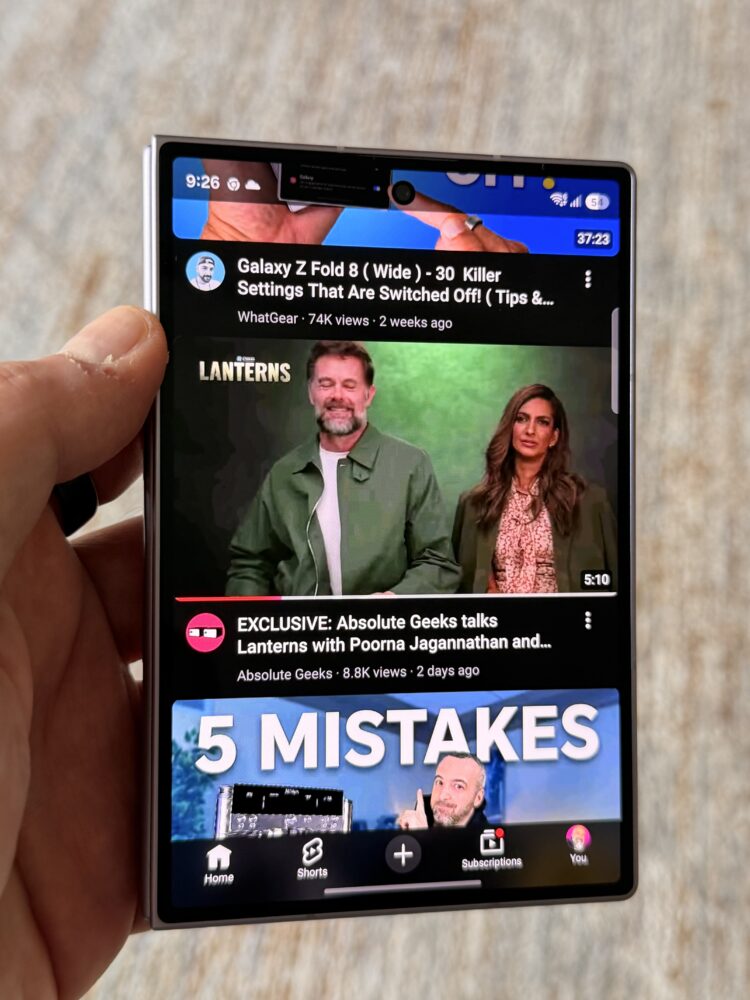
It’s the screen you use when you have a couple of minutes to kill.
Then you unfold the phone.
The 4:3 inner display is designed for the moments when you actually want to settle into something. Movies, TV shows, games, e-books, magazines, websites and longer videos suddenly have considerably more room to breathe.
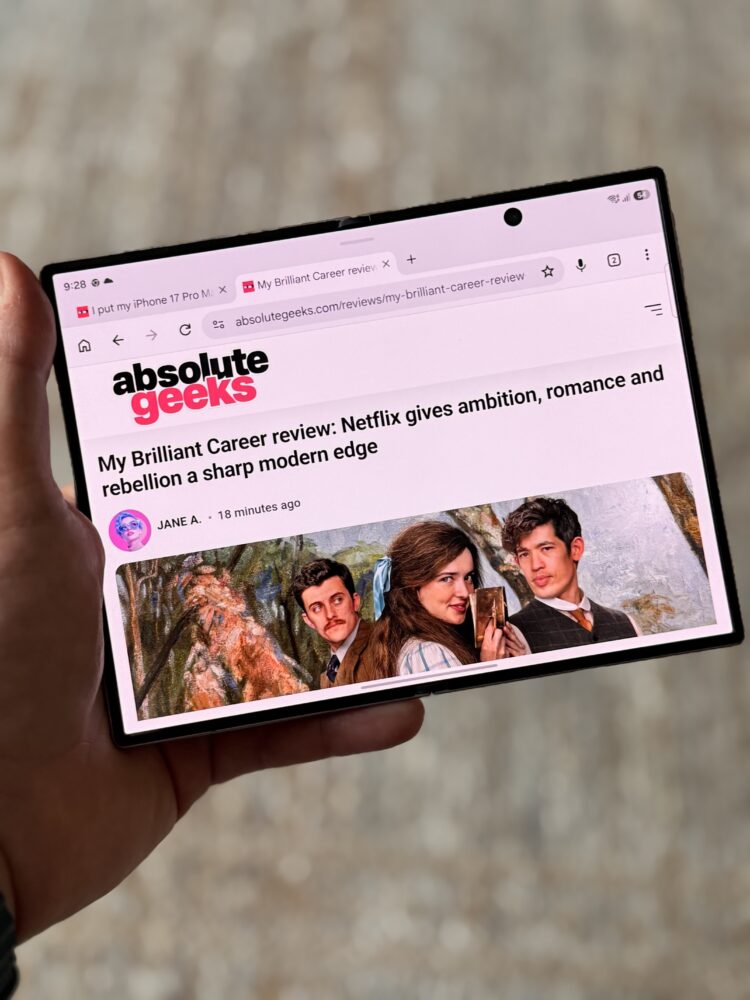
It’s a small distinction on paper, but it’s arguably the most interesting thing about the Fold8.
Rather than asking which screen is better, you’re encouraged to use whichever one makes the most sense for what you’re doing.
TikTok outside, Netflix inside
That makes the Fold8 particularly interesting in a world where “watching something on your phone” can mean wildly different things.
A TikTok video and a two-hour Netflix movie are both video, but we interact with them completely differently.
Short-form video is usually consumed vertically, one-handed and in rapid bursts. That’s exactly where the Fold8’s cover screen makes sense. There’s no real reason to unfold a tablet-sized display just to spend 30 seconds watching someone make an aggressively complicated cup of coffee.
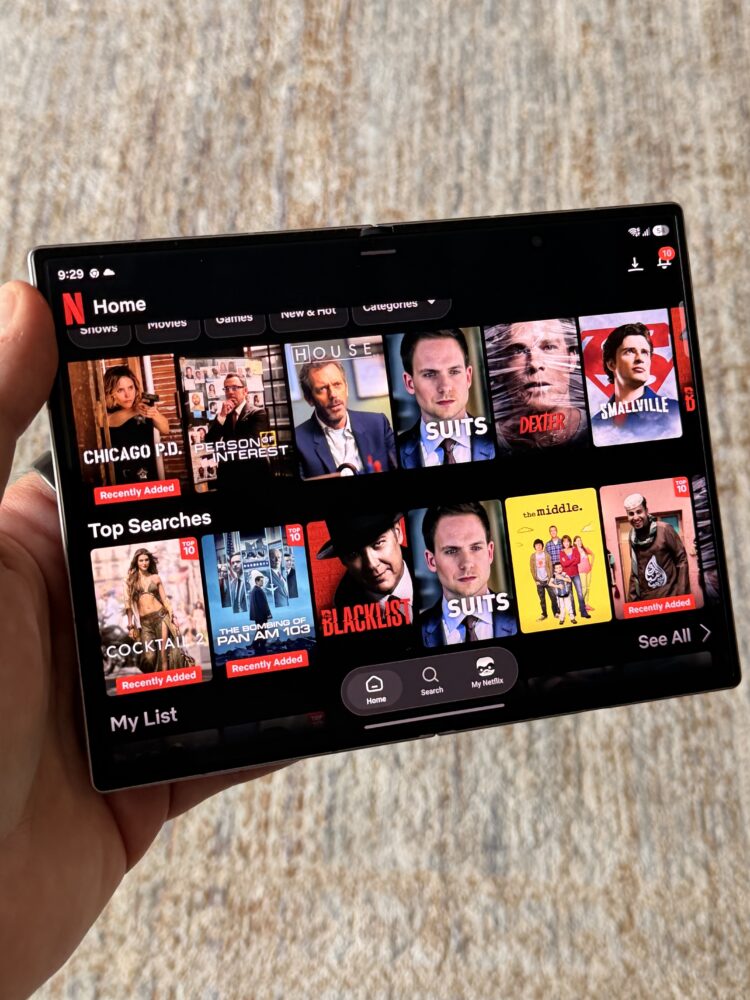
Start watching a movie, however, and unfolding the Fold8 becomes much more appealing.
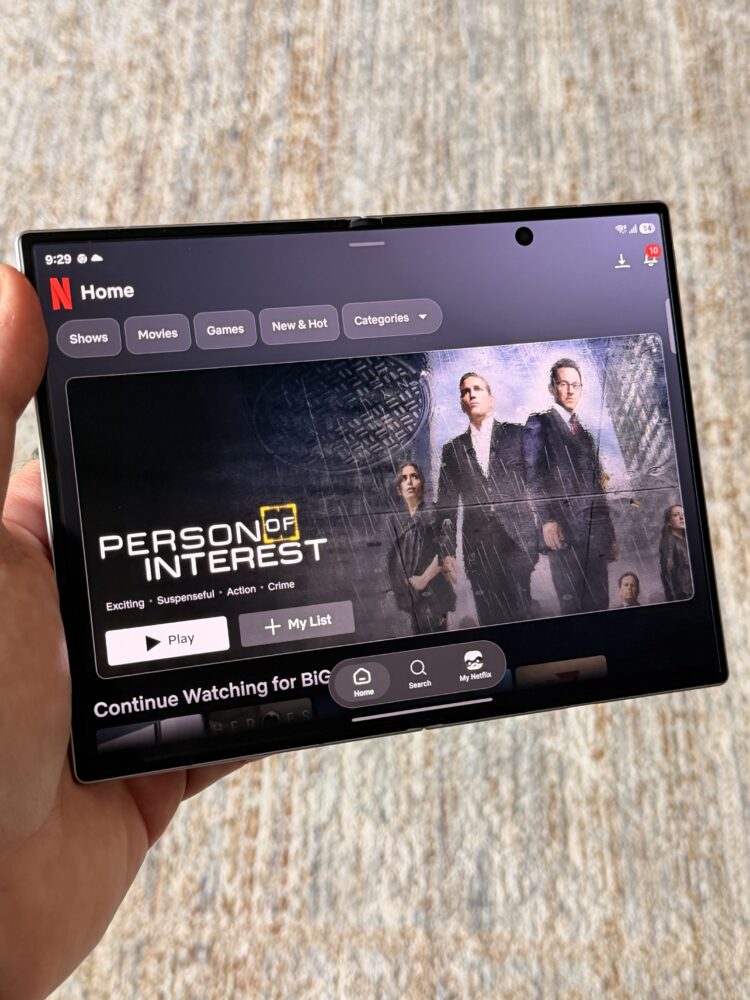
The 4:3 inner display gives video substantially more physical space, while rotating the device into landscape turns it into something closer to a miniature tablet. Samsung specifically designed the unfolded ratio around movies, TV series and gaming, while rotating the device into a 3:4 orientation lends itself better to reading and browsing.
There is an obvious caveat.
Most modern movies aren’t remotely close to 4:3, which means you’re still going to encounter black bars. A larger display doesn’t magically change the aspect ratio of the content you’re watching.
But the sheer size of the Fold8’s inner screen still makes watching long-form video a very different experience from doing the same thing on a conventional smartphone.
Reading might be its secret weapon
Video is the obvious showcase for a folding display, but reading might actually be where the Fold8’s unusual shape makes the most sense.
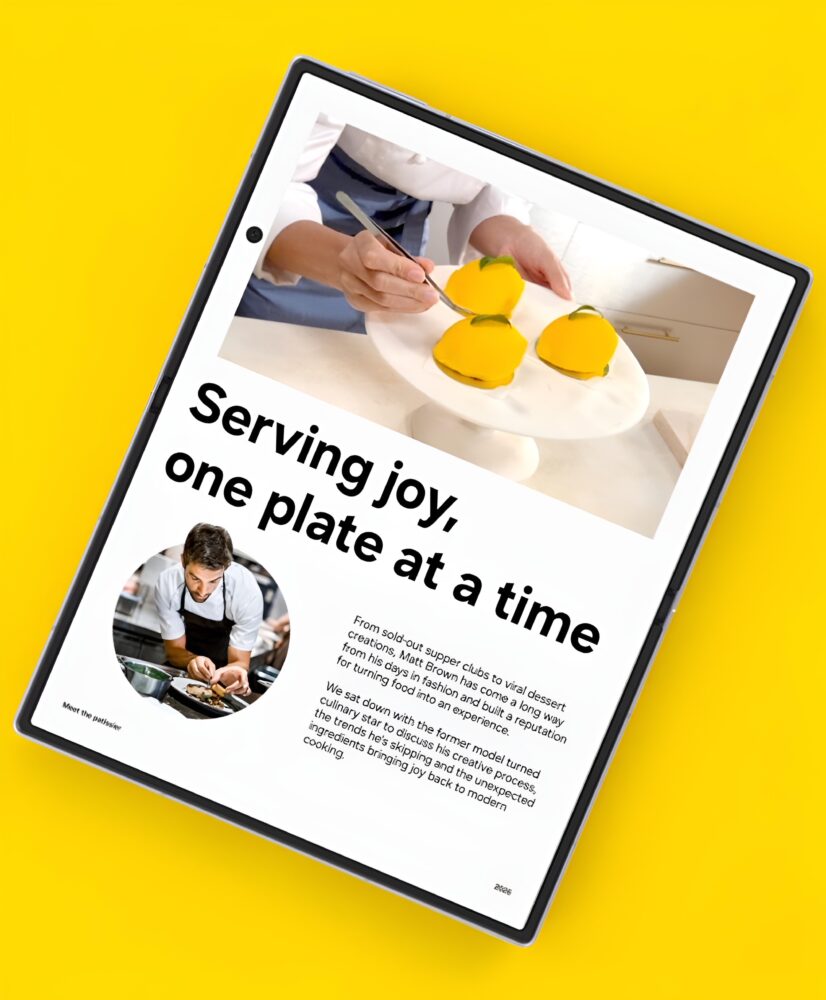
Open a long article, an e-book, a digital magazine or even a PDF and suddenly the squarer display stops looking unusual.
It starts looking logical.
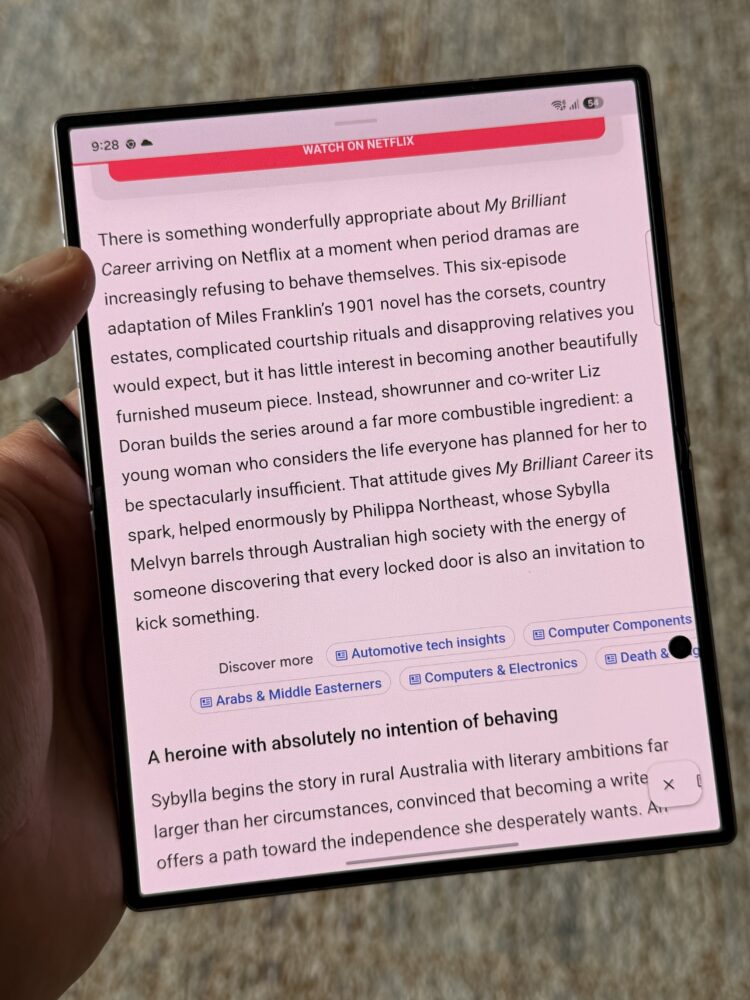
Rotate the unfolded Fold8 into portrait orientation and the 3:4 canvas gives text more horizontal space without stretching lines into oblivion. You can see more of a webpage, photographs have room to sit alongside text, and digital magazines begin to resemble the pages they were designed to imitate.
It’s one of those situations where the Fold8 isn’t necessarily replacing a Kindle or tablet. It’s replacing the moment when you think, “I wish I had my tablet with me.”
Because you do.
It’s just folded inside your pocket.
And then there’s gaming
Games present another interesting use case because the advantage isn’t simply that everything gets bigger.
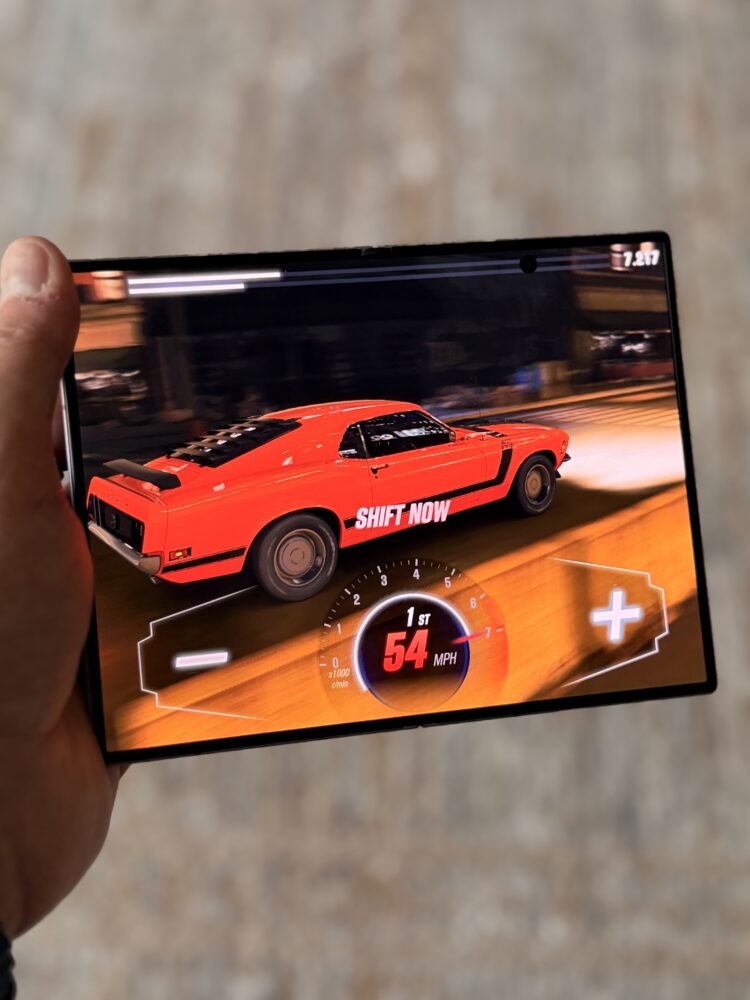
A larger display gives touch controls more room and can make games with busy interfaces considerably easier to navigate. Strategy games, RPGs and titles with maps, inventories and on-screen controls naturally benefit from having more canvas available.
Samsung has also equipped the Fold8 with the Snapdragon 8 Elite Gen 5 for Galaxy, so the hardware behind the display is designed to handle demanding graphics rather than simply provide a larger window for them.
Not every game will make perfect use of the Fold8’s unusual aspect ratio, of course. As with video and apps, optimization matters.
But when a game does scale properly, playing it on a 7.6-inch folding screen is fundamentally different from playing it on a traditional smartphone.
Bright enough to actually use outside
None of this matters much if you can’t see the screen once you leave the house.
Both Fold8 displays can reach up to 3,000 nits of brightness, which is particularly important for a device designed around consuming content wherever you happen to be.
That’s useful when you’re watching something on the train next to a bright window, reading outdoors or simply scrolling through your phone under Dubai’s less-than-forgiving sunlight.
And because you’re likely to spend more time staring at the inner display than you would on a conventional phone, battery life becomes equally important.
Samsung has fitted the Fold8 with a 4,800mAh battery and rates it for up to 26 hours of video playback.
Real-world battery life will obviously depend on brightness, connectivity, apps and exactly what you’re doing, but that capacity at least suggests Samsung understands that an entertainment-focused Fold needs enough endurance to back up the idea.
The lighter design matters more than you’d think
There is another specification that becomes surprisingly important when you’re talking about watching a two-hour movie or reading a book: weight.
The Galaxy Z Fold8 weighs 201 grams, making it Samsung’s lightest Galaxy Z Fold yet.
That matters.
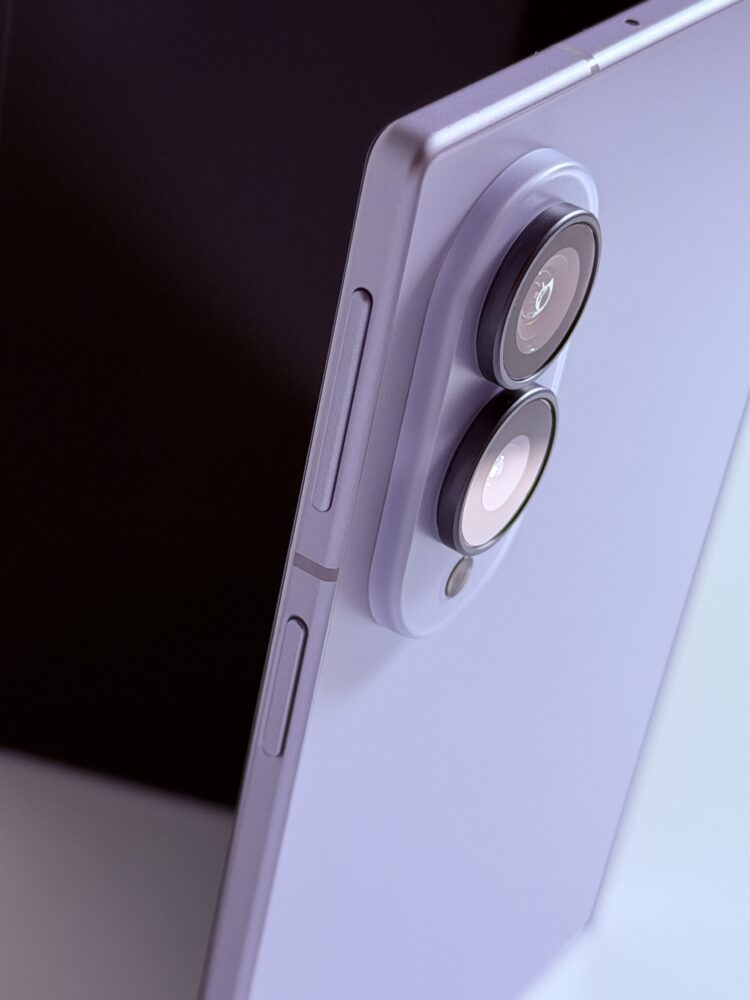
One of the compromises with early foldables was that you were essentially carrying two smartphones stacked on top of each other. They could be impressive when unfolded but noticeably bulky during normal use.
At 201 grams, the Fold8 is getting much closer to conventional flagship-phone territory.
And when you’re holding the device open for an extended reading or viewing session, every gram you remove makes the tablet-like experience a little more convincing.
A phone that understands how we actually consume content
The interesting thing about the Galaxy Z Fold8 isn’t simply that it has a big screen.
We’ve had big-screen foldables for years.
What’s different is that Samsung appears to have stopped treating the inner display as the entire reason for the Fold’s existence.
Instead, the Fold8 embraces the fact that sometimes you don’t want a tablet.
Sometimes you want to scroll through Instagram with one hand. Sometimes you want to reply to a message. Sometimes you just want to check something quickly without unfolding your phone.
That’s what the cover display is for.
But when that 30-second Reel becomes a 30-minute YouTube video, or when you decide to read a book, play a game or watch an episode of something on Netflix, you have another screen waiting.
Open it.
Suddenly your phone becomes something else.
That’s always been the promise of the Galaxy Z Fold.
With the Fold8, Samsung may finally have designed the screens around the content instead of expecting the content to adapt to the screens.