
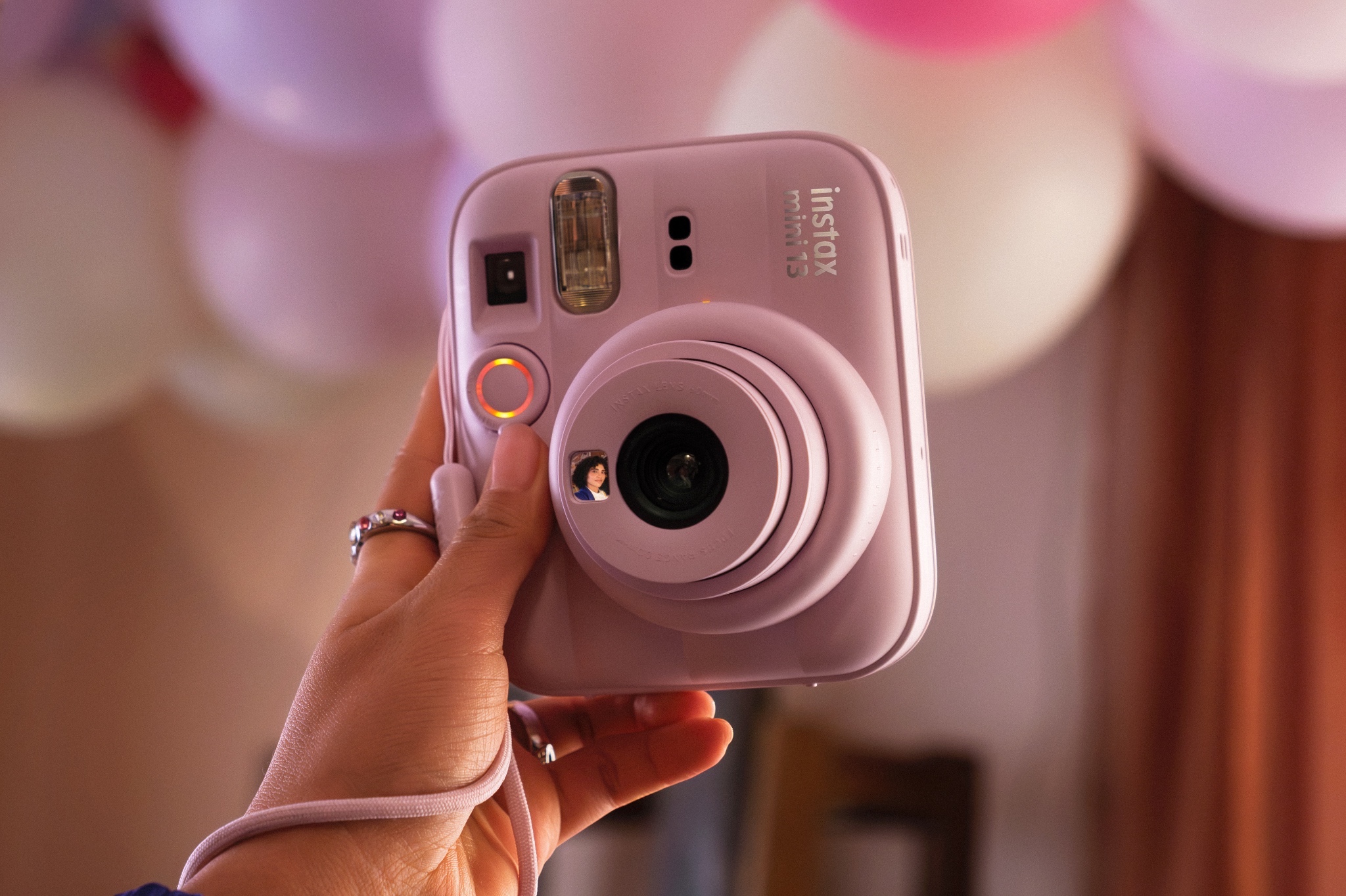
Fujifilm is giving its entry-level instant camera another refresh with the Instax mini 13, a new analog model that builds on the familiar formula of the Instax mini 12 while adding self-timer features aimed squarely at selfies and group photography.
Set to become available from August 2026, the Instax mini 13 keeps the series deliberately simple. There are no screens, digital filters or complicated shooting controls. Users turn the lens to switch the camera on, compose through the viewfinder and press the shutter. The photograph then develops on Instax mini film in the traditional instant-camera fashion.
The most meaningful change is the addition of two self-timer settings. A two-second timer is intended primarily for handheld selfies, giving photographers a moment to steady the camera after pressing the shutter. A 10-second option is more useful when the camera is placed on a surface, opening the door to group shots and full-body photos without requiring someone else behind the lens.
Fujifilm is also including a Camera Angle Adjustment Accessory, which allows the mini 13 to be positioned at different angles for self-timer shots without a conventional tripod. It is a relatively modest addition, but one that makes sense given how heavily the new model leans into self-portraits and casual social photography.
Elsewhere, the mini 13 inherits two important features from the Instax mini 12. Close-up mode is designed for selfies and subjects photographed at short distances, with parallax correction helping the viewfinder more closely represent the area that will appear in the finished print. Automatic exposure adjusts shutter speed and flash output according to lighting conditions. As with previous entry-level Instax cameras, the emphasis is on removing decisions rather than giving photographers extensive manual control.
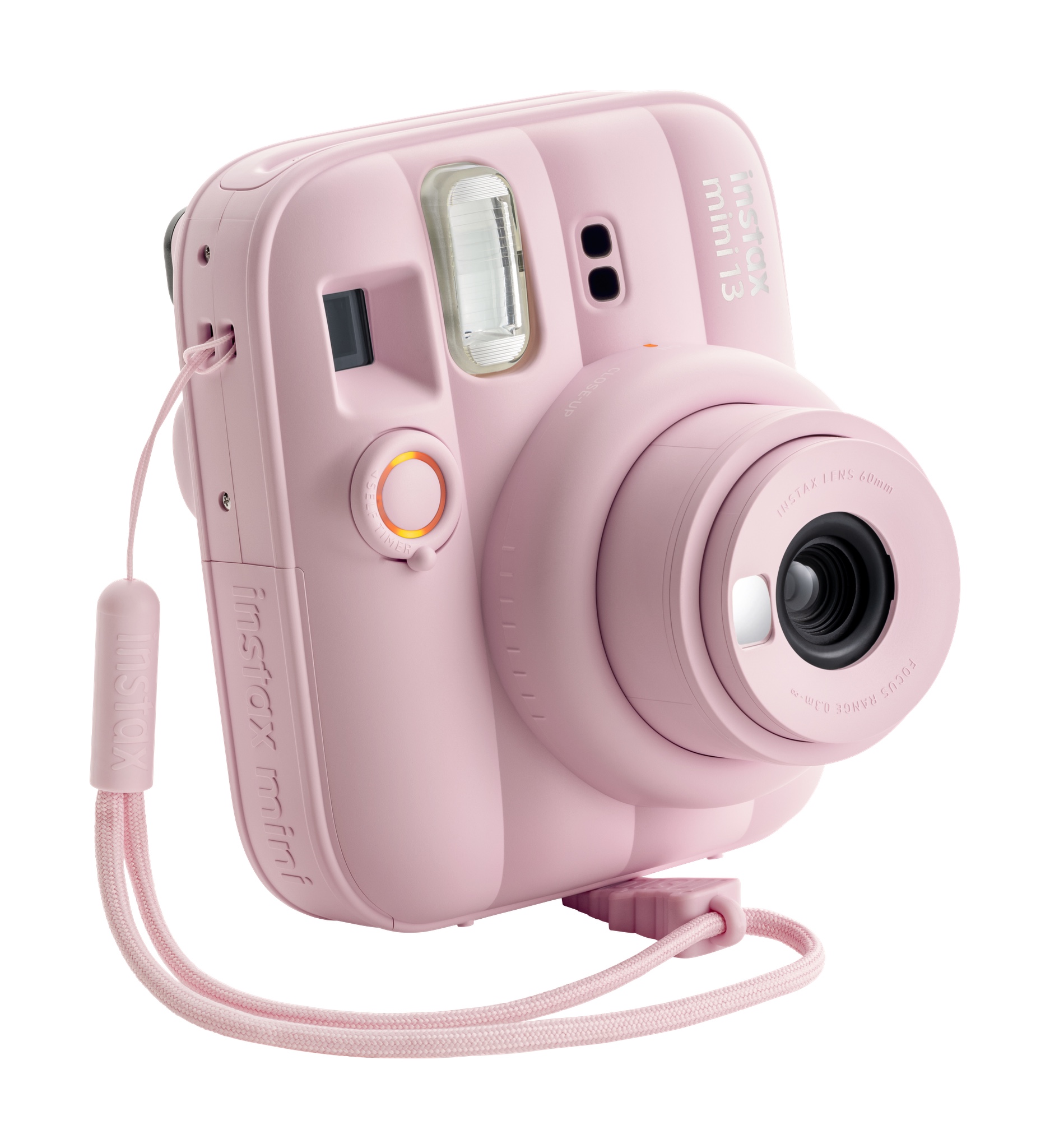
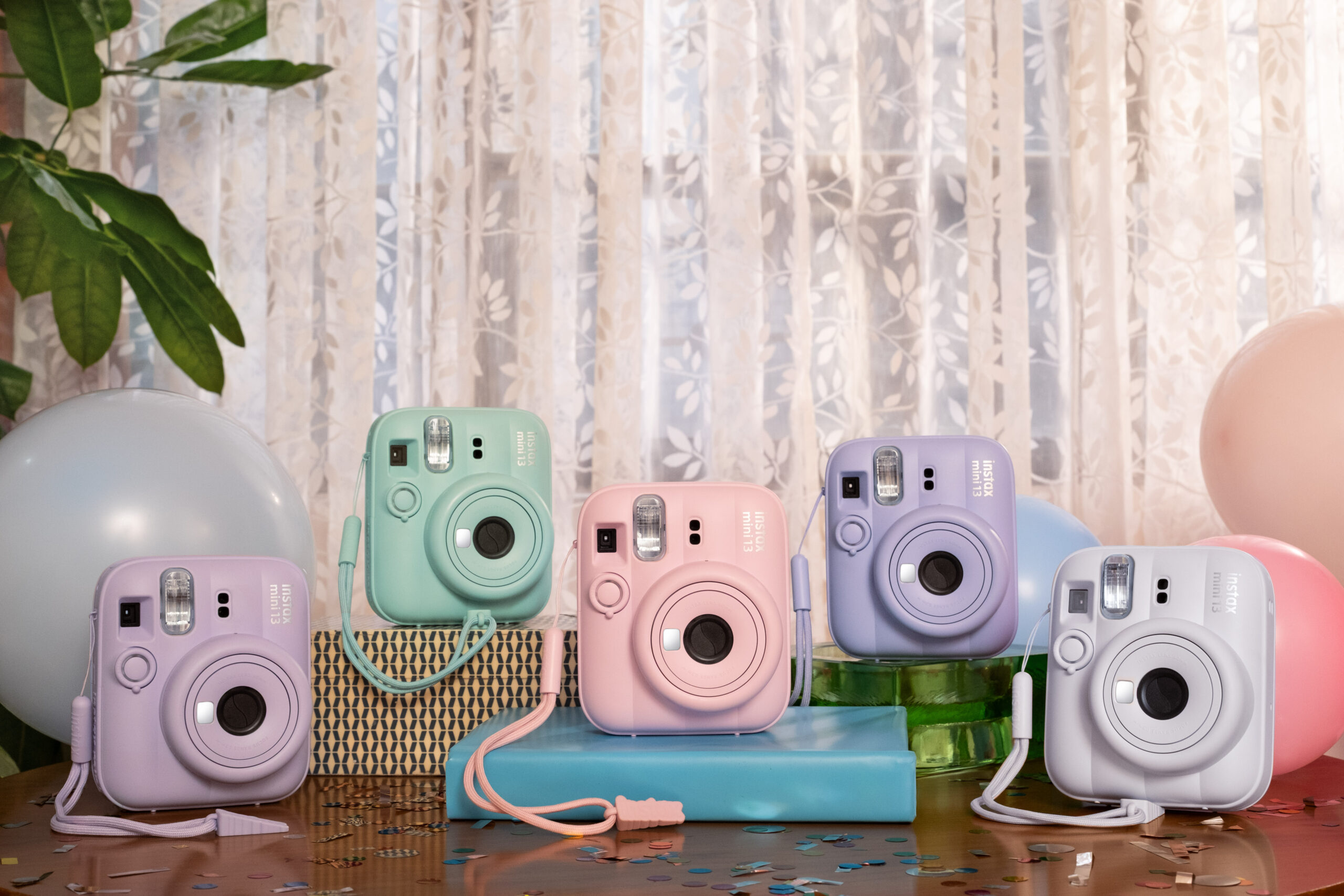
The physical design has also been reworked. Fujifilm has opted for a rounded, three-dimensional body with translucent pastel finishes and prominent Instax branding. Five colours will be offered: Dreamy Purple, Candy Pink, Frost Blue, Lagoon Green and Clay White. The styling reinforces the mini series’ position as much as a lifestyle product as a conventional camera.
That approach has been central to Instax since Fujifilm introduced the system in 1998. Instant photography has survived the smartphone era partly because it offers something phones cannot quite reproduce: a physical photograph appearing moments after the shutter is pressed. The mini 13 does not attempt to reinvent that experience. Instead, it makes a few practical changes to an already accessible camera.
There is a digital component for users who want one. Fujifilm’s updated Instax UP! smartphone app can scan physical Instax prints for storage and social sharing. The company says its latest scanning system uses AI to improve recognition of prints across different backgrounds and orientations, creating a bridge between the deliberately analog camera and the places where photographs are increasingly shared.
Pricing was not included in Fujifilm’s announcement, leaving one important part of the mini 13’s value proposition unanswered. For an entry-level instant camera, that figure — alongside the continuing cost of Instax mini film — will matter at least as much as the new timer when buyers compare it with the mini 12 and other instant-camera options.