

TL;DR: Beast of Reincarnation delivers satisfying parry combat and inventive vine traversal, but repetitive bosses, a lifeless story, and an uninspired world keep it from becoming more than a promising near-miss.
Beast of Reincarnation
There is something quietly thrilling about watching a studio long defined by one towering franchise decide to stretch its legs in a completely different direction. Beast of Reincarnation arrives as that kind of swing, an ambitious action-RPG built around precise parries, plant-powered traversal, and a post-apocalyptic landscape reclaimed by nature and machines. The core fantasy of controlling vines that double as grappling hooks, weapons, and living bridges feels like the sort of idea that should have electrified every session. Instead the game spends far too much of its runtime undercutting its own best instincts, leaving a finished product that shows flashes of real invention while never quite becoming the confident, memorable experience it keeps promising to be.
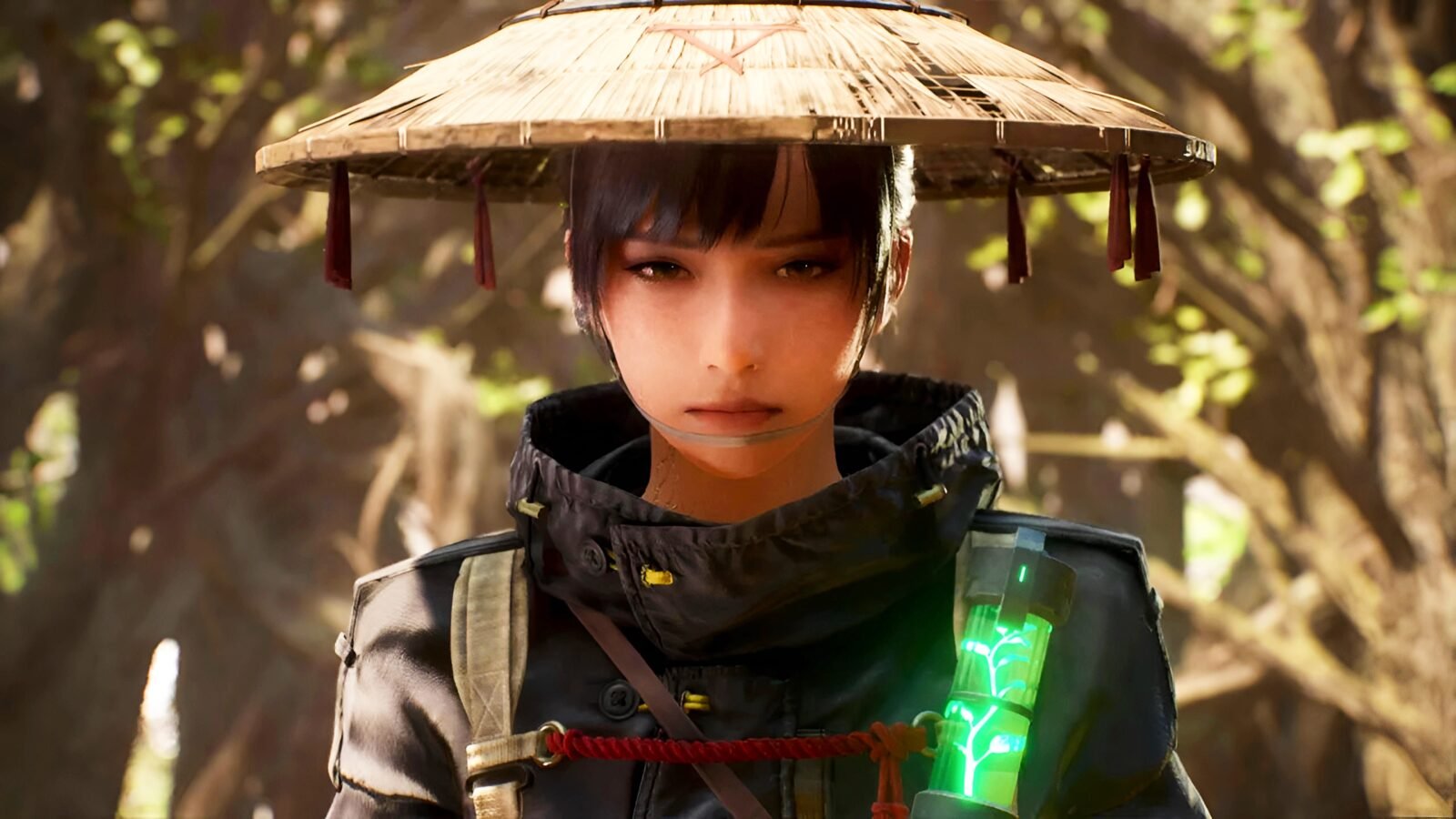
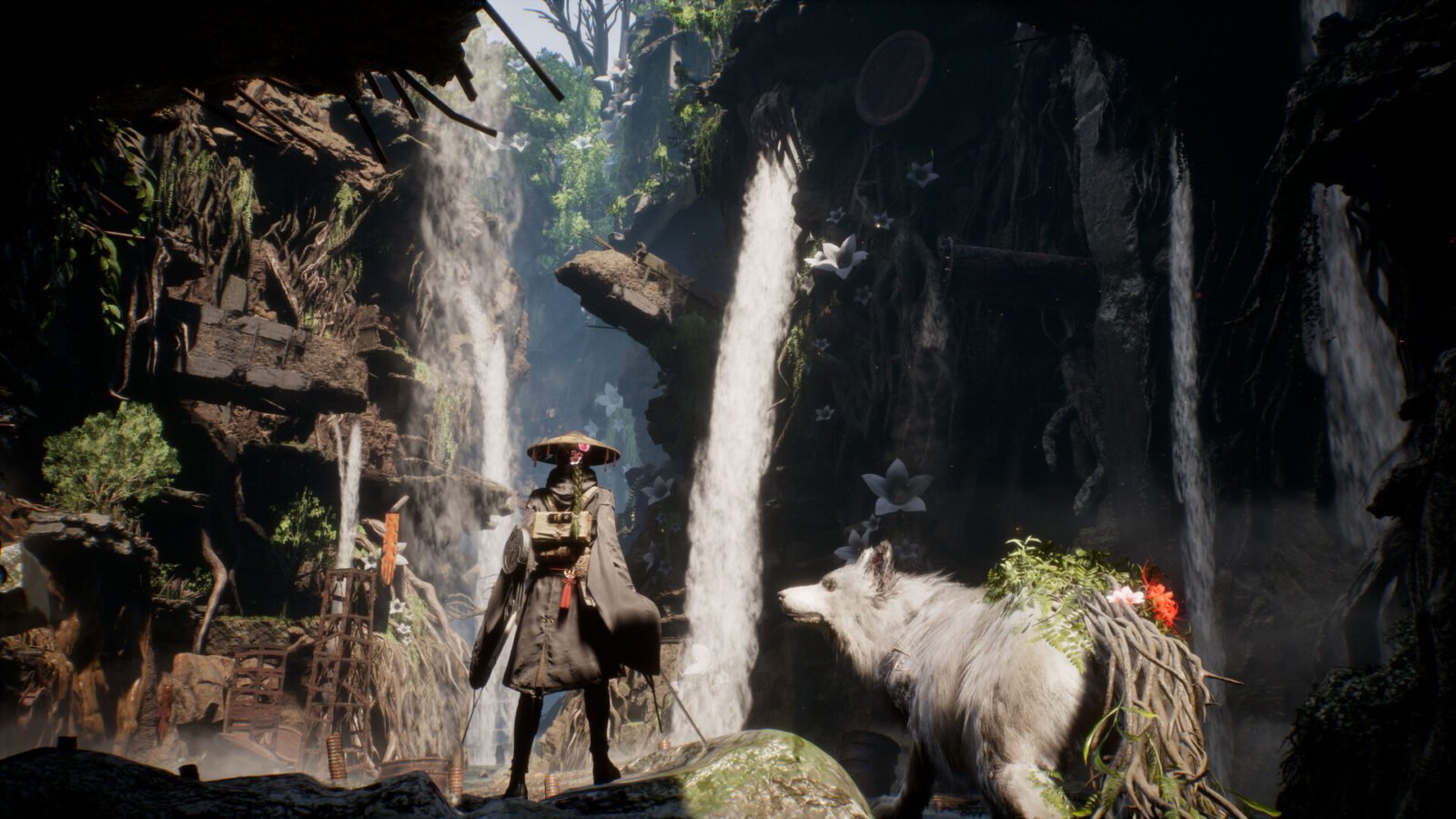
The setup is pure atmospheric bait. You play as Emma, a warrior already marked by the same blight that ended civilization, her body now capable of commanding plant life in ways that feel equal parts supernatural and desperately practical. Her companion is a dog named Koo whose special Bloom Arts turn the usual rhythm of combat into something stranger and more deliberate. On paper this is catnip for anyone who has ever wanted a more forgiving, more expressive cousin of FromSoftware’s precision combat systems. In practice the fantasy lands hardest in the quiet moments between fights, when you are flinging yourself across ruined structures on living vines or weaving temporary bridges over gaps that would otherwise stop progress cold. Those sequences deliver a genuine sense of physical agency that few recent action games bother to cultivate.
The Rhythm of Steel and Green
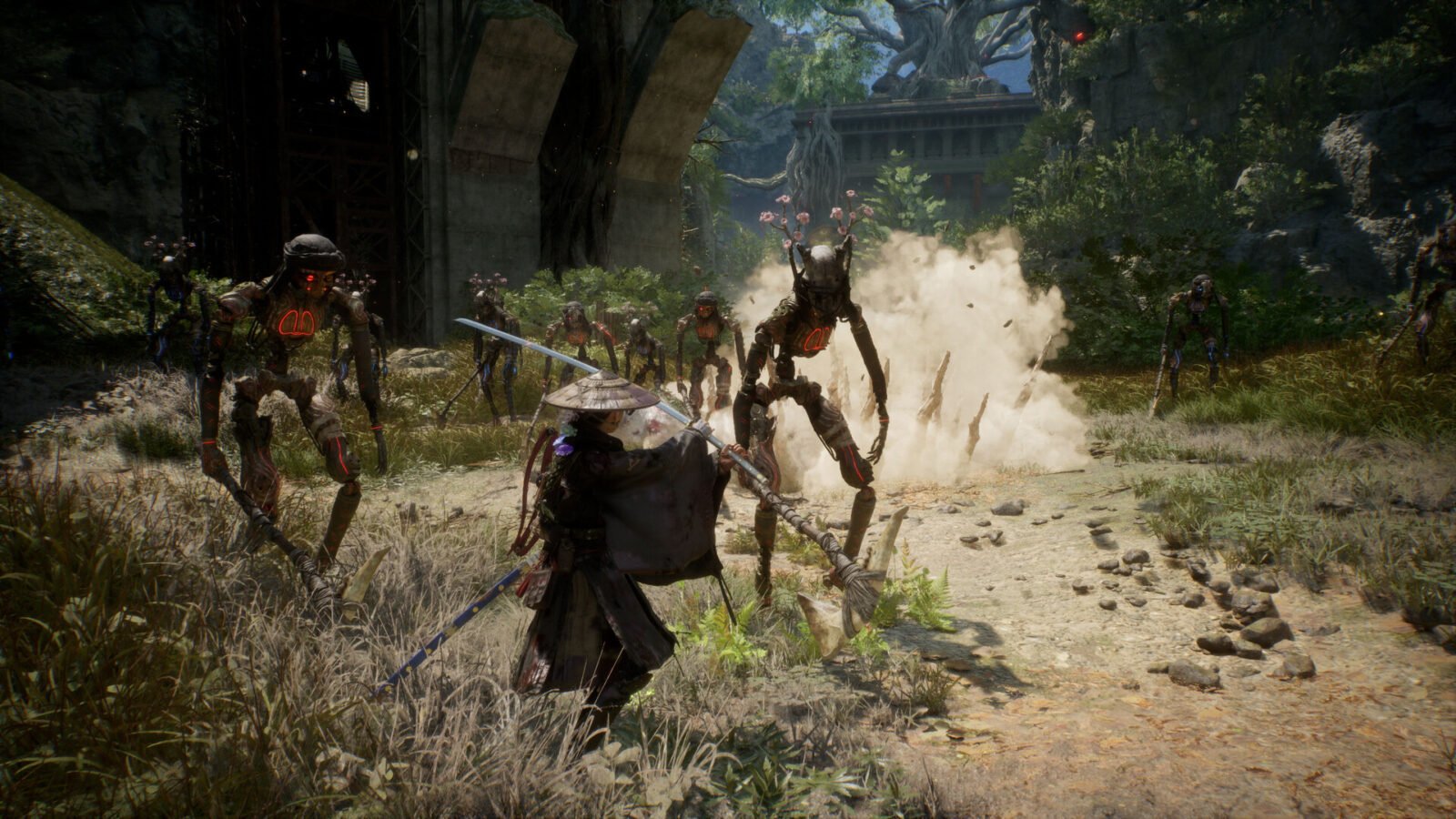
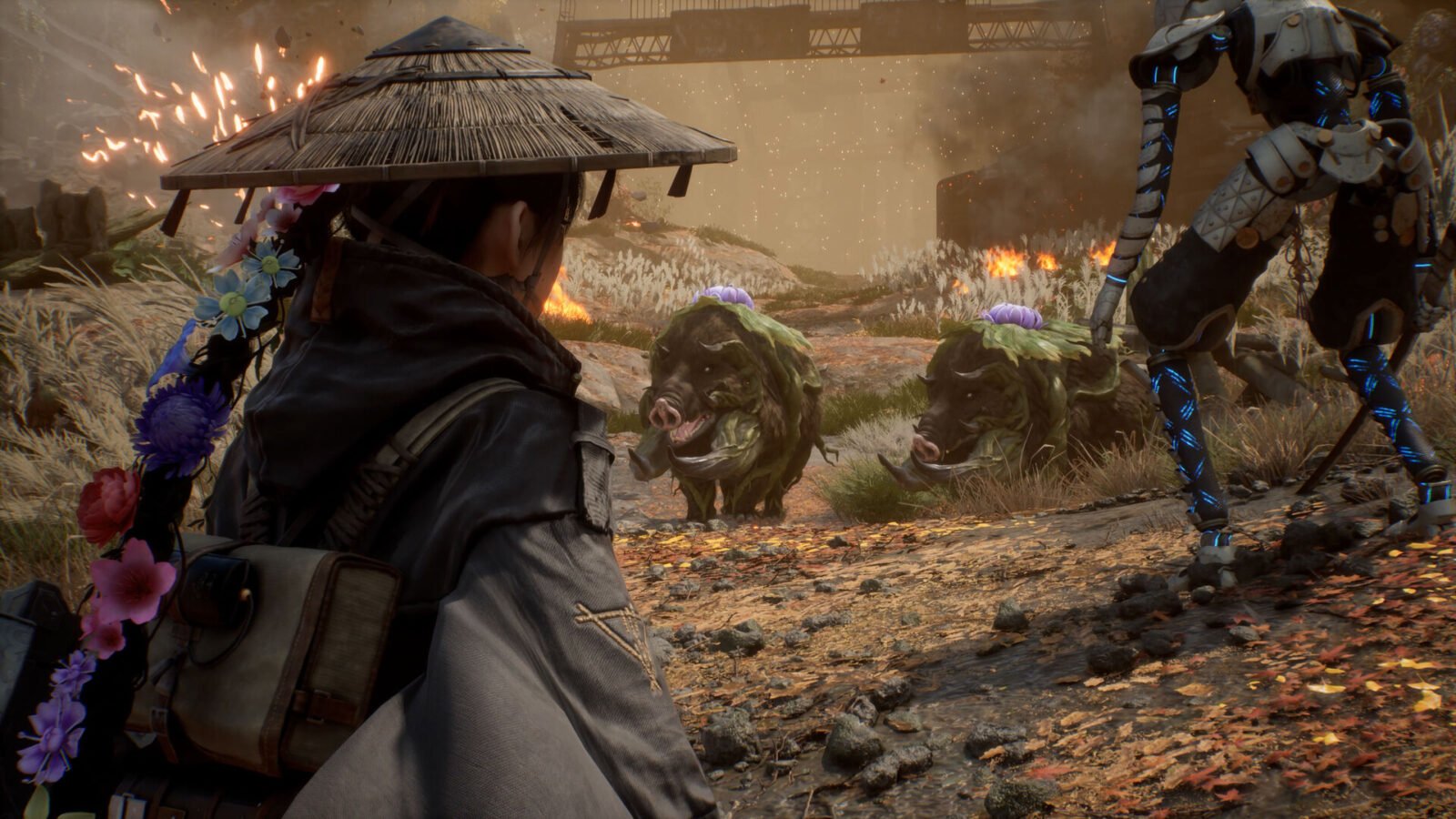
Combat is where Beast of Reincarnation feels most alive. The foundation is a parry-focused system that rewards timing over raw aggression. Land the deflection and you open enemies to stagger, which in turn feeds into Koo’s Bloom Arts. These special moves freeze the action long enough for a menu of options to appear, then demand a timed input to maximize the damage. The hybrid of real-time tension and brief turn-based decision-making gives the fights a personality that sets them apart from pure Soulslike clones. When everything clicks, the loop is deeply satisfying: read the tell, parry, trigger the slowdown, choose the flourish, and watch Emma and Koo dismantle something that looked insurmountable seconds earlier.
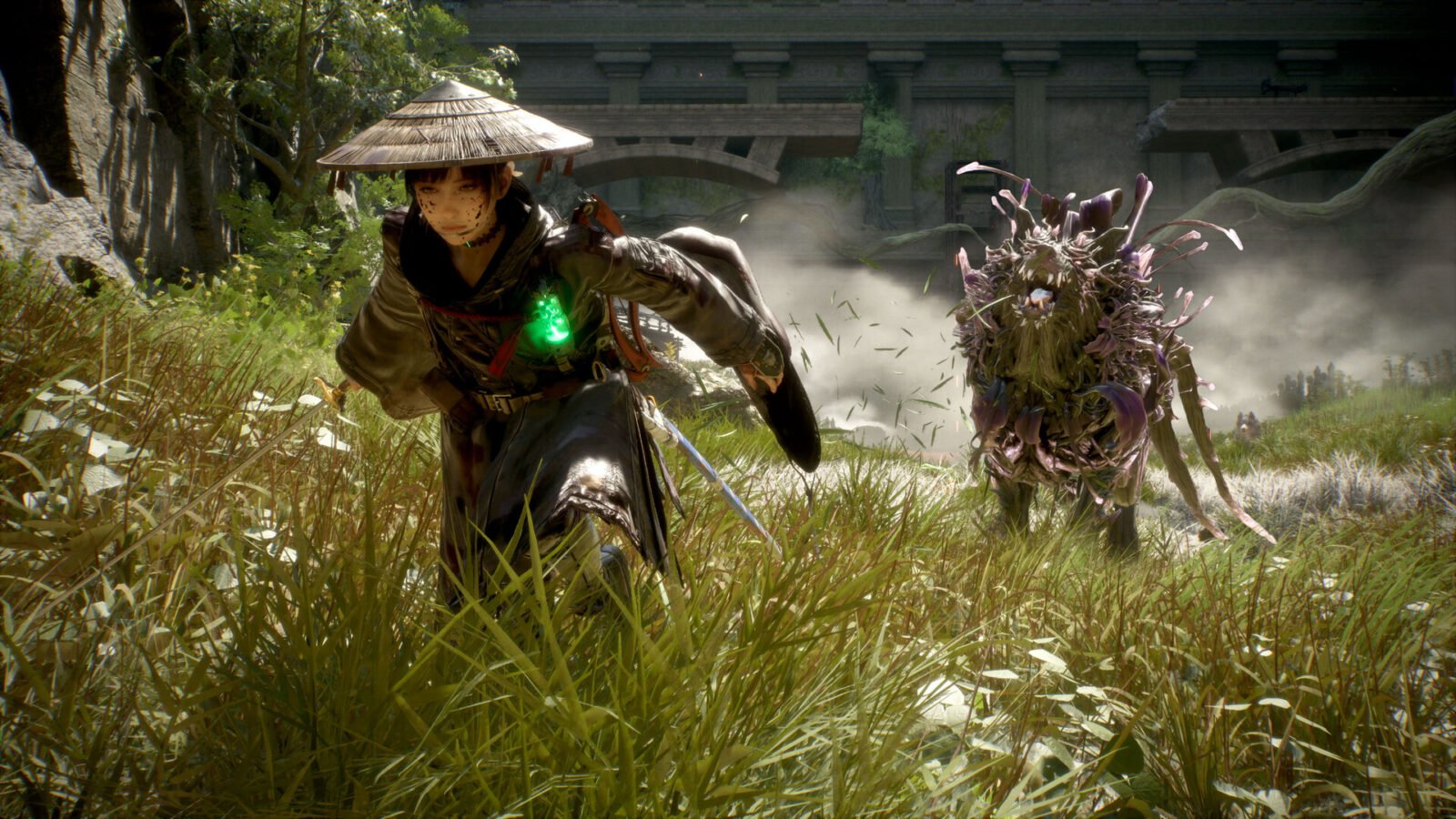
Exploration leans hard into the same plant powers. Vines lift Emma skyward, yank her across open air, and let her treat vertical architecture as playground rather than obstacle. The freedom is real and frequently joyful. You can ignore the critical path for long stretches, hunting new blades or clearing pockets of robotic golems simply because the movement feels good under your fingers. That freedom is the purest expression of the game’s ambition. It is also the part that makes the later shortcomings sting harder, because you can feel how much stronger the whole experience could have been if the rest of the design had matched this level of kinetic confidence.
A World That Forgot How to Surprise
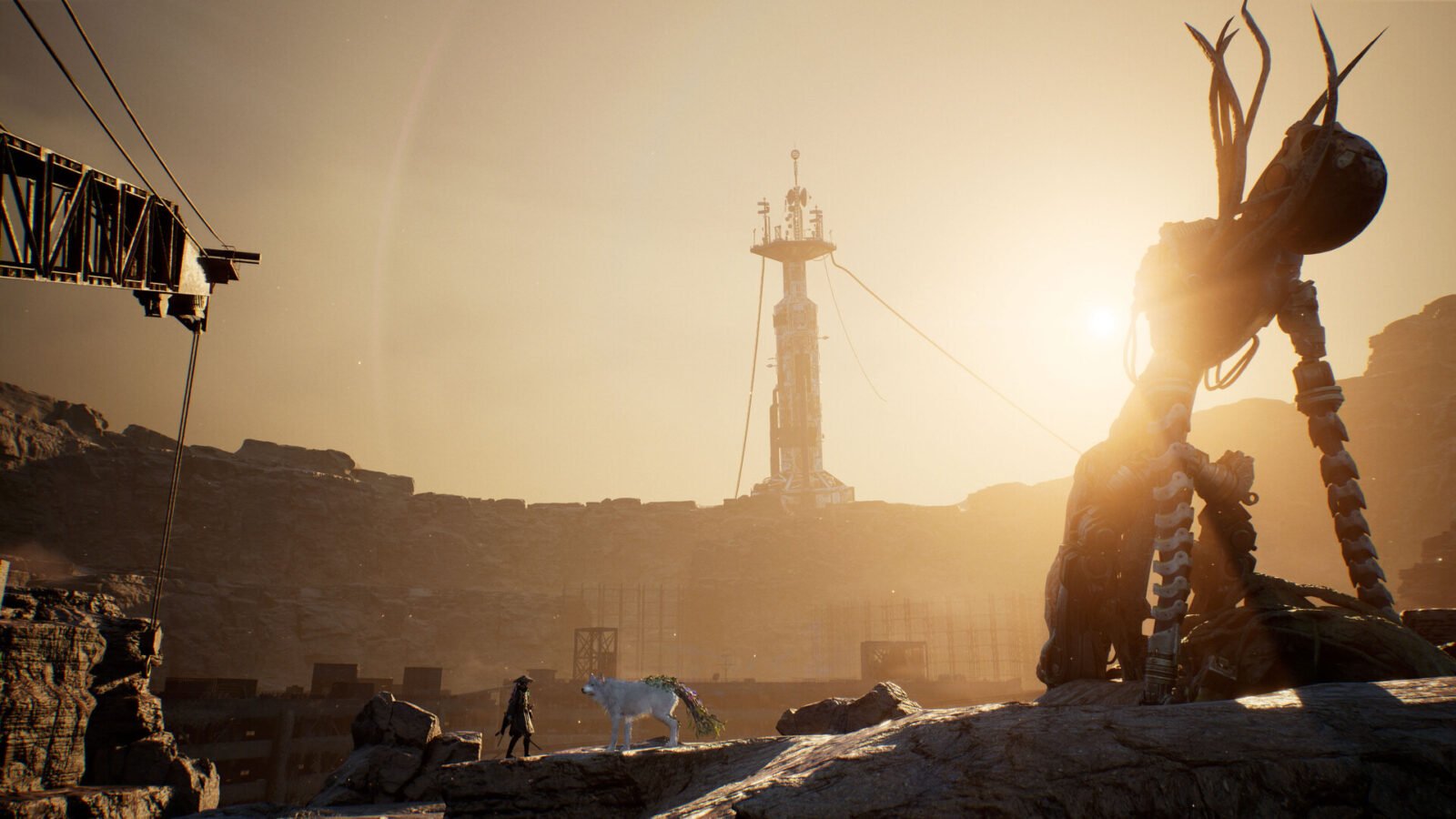
The larger map, however, rarely rewards that curiosity with genuine spectacle or discovery. Most regions share the same muted green-and-brown palette and the same sense of overgrown sameness. Texture pop-in and muddy surfaces appear often enough to pull you out of the moment, and the environmental storytelling never builds the kind of quiet awe that the best post-apocalyptic settings manage. You move through places that look like they should feel haunted or sacred or dangerous, yet the actual sensation is closer to walking through a large, slightly under-rendered theme park after the lights have been dimmed. The campfires and shortcuts are there, the structure is familiar, but the emotional charge never arrives.
Enemy variety suffers from the same lack of imagination. Early encounters introduce interesting shapes and behaviors, yet the roster quickly settles into familiar patterns. The bosses in particular become a study in diminishing returns. Most are oversized animals draped in foliage, and the game insists on making you fight them multiple times with only modest visual and mechanical upgrades between rounds. Attack patterns overlap more than they diverge. The repetition turns what should have been crescendo moments into chores. There is a special kind of fatigue that sets in when you realize the next big set-piece is essentially the previous one wearing a slightly different coat of leaves.
When the Script Becomes the Enemy
If the combat and traversal are the game’s best arguments, the story is its most persistent obstacle. Dialogue arrives in long, breathy monologues delivered by characters who stare past one another with the emotional range of mannequins. Cutscenes stretch far beyond their welcome. Exposition dumps appear at the worst possible moments, forcing you to stand in place while the plot lectures you at length. One late sequence in particular reduces the player to a glorified lever-puller while an unbroken stream of lore washes over the screen. The interesting ideas that occasionally surface—questions about the blight, about what Emma’s powers truly cost, about the relationship between the living and the mechanical—are smothered under the weight of poorly paced delivery and lifeless performances.
The result is a narrative that actively works against the game’s strengths. When you ignore the cutscenes and simply roam, the mechanical pleasures reassert themselves. Side paths, optional blades, and quiet pockets of combat remind you why the core systems were worth building in the first place. Yet the story keeps interrupting, and every interruption feels like a tax on the goodwill the gameplay has earned. By the time the credits roll after roughly twenty to twenty-five hours of mostly main-path progress, the sense of missed opportunity is hard to shake.
Controls That Occasionally Refuse the Call
Even the moment-to-moment feel is not entirely trustworthy. There are stretches where inputs lag or simply fail to register: a heal that never comes, a grapple that refuses to lock, a special ability that stays stubbornly dormant while an enemy winds up. These moments are not constant enough to break the game, but they are frequent enough to make some deaths feel cheap rather than earned. In a system built on precise timing, any unreliability in the controls becomes its own form of friction. The best fights still feel fair and exhilarating. The worst ones leave you wondering whether the failure was yours or the game’s.
The Vision That Never Fully Arrived
What lingers after the final boss is a clear picture of the game Beast of Reincarnation wanted to be. You can see the ambition in the vine traversal, in the hybrid combat rhythm, in the willingness of a studio famous for one kind of game to attempt something this mechanically distinct. You can even feel the residual pleasure of returning after the credits to clear leftover areas and test new weapons. That residual pleasure is real. It is also not enough to paper over the repetitive bosses, the forgettable world, the lifeless storytelling, and the occasional control hiccups that keep the experience from ever fully coiling into something special.
Beast of Reincarnation is the kind of project that makes you root for the next attempt. The foundation is sturdy enough that a tighter focus, more inventive enemy design, and a story that trusted its players instead of lecturing them could have produced something genuinely memorable. As it stands, the game is a solid mechanical experiment wrapped in too many compromises. It is worth playing for the moments when Emma and Koo move in perfect, plant-powered sync. It is harder to recommend as a complete adventure.