
TL;DR: A gently surreal co-op walking adventure that turns proximity chat, shared discovery, and soft puzzle-solving into something quietly special. Best experienced with a patient, slightly chaotic friend group that is happy to invent its own rules along the way.
Big Walk
There is a particular kind of magic that only happens when you and a handful of friends commit to getting gloriously lost in the same digital space at the same time. Most co-op games these days either throw you into endless waves of enemies or lean so hard into the “just vibes” category that the experience collapses the moment anyone actually wants to achieve something. Big Walk refuses both extremes. It sits in this strange, lovely middle ground where the simple act of walking becomes the entire point, and the world around you is designed to reward curiosity, miscommunication, and the occasional spectacular failure of coordination. What House House has built here feels less like a traditional game and more like a shared dream that somehow came with excellent physics and proximity voice chat.
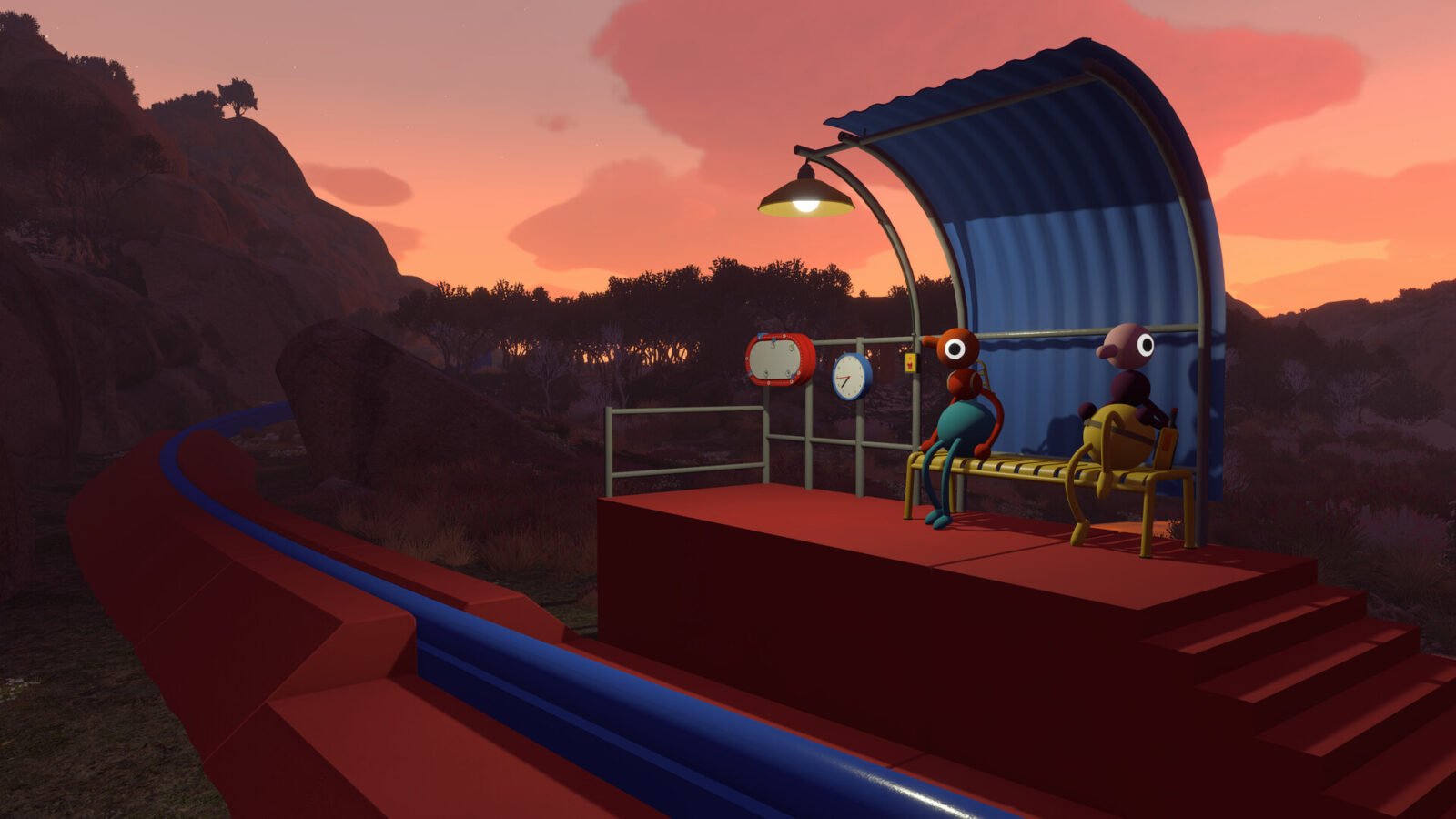
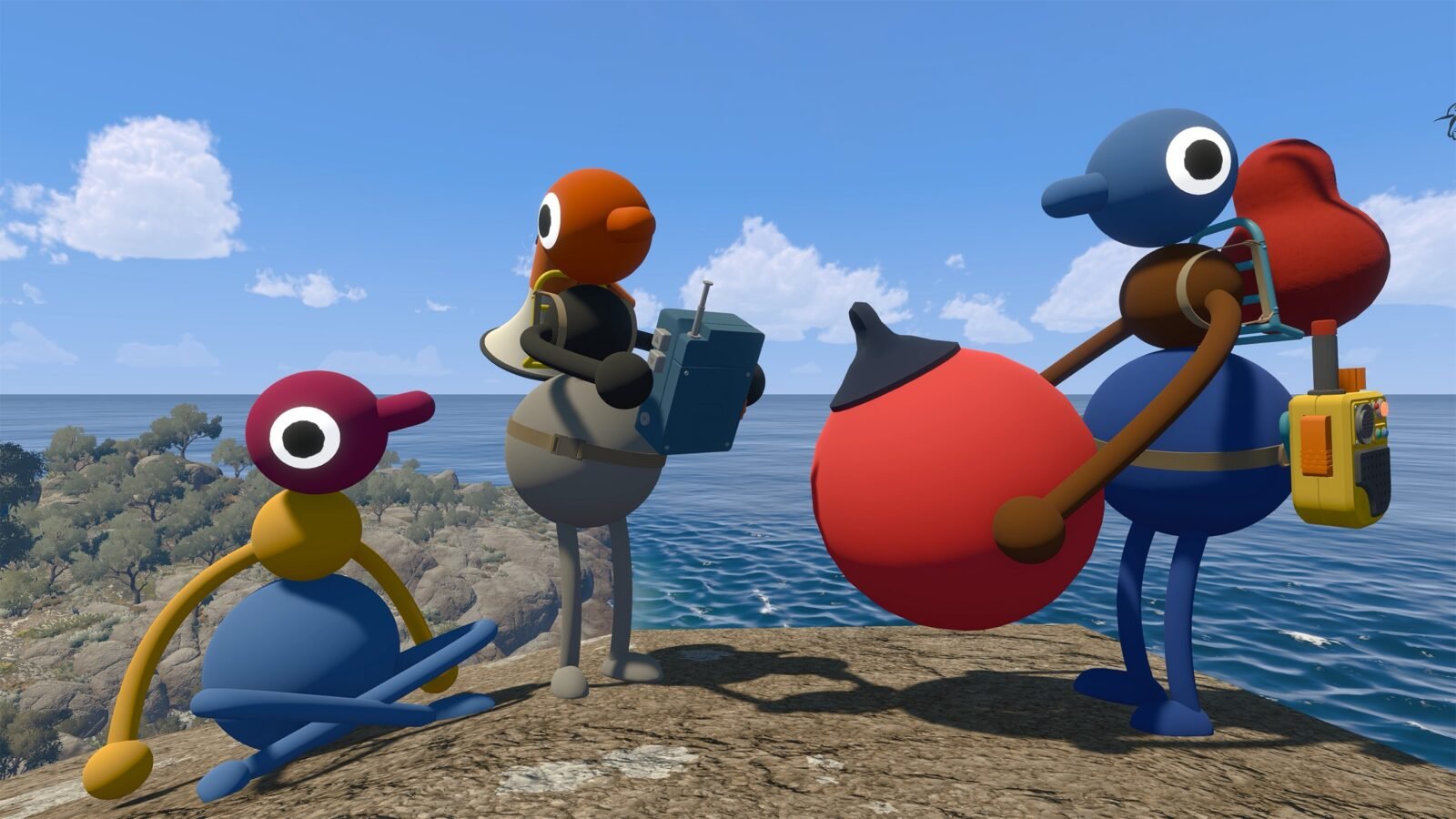
I went in expecting something closer to a digital hangout lounge with light puzzle seasoning. What I found instead was a meticulously crafted open-world escape room that never puts a clock on the wall. You and your group of two to twelve players drop into a landscape that feels handmade and slightly unhinged in the best way. The inhabitants are these soft, duck-like creatures whose body language does half the storytelling for you. They can walk, scramble, stack on top of one another like a living tower of silly ambition, and express themselves through the kind of physical comedy that Untitled Goose Game perfected years ago. Watching three friends try to form a human (well, duck) ladder while a fourth person frantically waves their arms from a distant cliff is pure co-op theater.
Why the World Feels Alive Even When Nothing Is Happening
The first hour or so of Big Walk is deliberately slow. You are not handed a quest log screaming at you to hurry. Instead the landscape itself becomes the invitation. Rolling hills give way to odd geometric structures, quiet rivers that somehow feel important, and little environmental details that only make sense once someone in the group decides to poke them. Because the game leans so heavily on proximity chat, distance becomes a design tool rather than a inconvenience. Walk far enough from your friends and their voices fade into soft static, then silence. That single mechanical choice turns every separation into a small adventure. Suddenly the group starts inventing its own language. “Meet at the spiky rock that looks like a disappointed hat” becomes a perfectly reasonable navigation instruction after about twenty minutes of shared discovery.
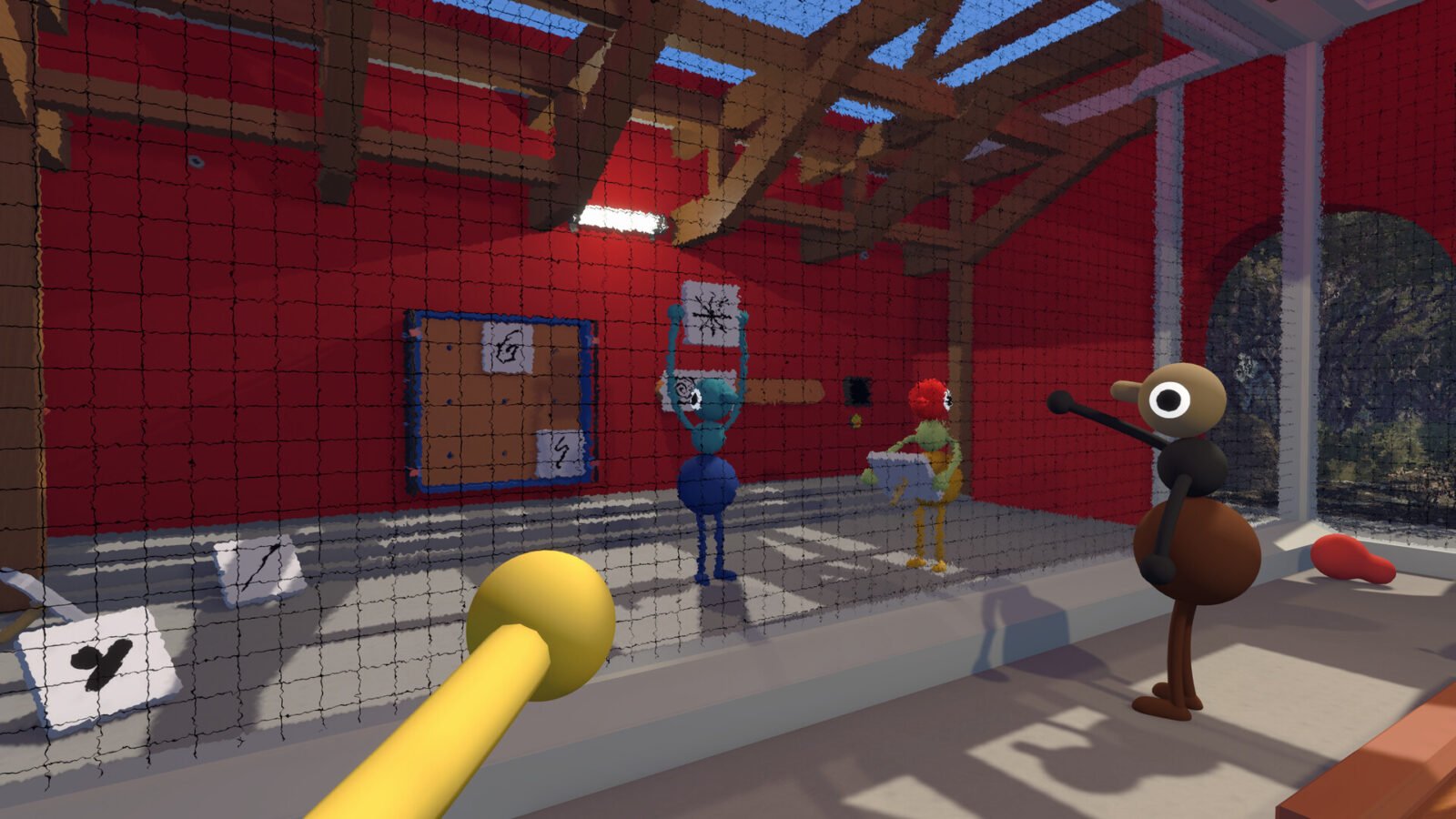
I spent an entire evening with three regular collaborators just trying to map the early areas without solving a single formal puzzle. We named landmarks. We got separated. We used the flare guns and binoculars more for dramatic effect than actual utility. One of us found a whiteboard and started leaving increasingly unhelpful messages that the rest of us would discover hours later. That session felt more memorable than most heavily scripted co-op campaigns I have finished in recent years. The game never punished us for ignoring the critical path. It simply waited, patient and slightly amused, until we were ready to engage with its stranger challenges.
Puzzles That Respect Your Group’s Rhythm
When the puzzles do arrive, they feel designed by people who understand how friend groups actually think. Mechanics rarely repeat in the same way twice. One sequence might require precise physical stacking and timing. Another might demand that part of the group stays completely silent while others communicate from a distance. Some solutions only become obvious once someone wanders off and finds an object that, on its own, seems completely useless. The best part is that the game almost never forces a single correct approach. If your particular collection of humans is better at chaotic improvisation than careful planning, Big Walk usually has room for that energy.
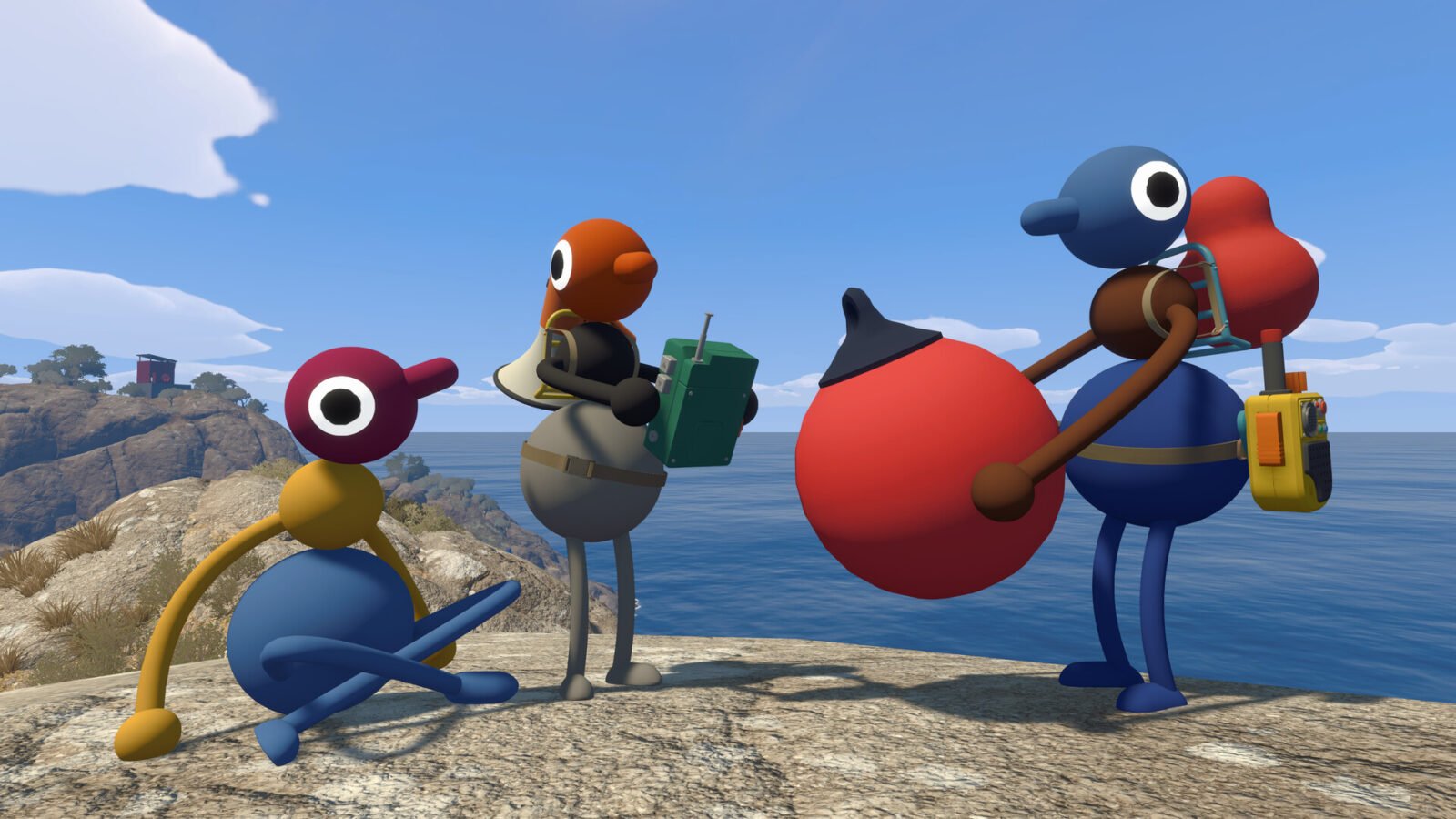
There is a quiet confidence in how the difficulty curves. Early challenges feel playful and slightly absurd. Later ones demand genuine coordination without ever tipping into frustration for the sake of it. Because you can always walk away from a problem and come back later with fresh eyes (or a newly discovered tool), the classic “we’re stuck and the mood is dying” death spiral that kills so many co-op sessions simply does not happen as often here. The world is large enough and strange enough that someone will always find something new to show the others.
The Soft Edges and the Hard Rules
Of course, Big Walk is not interested in being everything to everyone. It is unapologetically a multiplayer experience. There is no solo mode, and attempting to force one would break most of the puzzle design. Save progress lives with the host, which means the same person needs to start the session every time if you want continuity. Cross-play works, but the social logistics of getting everyone online at the same moment remain a very human problem that no amount of elegant code can fully solve. These are real constraints, and they will matter more to some groups than others.
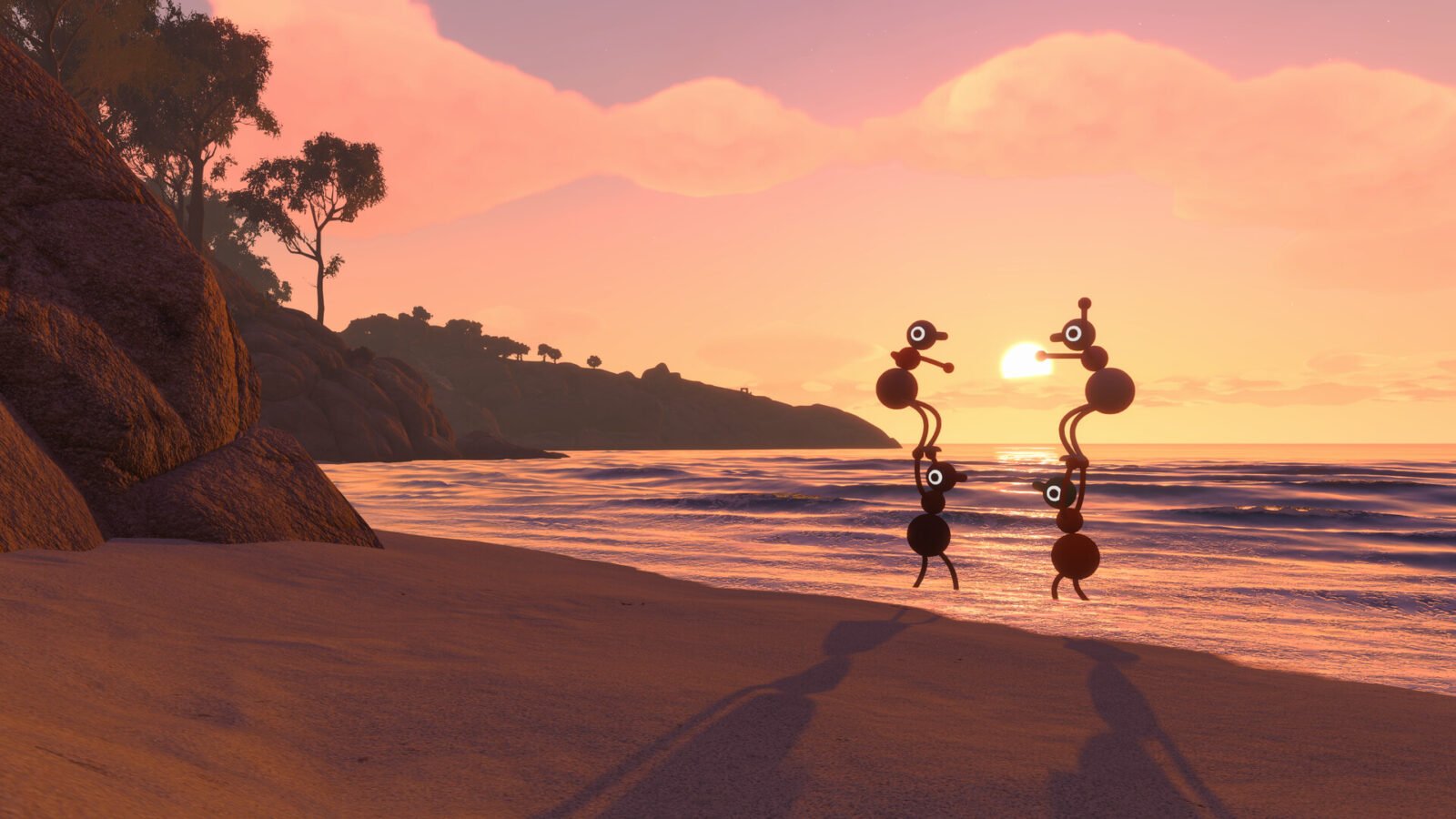
I found that the limitations actually sharpened the experience. Knowing that our progress depended on the same host showing up created a gentle accountability that made each session feel special rather than disposable. The proximity chat system, once you stop fighting it and start treating it as a core design pillar, becomes one of the most charming communication tools I have used in a game. Voices rise and fall with distance. Yelling across a canyon feels ridiculous and perfect at the same time. Losing someone in the fog and then hearing their voice slowly return as you climb a ridge is the kind of small emotional beat that most games never even attempt.
Living Inside the Soft Strangeness
Visually the game is not trying to dazzle with hyper-realistic lighting or cinematic set pieces. The art direction is soft, slightly surreal, and full of personality. Animations carry an enormous amount of the humor and warmth. The way these little creatures move, react, and interact with the world is constantly entertaining even when you are simply standing still and watching a friend attempt something ambitious. Audio design matches that intention beautifully. Environmental sounds feel thoughtful rather than busy, and the proximity voice system sits right in the middle of everything without ever becoming distracting.
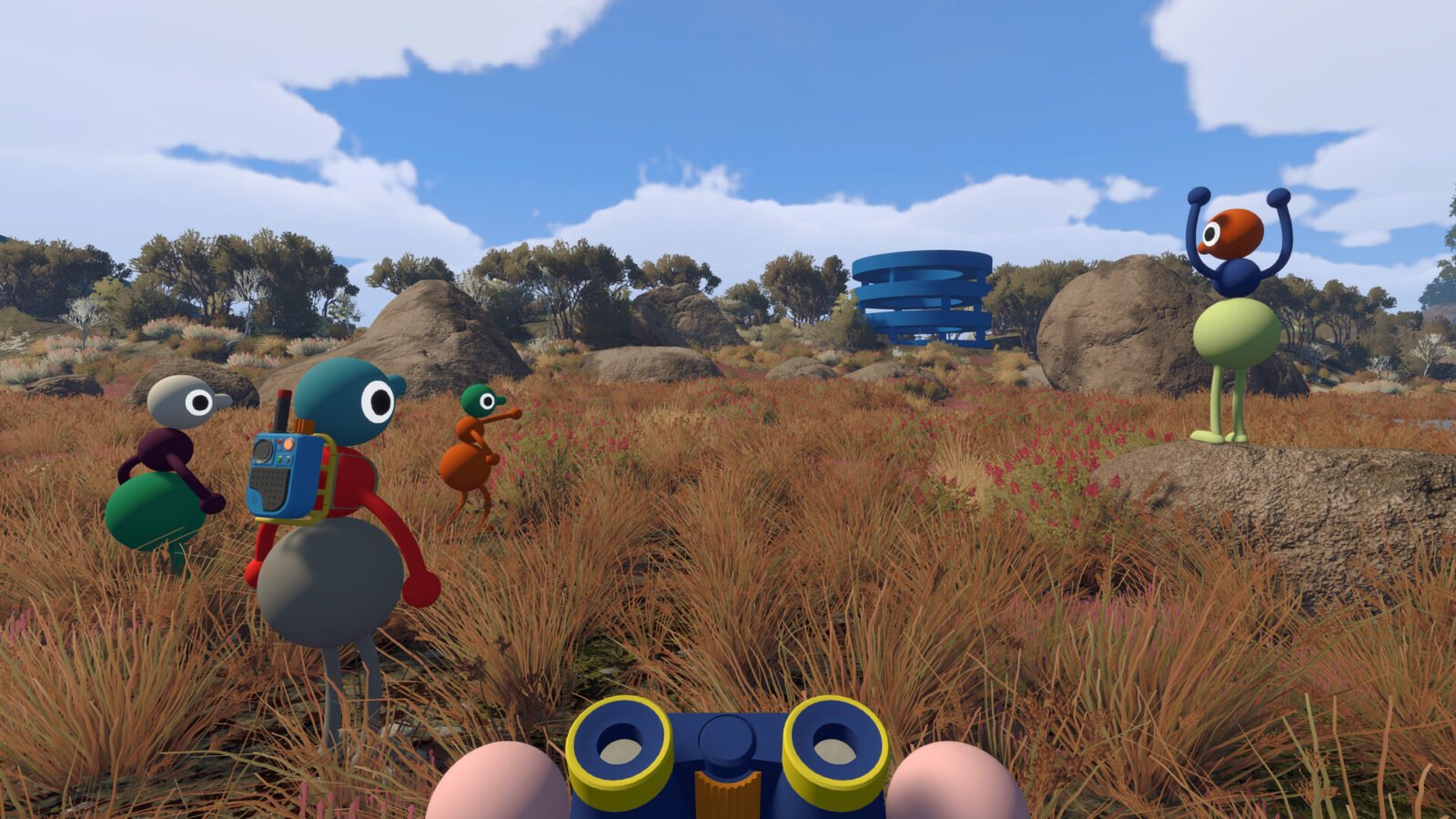
What surprised me most was how quickly our group started treating the world like a shared private space rather than a game level. We developed inside jokes tied to specific locations. We returned to earlier areas just to show each other things we had missed. The ten-to-twenty-hour runtime (depending on how much you stop to explore) never felt padded because the joy was not in checking boxes. It was in the accumulating collection of weird little stories that only existed because we were there together.
House House has a rare ability to take something that looks simple on the surface and fill it with quiet complexity. Untitled Goose Game taught an entire generation that chaos could be gentle and deeply funny. Big Walk takes that same spirit of playful irreverence and stretches it across an entire landscape designed for shared wandering. It trusts its players to bring their own personalities into the space and then gives those personalities room to bounce off one another in unexpected ways.
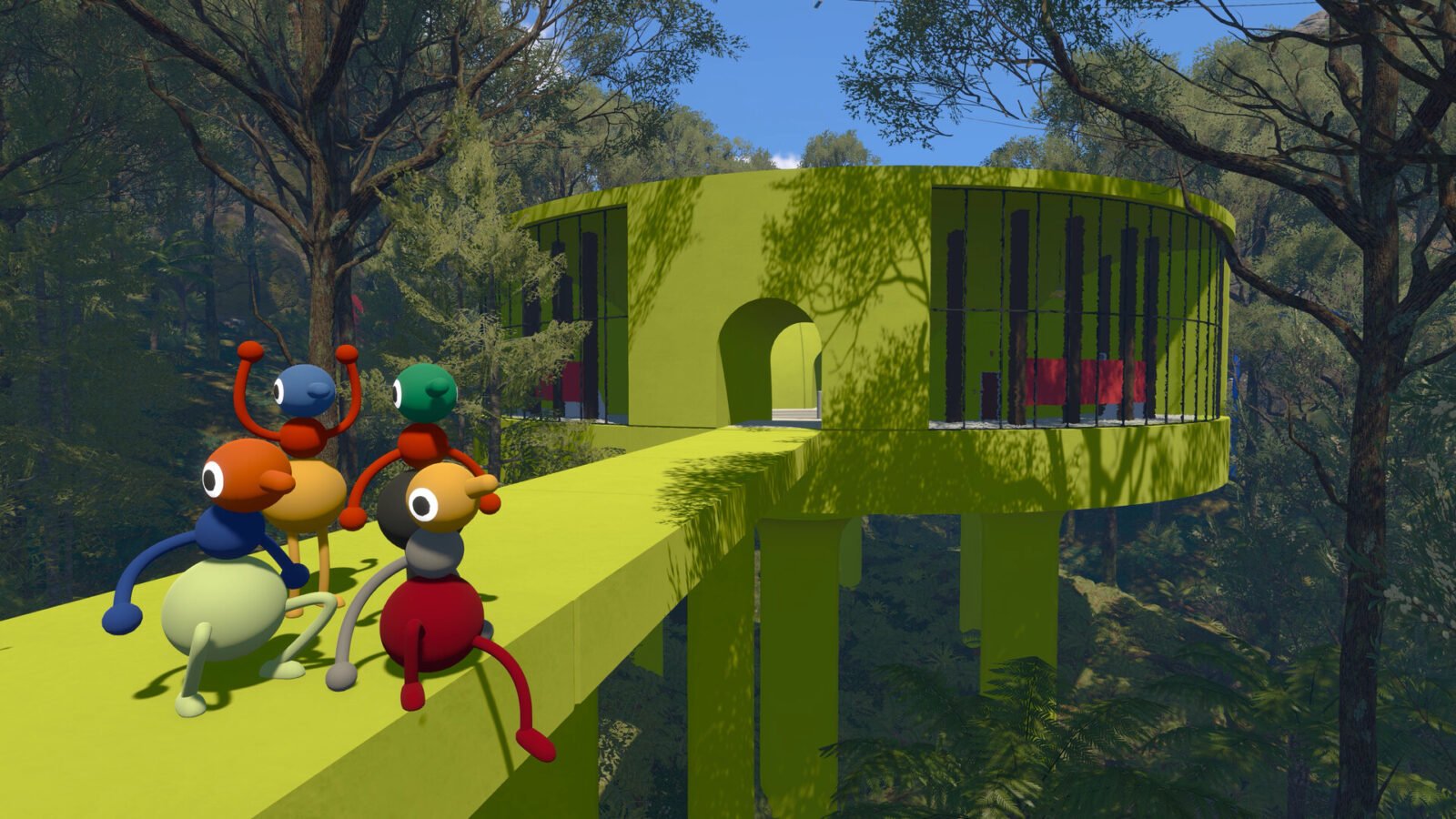
There are moments when the design feels uneven, when one area lands more elegantly than the next, but those imperfections rarely undercut the overall feeling of discovery. The game is at its best when your group is slightly lost, slightly ridiculous, and completely invested in figuring out the next small mystery together. In a market full of loud, over-explained multiplayer experiences, Big Walk’s willingness to stay soft-spoken and open-ended feels almost radical.
Verdict
Big Walk is one of those rare co-op games that understands the difference between playing together and simply occupying the same digital room. It rewards curiosity, tolerates chaos, and turns the simple act of walking into something surprisingly profound. The technical and social constraints are real, but for the right group of people they become part of the charm rather than obstacles. If you have a small circle of friends who enjoy getting lost on purpose and inventing their own language along the way, this is a journey worth taking.