
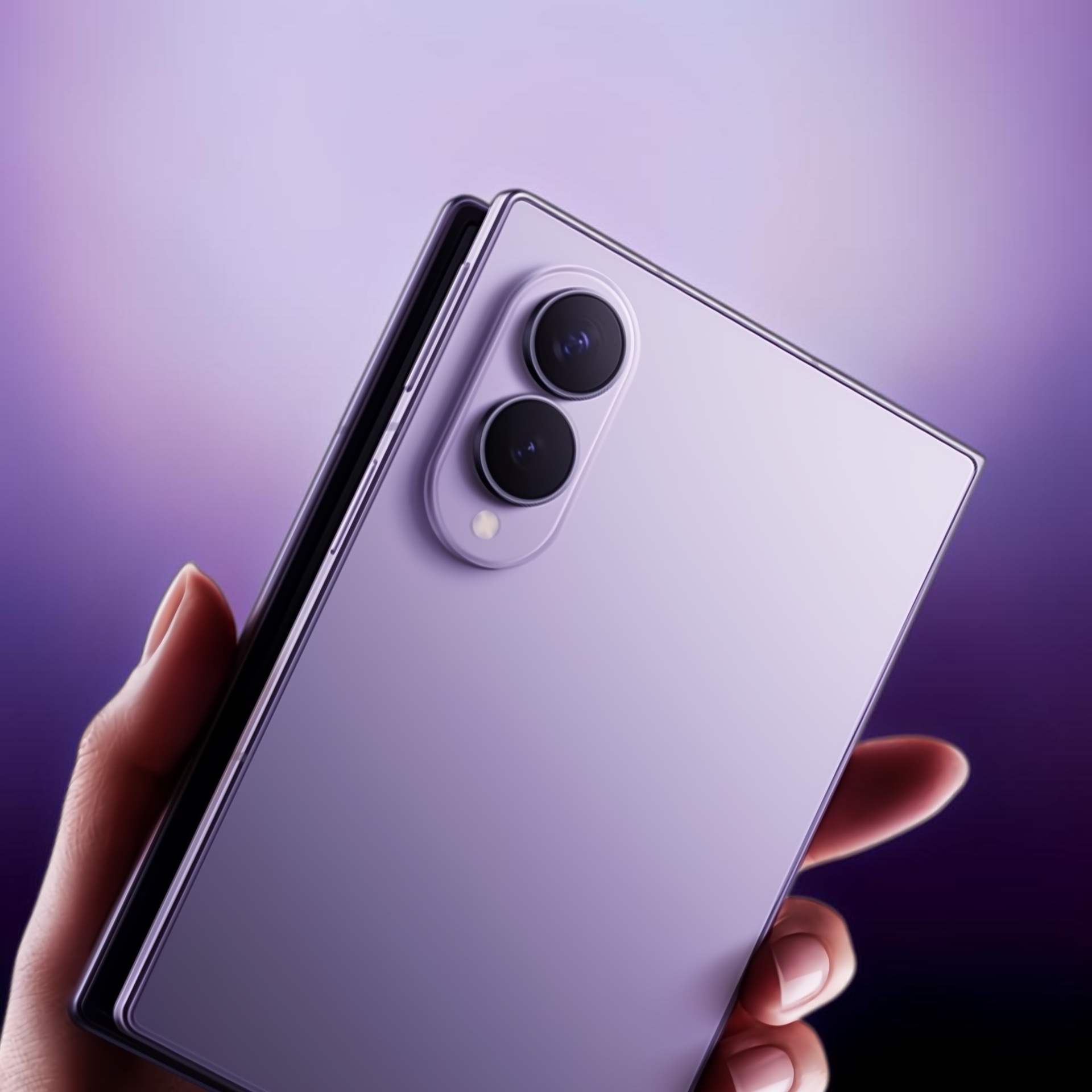
TL;DR: The Samsung Galaxy Z Fold8 trades maximum specifications for something more valuable: balance. At 201 grams with a compact 5.5-inch cover screen, excellent 7.6-inch 4:3 display, flagship Snapdragon performance and 4,800mAh battery, it’s Samsung’s most approachable book-style foldable yet, although the missing telephoto camera and S Pen support remain frustrating compromises.
Foldable phones stopped being science-fiction props several generations ago, but that doesn’t mean the category has finished figuring itself out. Every year has chipped away at the obvious problems: hinges became tougher, bodies became thinner, creases became less distracting and software stopped panicking whenever an app encountered a display shaped differently from the rectangle it expected. The Samsung Galaxy Z Fold8 feels like the point where those improvements are finally being organised around something more important than technological flexing.
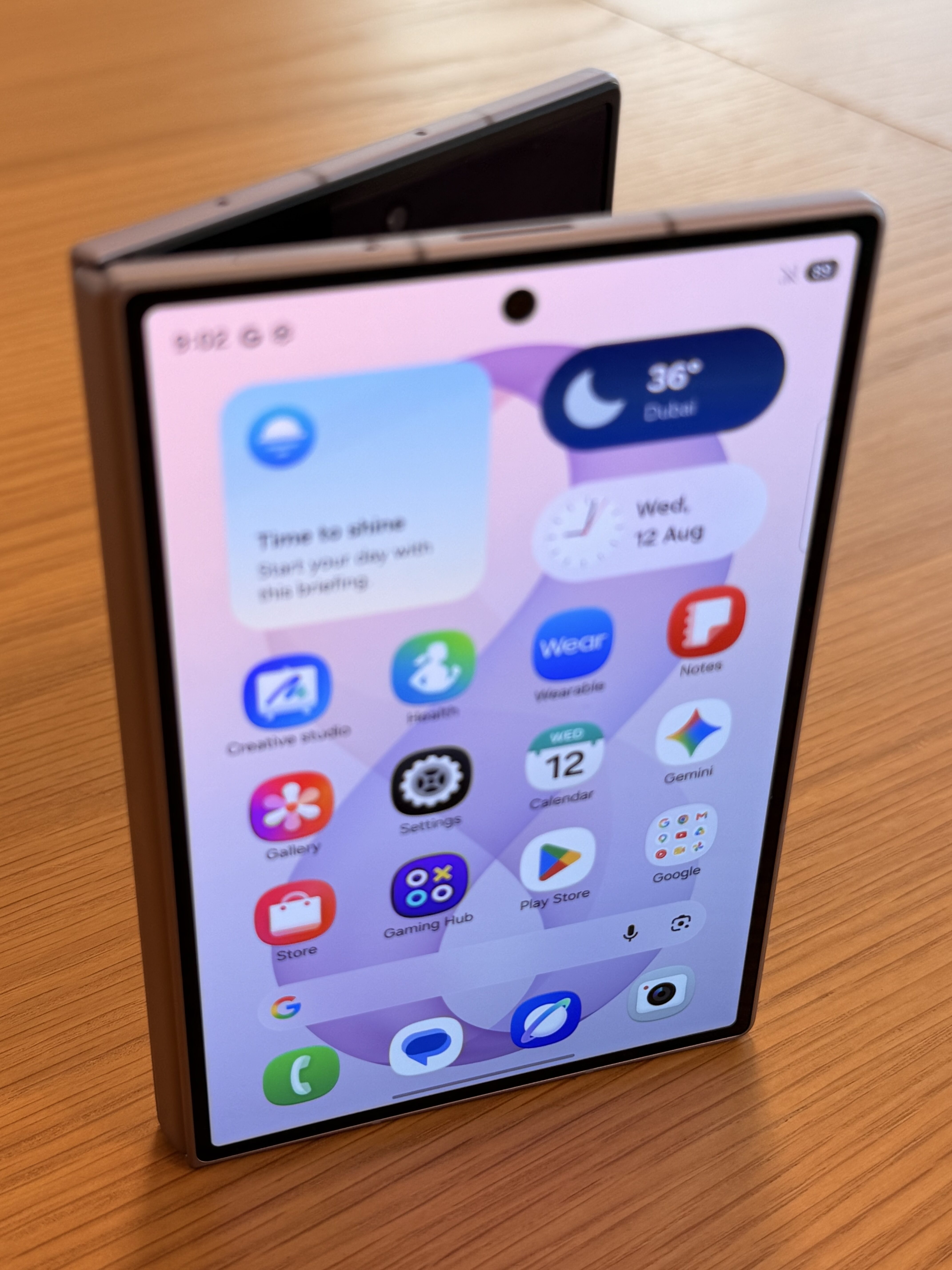
Samsung has redesigned the standard Fold around portability and content consumption, while the Galaxy Z Fold8 Ultra now carries the larger, productivity-focused torch. That distinction gives the regular Fold8 an identity of its own, and after spending time with its unusually compact proportions, 201-gram chassis and 4:3 inner display, I’m convinced this might be the more interesting interpretation of Samsung’s foldable formula.
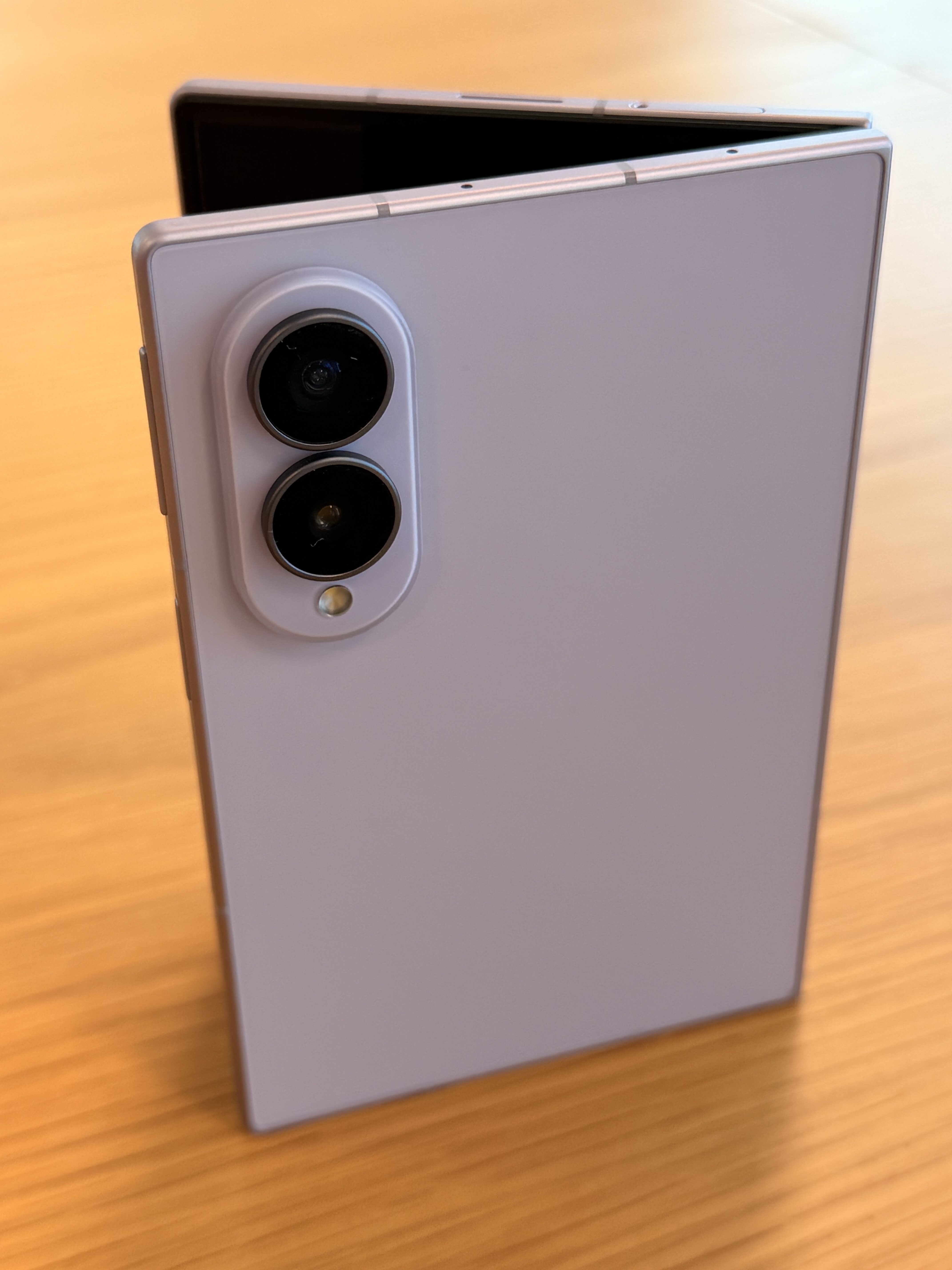
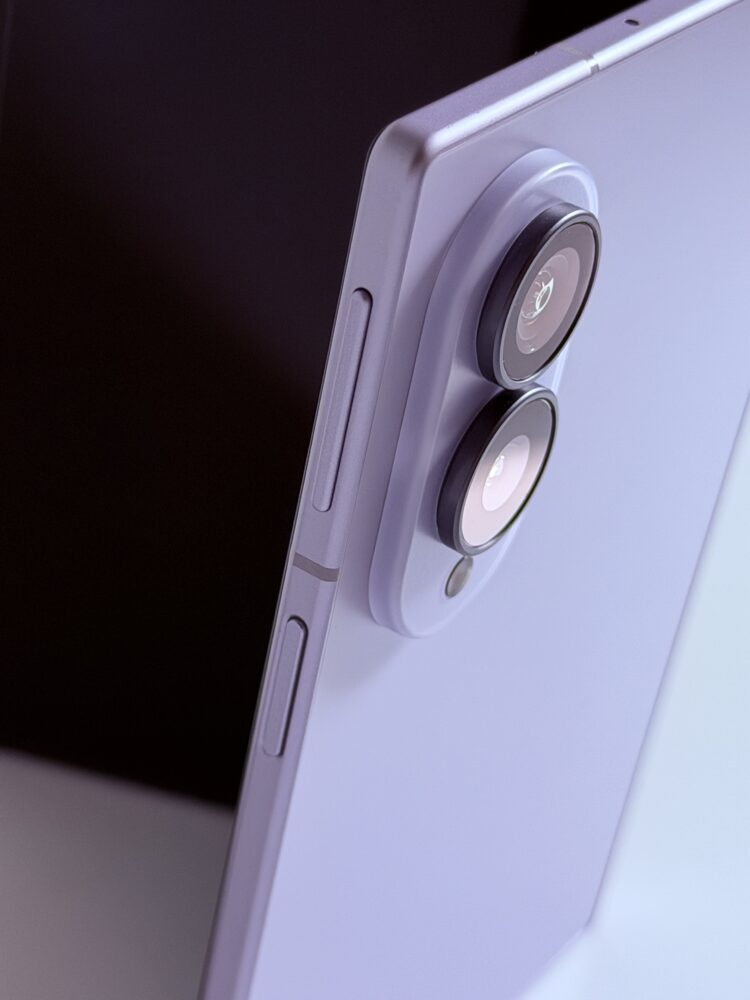
Samsung’s official specifications reinforce how deliberately different this model is. The Galaxy Z Fold8 combines a 5.5-inch cover screen with a 7.6-inch folding display, measures only 4.5mm thick when unfolded and carries a 4,800mAh battery despite being Samsung’s lightest Fold yet. Inside is the Snapdragon 8 Elite Gen 5 for Galaxy, while the rear camera system consists of 50MP wide and 50MP ultra-wide sensors. None of those ingredients individually revolutionises the category, but together they create something foldables have historically struggled to deliver: a device that doesn’t constantly remind you that you’re carrying an engineering compromise. The Fold8 feels less like a tablet folded reluctantly into your pocket and more like a small phone that happens to contain a tablet when you need one.
A new Fold philosophy instead of another annual resize
The most significant change isn’t something you’ll find buried in a processor benchmark. Samsung has effectively split the traditional Fold concept into two personalities. The Galaxy Z Fold8 Ultra provides the larger 6.5-inch cover display and 8-inch main screen, while the standard Fold8 shrinks those dimensions to 5.5 and 7.6 inches respectively. The Ultra is clearly positioned toward maximum workspace, while the Fold8 concentrates on portability, media and quick everyday interactions. Samsung itself describes the regular model as being designed around both short-form and long-form content, and unusually for marketing language, that description maps surprisingly well onto how the hardware actually behaves.
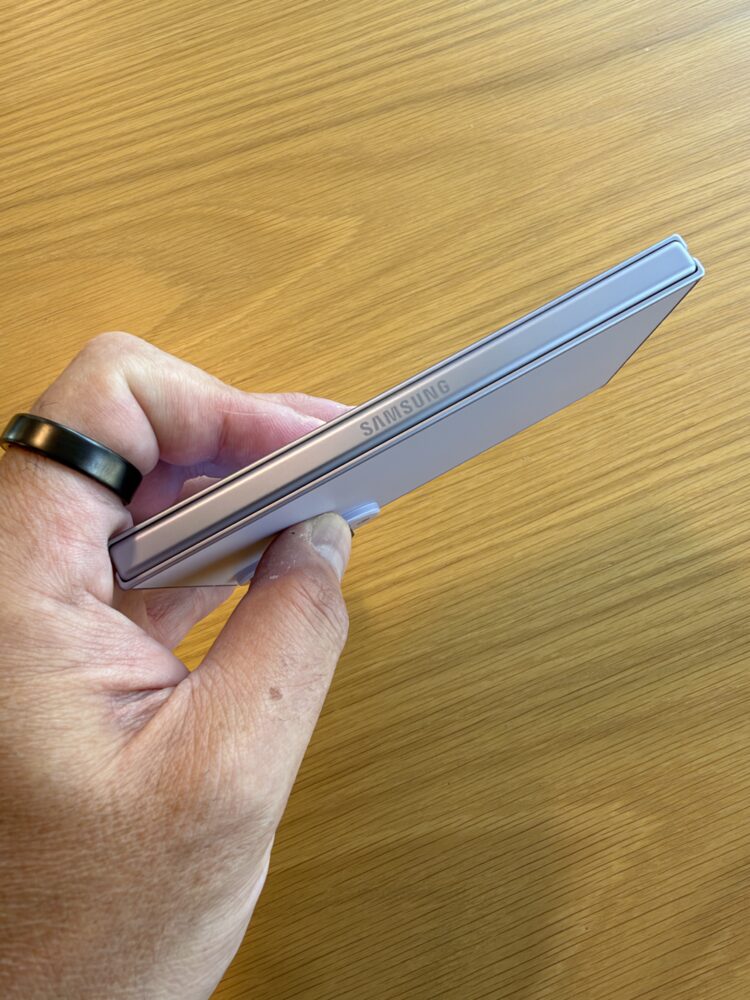
At 201 grams, the Galaxy Z Fold8 is particularly impressive because weight has always been one of the invisible taxes attached to book-style foldables. Samsung’s larger Fold8 Ultra weighs 215 grams, meaning the regular Fold isn’t simply smaller for the sake of product segmentation; its reduced dimensions deliver an immediately noticeable ergonomic advantage. The 4.5mm unfolded thickness is equally ridiculous when you remember there is a flexible display, hinge, battery and substantial computing hardware inside. Fold it closed and the device remains remarkably manageable, eliminating much of the brick-like sensation that once made book-style foldables feel as though somebody had taped two flagship phones together and declared victory.
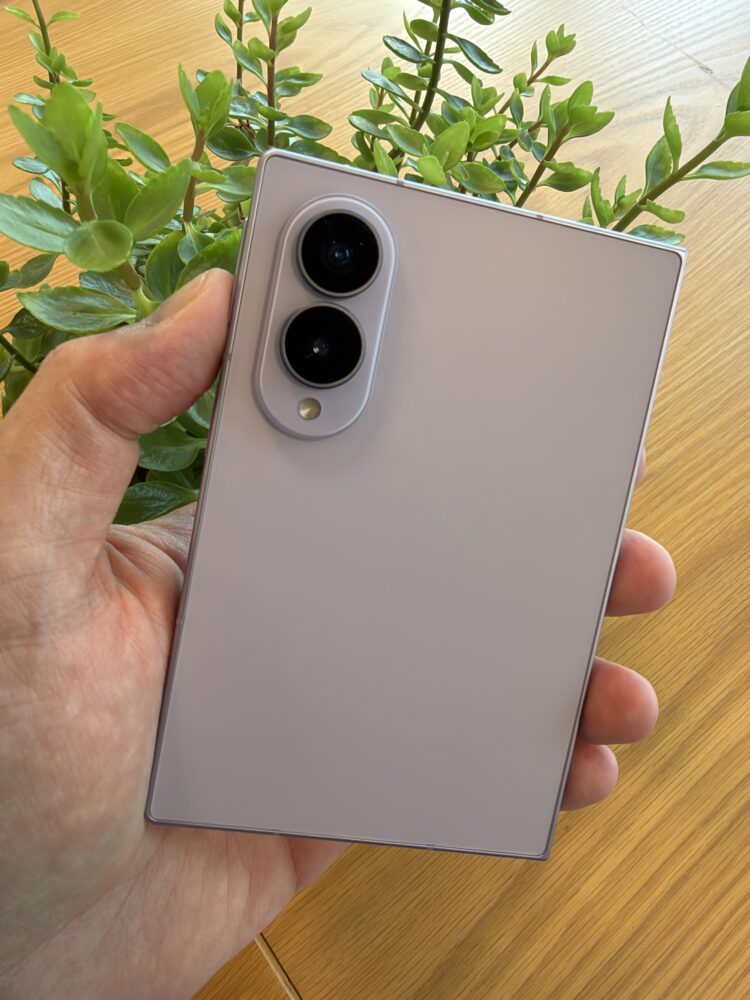
That lighter construction changes how frequently I actually want to use the Fold as a Fold. Earlier models occasionally encouraged me to leave them closed for minor tasks because unfolding felt unnecessarily ceremonial. With the Fold8, opening the device becomes almost unconscious. Notifications, quick messages and music controls remain perfectly suited to the cover screen, while an article, photo gallery, game, document or longer conversation quickly earns the larger canvas. That distinction is crucial because the best foldable shouldn’t force you to use its internal screen simply to justify the purchase. It should make both states valuable enough that moving between them becomes part of your normal interaction with the device.
The 5.5-inch cover screen is strange until it suddenly isn’t
The 5.5-inch cover display is one of the Fold8’s more controversial design decisions because we’ve spent years watching manufacturers make foldable cover screens increasingly similar to conventional smartphones. Samsung has deliberately stepped sideways. Its 10:16 aspect ratio creates something compact, broad and immediately distinctive, giving the folded device a footprint that feels unusually manageable in one hand. The 1972 x 1248 Dynamic AMOLED 2X panel remains technically premium, with an adaptive refresh rate reaching 120Hz and peak brightness rated at 3,000 nits, so the smaller dimensions aren’t accompanied by a downgrade in display quality.
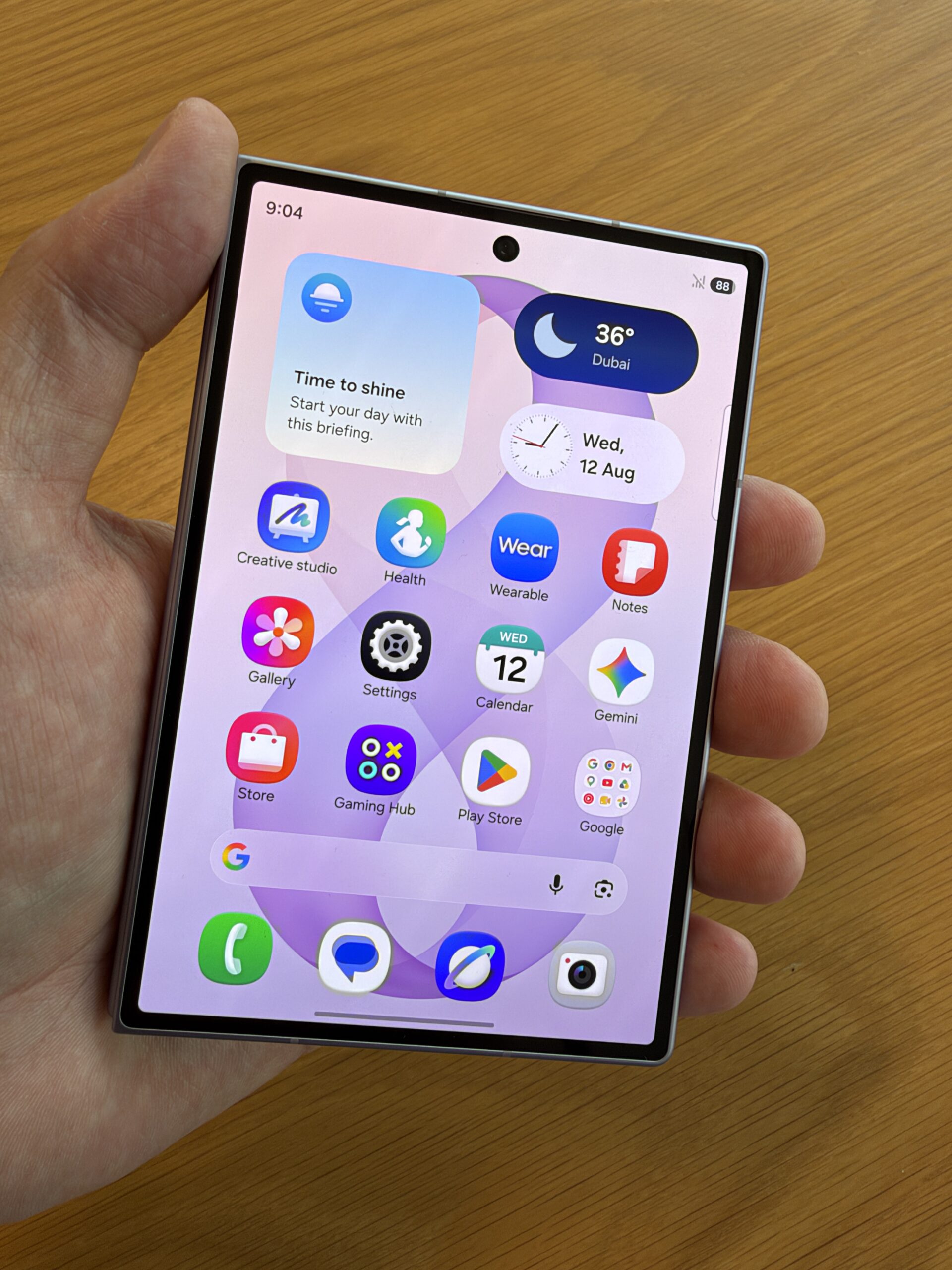
Typing takes a little adjustment because years of muscle memory expect a different keyboard shape, but that discomfort doesn’t last particularly long. Social feeds, messaging and quick browsing actually suit the compact format remarkably well once your thumbs stop arguing with the geometry. There is also something refreshing about having a flagship smartphone that doesn’t demand two hands whenever you need to perform a trivial interaction. Modern phones have become enormous partly because manufacturers could make them enormous, and the Fold8 reminds us that portability remains a feature even if it doesn’t look particularly exciting on a presentation slide.
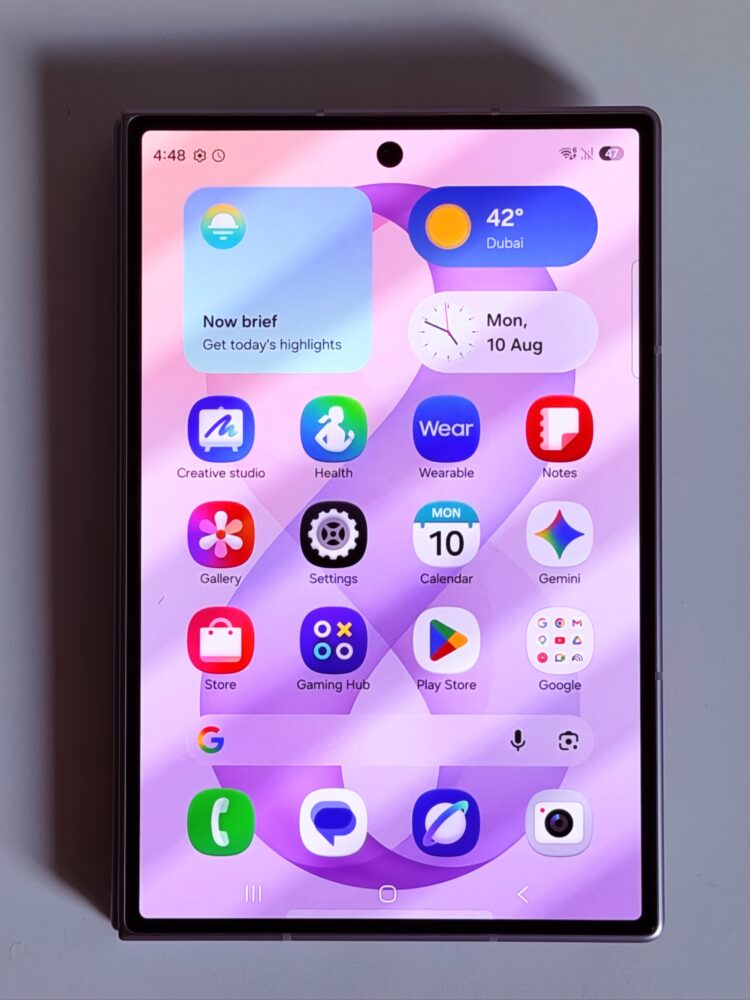
More importantly, Samsung hasn’t tried to make the cover screen everything. That’s precisely why the design works. The outer display handles quick interactions, while unfolding the device provides an immediate and meaningful upgrade rather than simply producing a larger version of roughly the same shape. Foldables need that contrast. If the external display already behaves exactly like a giant flagship, opening the device can begin feeling optional rather than transformative. Here, the two displays have distinct jobs, and Samsung’s willingness to embrace that difference gives the Fold8 considerably more personality.
Open it and the Fold8 becomes something completely different
The 7.6-inch internal Dynamic AMOLED 2X panel uses a 2448 x 1848 resolution and 4:3 aspect ratio, and this is where Samsung’s design starts making complete sense. Instead of resembling an unusually large smartphone, the Fold8 becomes a miniature tablet. E-books, magazines, websites and photographs immediately benefit from the proportions because content has enough horizontal and vertical room to breathe. Samsung specifically highlights portrait-oriented reading as one of the advantages of the format, and after using it that way, it’s difficult to disagree.
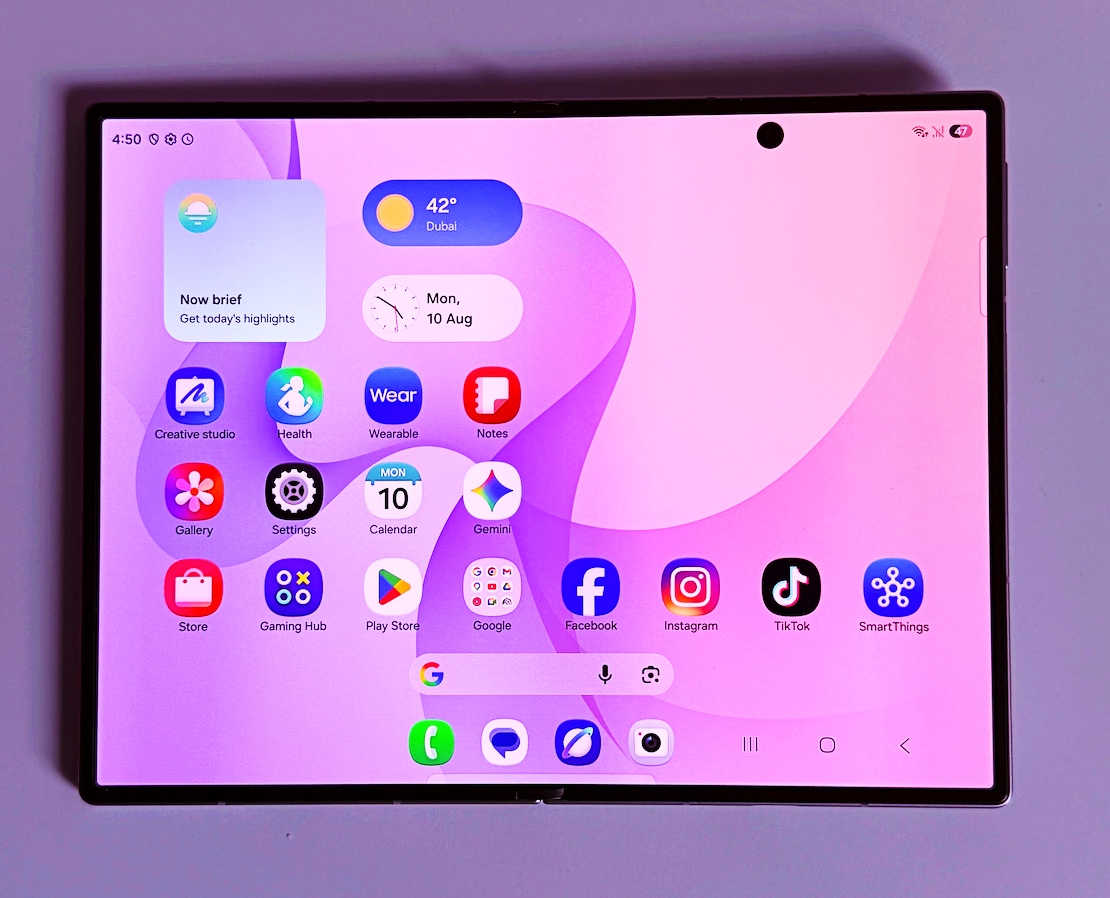
Both screens can reach 3,000 nits of peak brightness, while the main panel receives an anti-reflective treatment intended to reduce glare. The latter is more important than it sounds. Folding displays traditionally have an annoying talent for becoming expensive mirrors under difficult lighting, so reducing reflections contributes more to perceived quality than simply chasing increasingly absurd brightness numbers. The screen remains punchy, fluid and unmistakably Samsung, but clarity is the improvement you notice most when moving between indoor and outdoor environments.
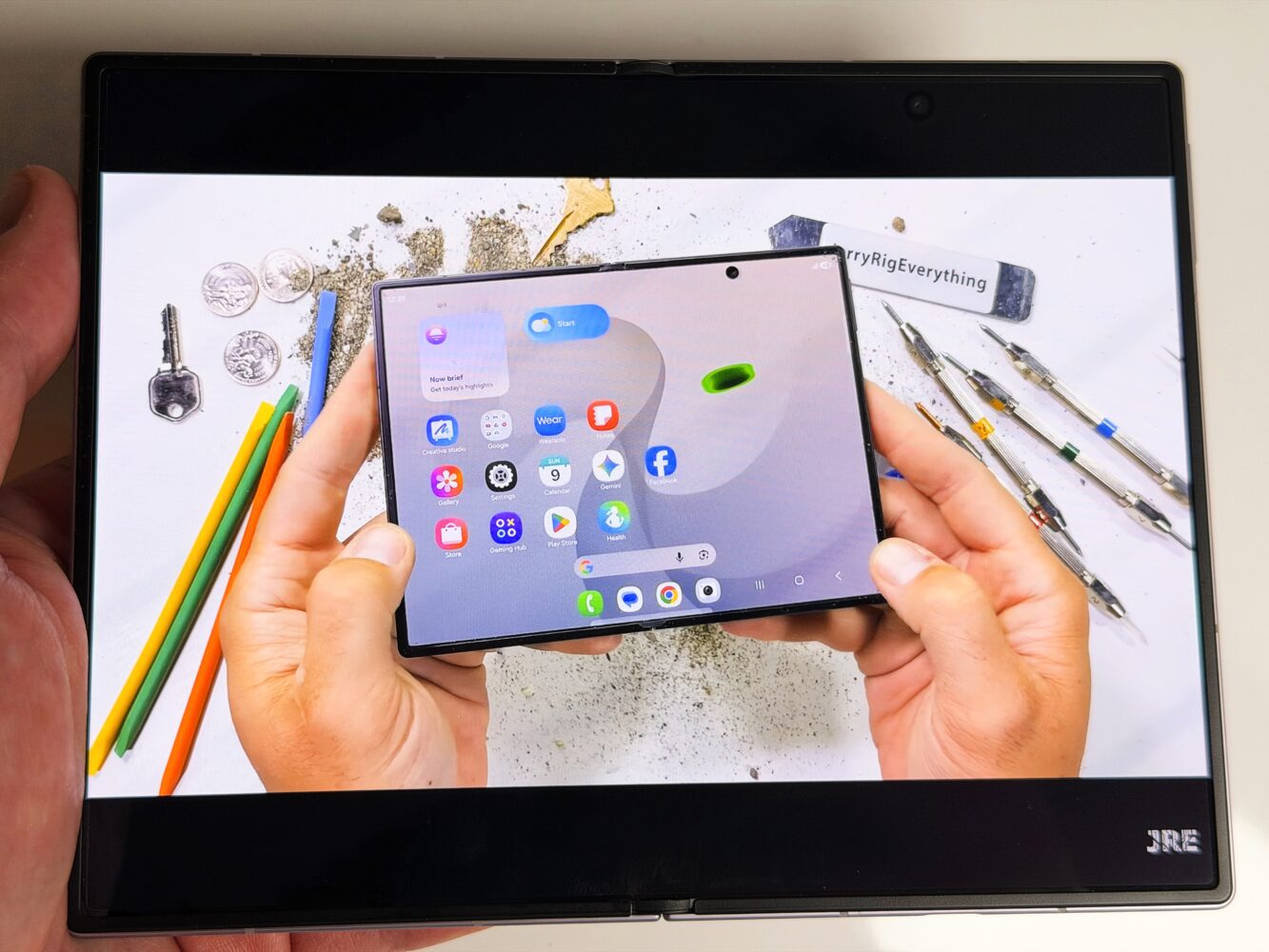
The crease remains visible under the right lighting and perceptible when your finger crosses the centre, but it has reached the stage where actively hunting for it is considerably more distracting than simply using the device. Foldable discourse occasionally treats the crease like a graphical glitch that must eventually be patched out of reality, yet it barely affects practical use anymore. I’ll happily tolerate a faint valley if the engineering trade-off gives me a lighter chassis, stronger folding structure and more durable display. Perfection is appealing, but useful engineering is considerably more interesting.
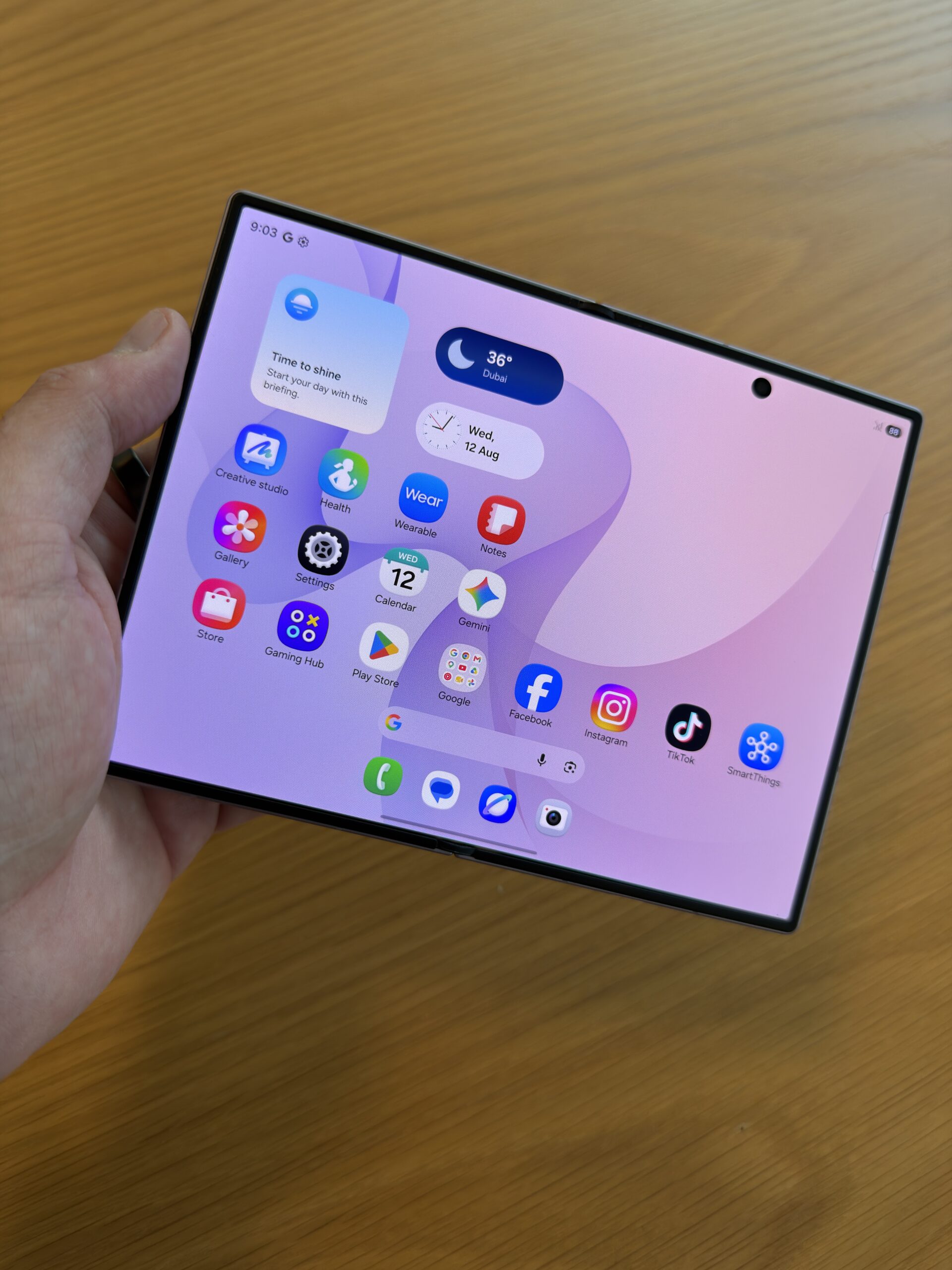
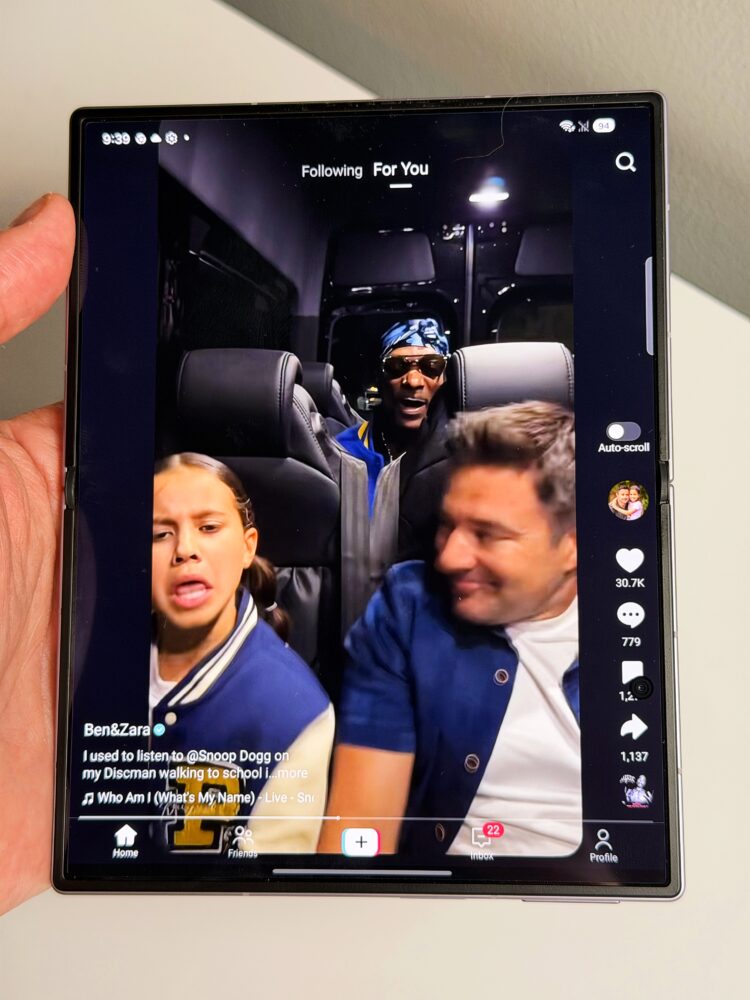
Rotate the device, and the experience changes dramatically. Portrait orientation provides the vertical space that documents, email, research and writing need, while landscape feels fantastic for video, photography and many games. This adaptability became one of my favourite aspects of the Fold8 because it doesn’t insist that one orientation must solve every problem. The hardware changes shape once through the hinge and effectively changes character again through rotation, giving you several genuinely different layouts from one device.
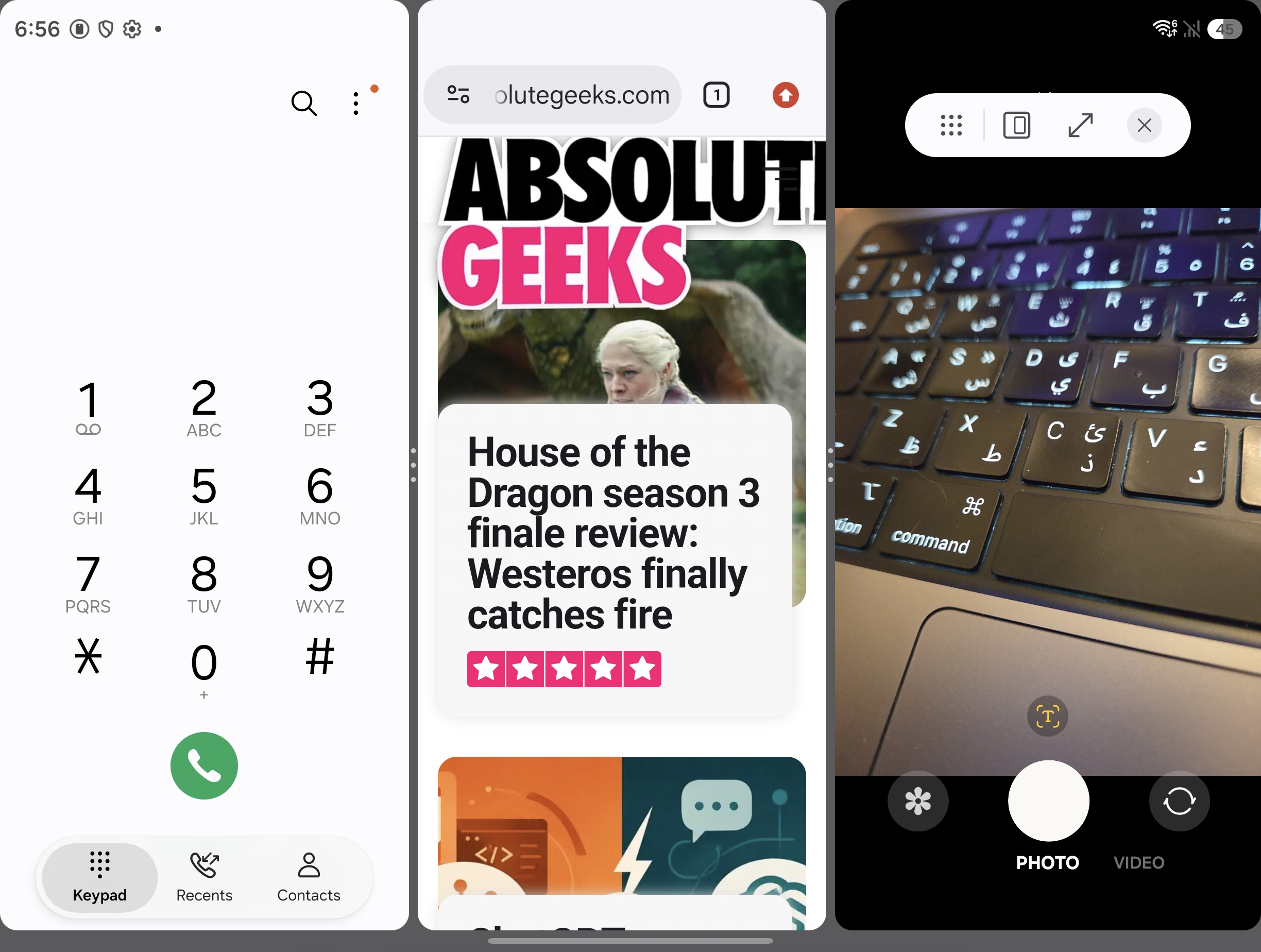
Samsung’s software maturity deserves considerable credit here. Android 17 and One UI 9 understand folding hardware well enough that moving between displays and orientations rarely feels disruptive. Apps transition smoothly between panels, layouts adjust quickly, and Samsung provides enough control over multitasking without turning the Fold8 into a desktop operating system wearing an Android costume. Three-app combinations are now particularly useful, with One UI 9 supporting both two-way and three-way split views. You can keep a browser, notes and messaging app visible together, or mix video, email and calendar without constantly jumping between apps. On a display this wide, multitasking finally feels like a natural part of the Fold8 rather than something you’re doing simply because the phone allows it.
Samsung’s durability engineering deserves more attention
Making the Fold8 lighter would be considerably less impressive if Samsung had simply removed structural reinforcement and whispered “good luck” while handing you the box. Instead, the company has introduced what it calls Flex Titanium, placing two titanium layers within the shock-absorbing structure underneath the flexible display. The chassis uses Armor Aluminum, while Samsung’s Armor FlexHinge has been designed to remain thin while maintaining rigidity. The cover and rear surfaces also use reinforced Corning glass.
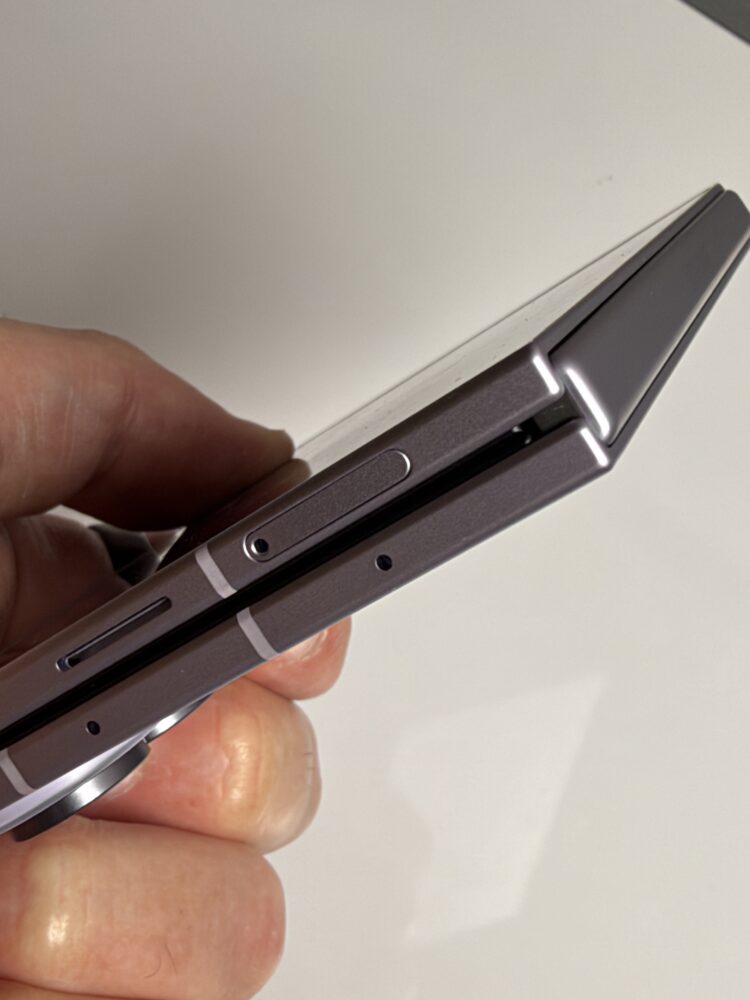
Samsung lists IP48 protection, which provides meaningful water resistance but still leaves the Fold behind conventional IP68 flagships when fine dust becomes part of the equation. That’s worth remembering if your idea of a relaxing weekend involves beaches, deserts or any environment where tiny particles enthusiastically invade expensive electronics. Foldables have become dramatically more durable, but flexible screens and intricate hinges still require more mechanical complexity than a rigid smartphone slab.
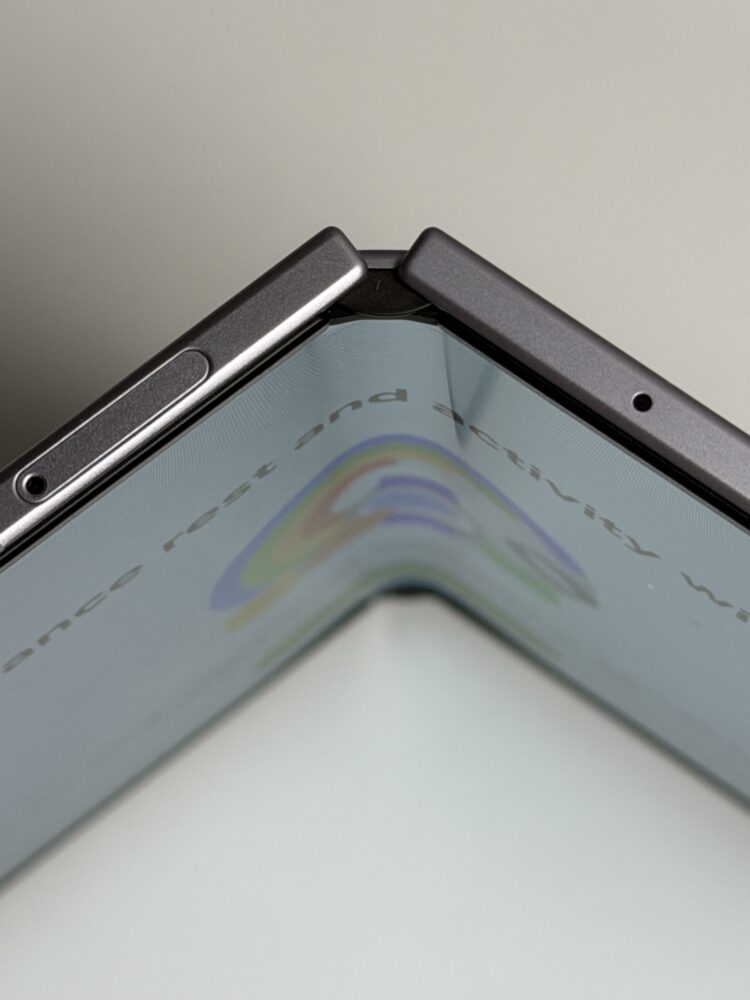
The important difference is psychological. Using the Fold8 doesn’t feel like handling an experiment anymore. The hinge action feels deliberate, the chassis doesn’t communicate fragility and normal daily opening and closing quickly becomes something you stop thinking about. That confidence is perhaps Samsung’s greatest achievement after so many generations of foldables. Durability isn’t only about surviving laboratory tests; it’s about making the owner forget there is a laboratory test to worry about.
Snapdragon 8 Elite Gen 5 gives this tiny tablet serious horsepower
Samsung uses the Snapdragon 8 Elite Gen 5 for Galaxy, a customised version of Qualcomm’s flagship platform combining updated CPU, GPU and NPU hardware. Samsung specifically highlights the processor’s AI capabilities, graphics performance and energy efficiency, while Vulkan support enables hardware-accelerated real-time ray tracing in compatible gaming workloads. Whether mobile ray tracing becomes essential or remains another excellent way to make batteries nervous is a separate conversation, but there’s no shortage of processing headroom here.
Storage options include 256GB, 512GB and 1TB. The first two configurations receive 12GB of memory, while the 1TB model increases that to 16GB. That’s a sensible allocation for hardware designed around multitasking, particularly because several simultaneously active applications can consume memory considerably faster than conventional single-screen usage. Samsung also promises up to seven generations of Android OS and security updates, an important consideration when the initial purchase price is high enough that replacing the device every couple of years would require a financial strategy meeting.
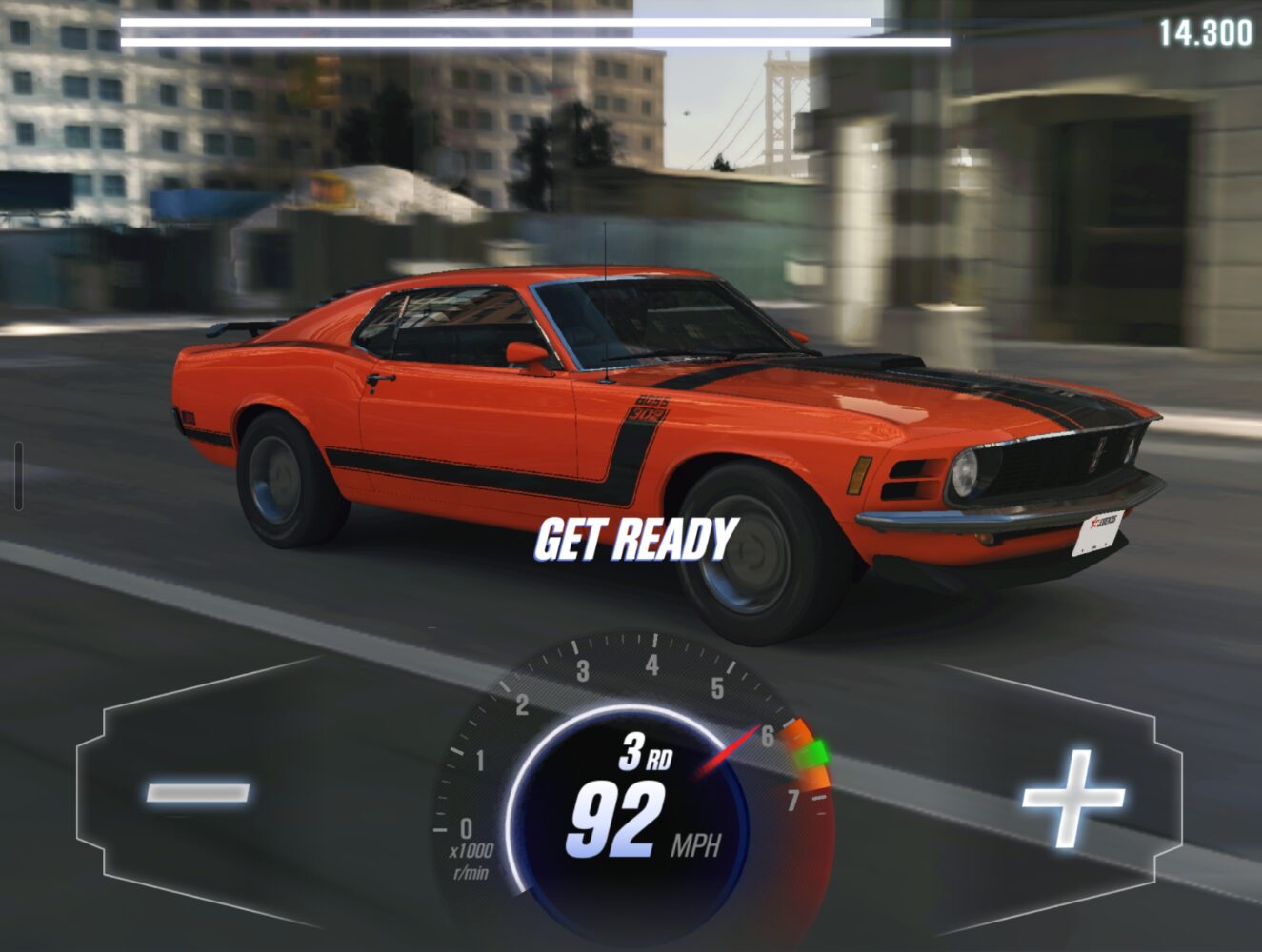
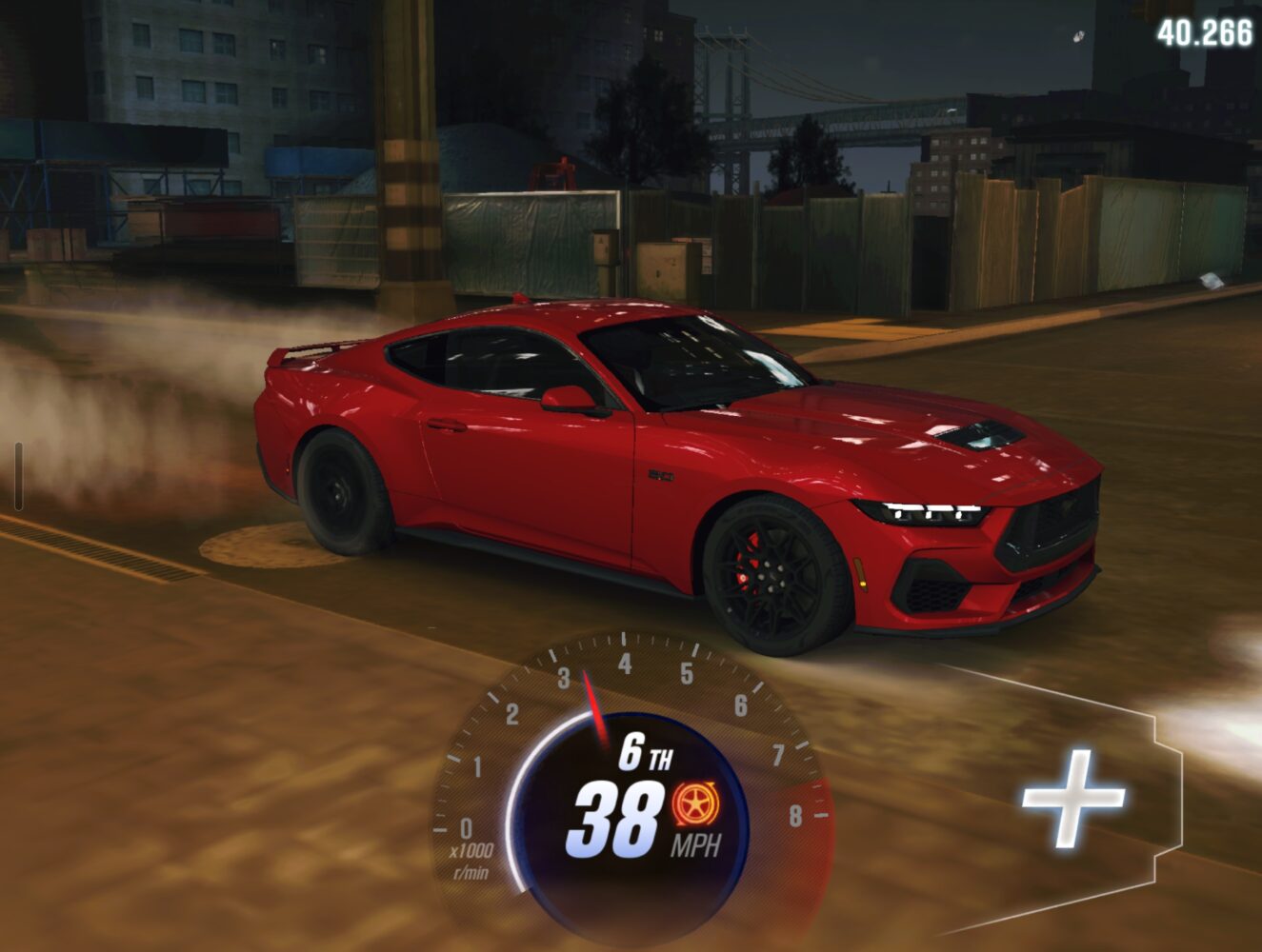
Gaming is especially enjoyable because the Fold8 combines flagship performance with a display large enough to give touch controls breathing room. The 201-gram weight becomes an advantage during longer sessions because you’re essentially holding a miniature gaming tablet without the mass usually associated with one. Demanding titles look superb on the 120Hz AMOLED panel, while the Snapdragon hardware keeps animation and input responsive. Foldables have always possessed gaming potential; the Fold8 makes that potential much easier on your wrists.
Galaxy AI works better when it isn’t fighting for screen space
AI remains deeply integrated throughout Samsung’s current software strategy, with Galaxy AI supporting features involving search, translation, summarisation, image manipulation and contextual assistance. The Fold8 also supports Galaxy AI functionality in Arabic where available, including features such as Circle to Search, Live Translate and AI-powered summarisation. Samsung notes that individual AI features can depend on region, language, account requirements and software version, so the exact experience can vary.
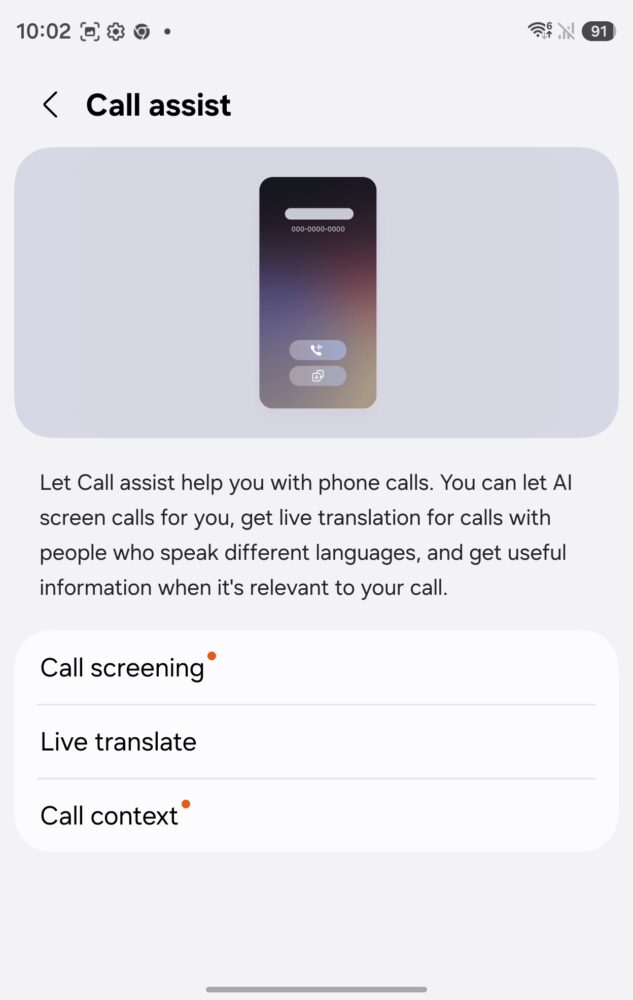
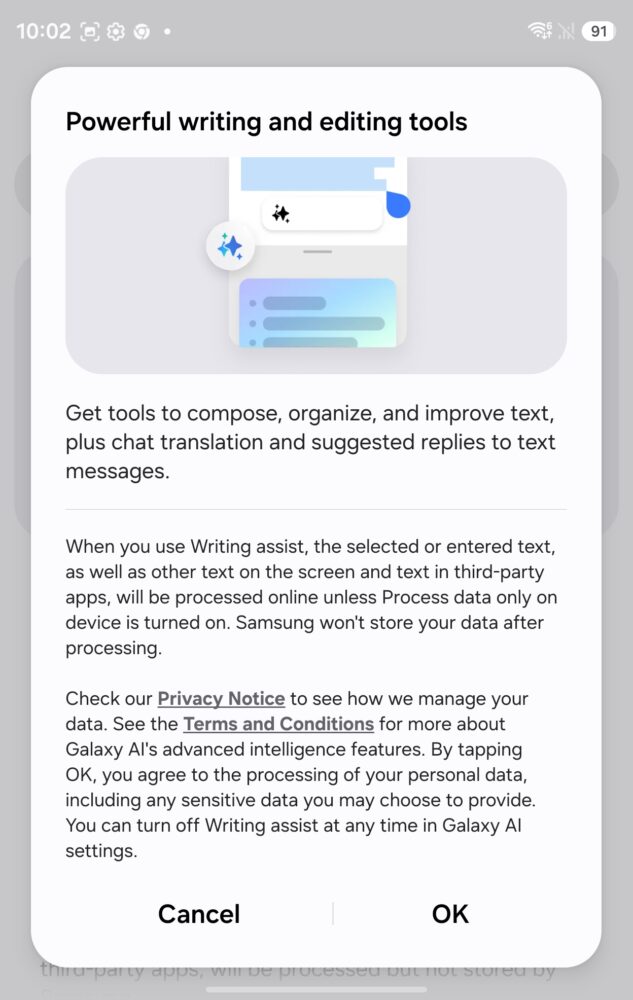
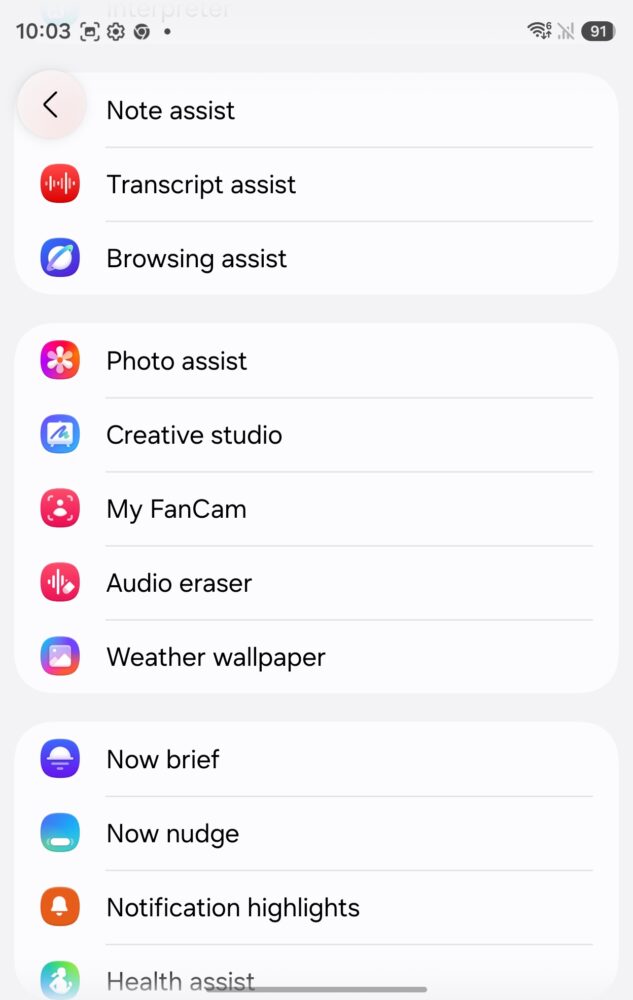
What makes AI more convincing on the Fold isn’t necessarily intelligence; it’s space. Conventional smartphones frequently pile AI panels, keyboards, source material and controls onto the same narrow display until the feature designed to save time begins requiring interface archaeology. The 7.6-inch panel provides enough room for contextual tools to coexist with your original content. That sounds mundane, but good AI should eventually feel mundane. The objective isn’t to remind users every thirty seconds that artificial intelligence exists; it’s to remove small pieces of friction without demanding applause afterwards.

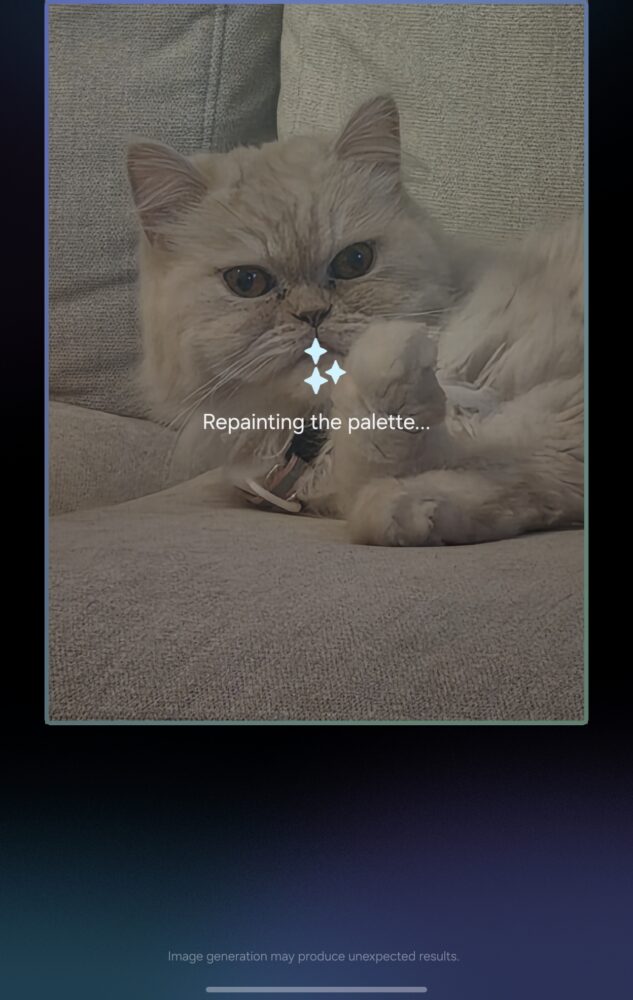
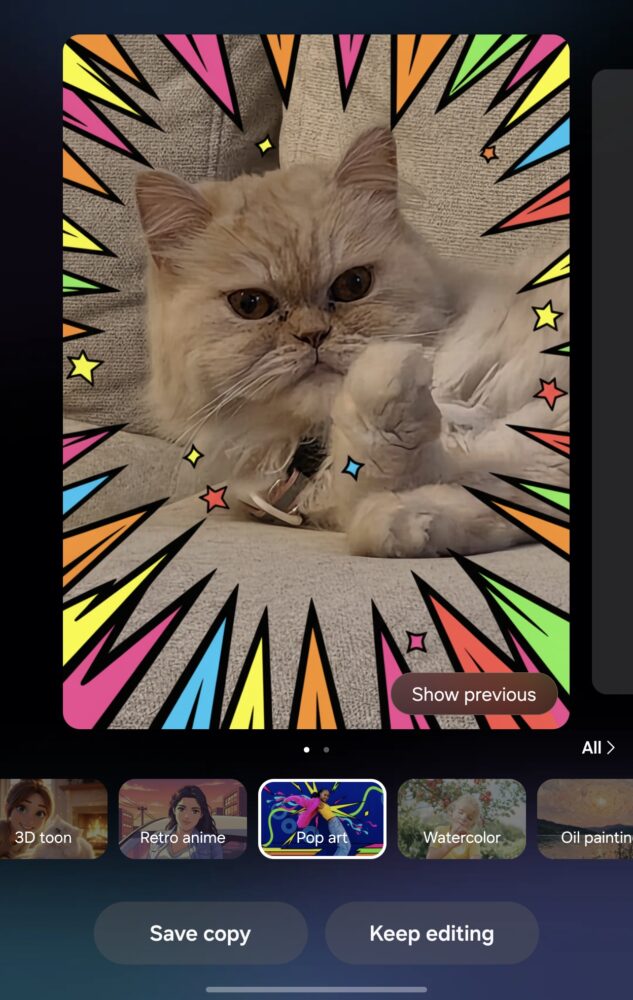
Some tools inevitably remain more convincing than others. AI features that summarise, translate or manipulate existing information have obvious recurring value, while more experimental creative tools can feel situational. That’s normal for the current stage of smartphone AI. The important thing is that Samsung has built hardware where these capabilities can grow without constantly colliding with the limitations of a six-inch rectangle.
Two 50MP cameras are excellent until…
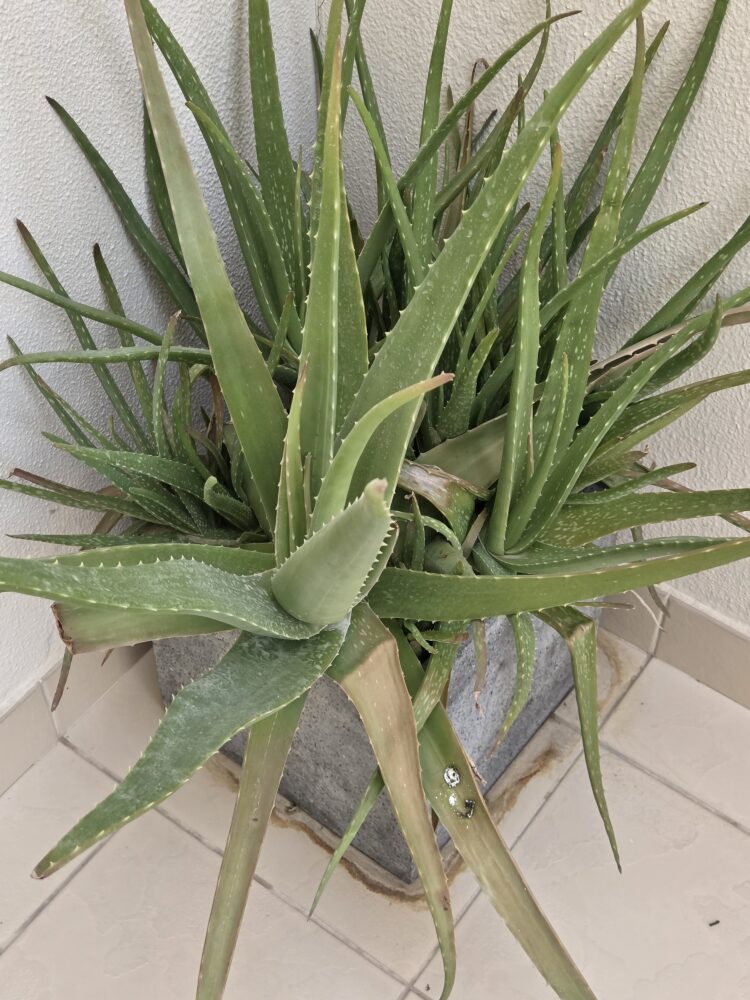
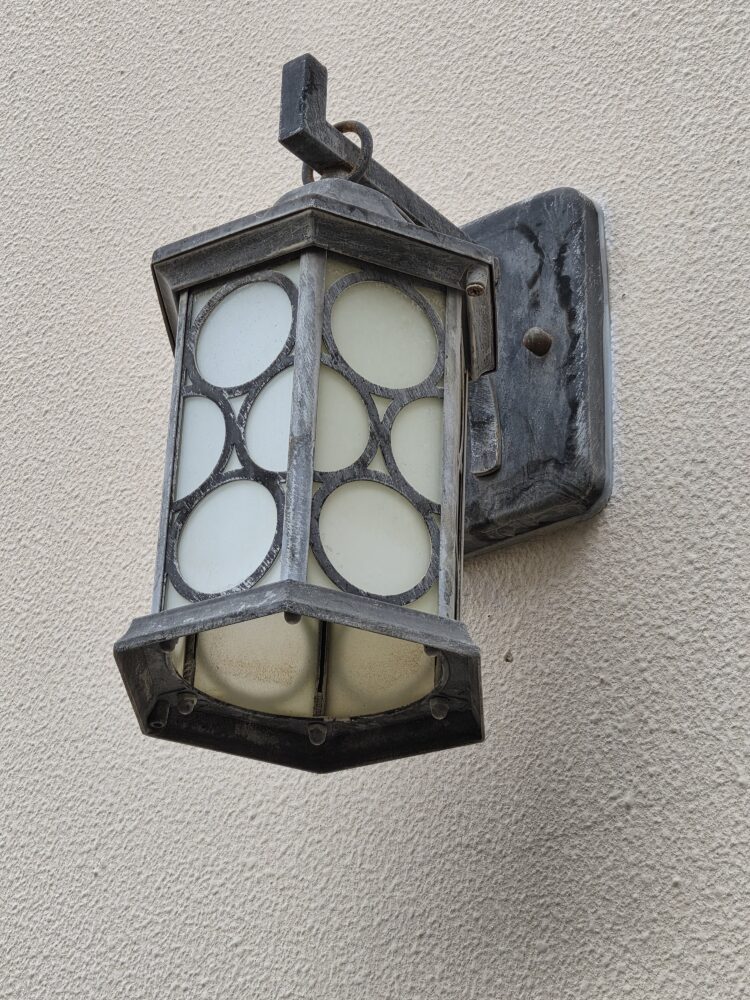
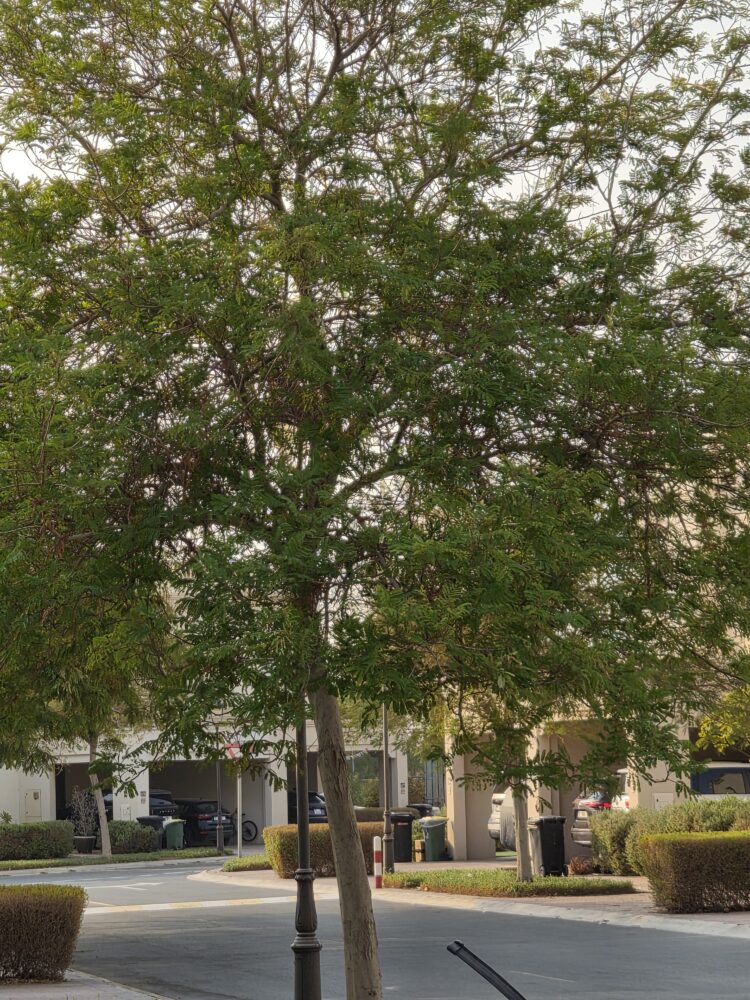
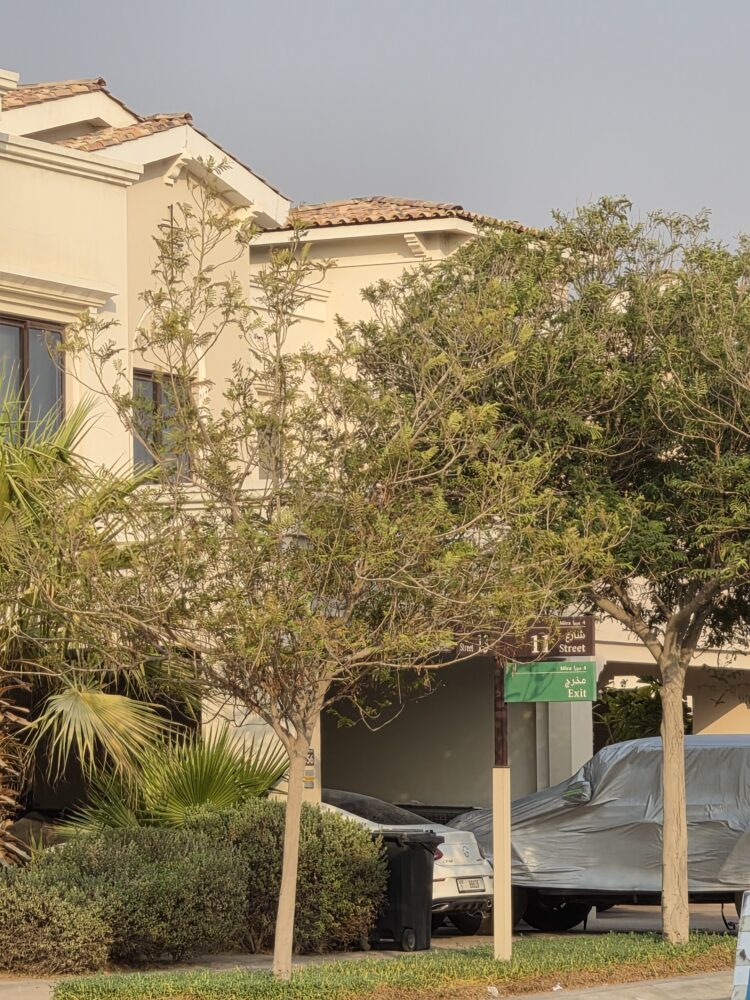
Samsung’s camera approach is unusual for such an expensive device. The Galaxy Z Fold8 uses a 50MP f/1.8 wide camera alongside a 50MP f/1.9 ultra-wide, giving both primary perspectives substantial resolution. The wide camera supports optical-quality 2x zoom through its adaptive pixel sensor, while digital zoom extends to 10x. There are also two 10MP front-facing cameras, including a main-screen camera with a 100-degree field of view that’s particularly useful for group selfies.
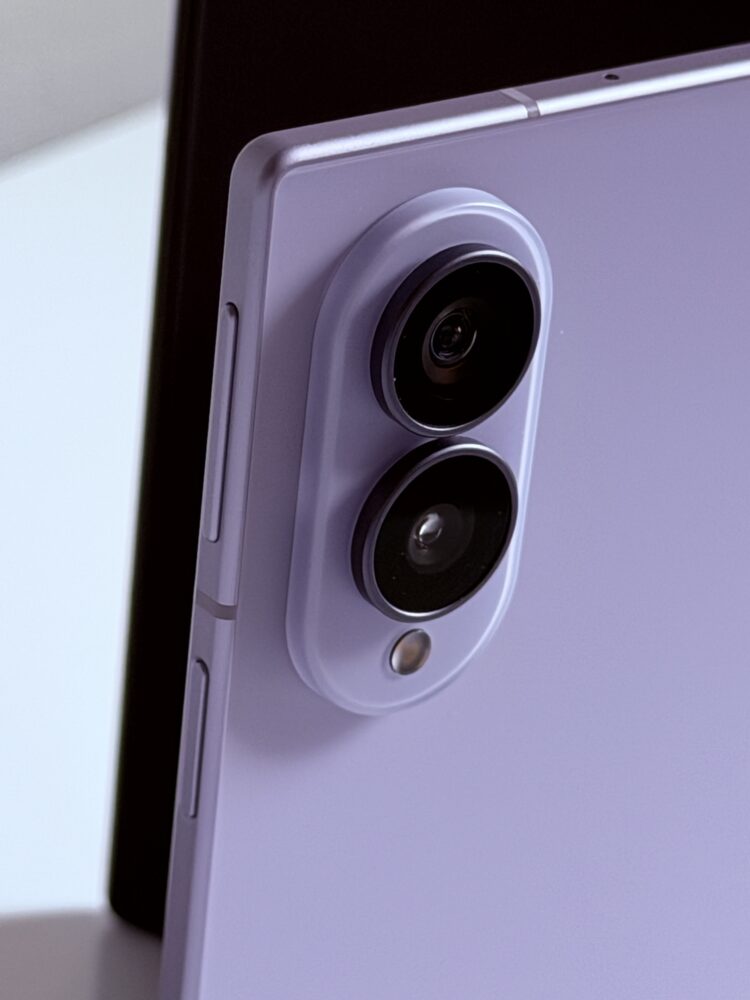
The main camera delivers the kind of bright, detailed and punchy images expected from modern Samsung processing, while the 50MP ultra-wide is a welcome upgrade for landscapes, architecture and group shots. Samsung’s ProVisual Engine performs real-time noise reduction and additional processing for low-light video, while Nightography applies stabilisation and image optimisation without requiring users to manually configure specialist modes. Video can reach 8K resolution, giving the Fold8 plenty of technical capability for anyone determined to fill that 1TB storage option as quickly as humanly possible.
Dual Recording is particularly well suited to folding hardware. The feature can simultaneously capture different perspectives and present previews across the cover and main displays, allowing both photographer and subject to see what’s happening. It’s the sort of camera feature that actually takes advantage of having two screens rather than simply existing because someone needed another icon in the camera app. Flex-style shooting similarly makes the folding chassis useful as its own stand, reducing the need to prop the phone against whatever conveniently shaped object happens to be nearby.
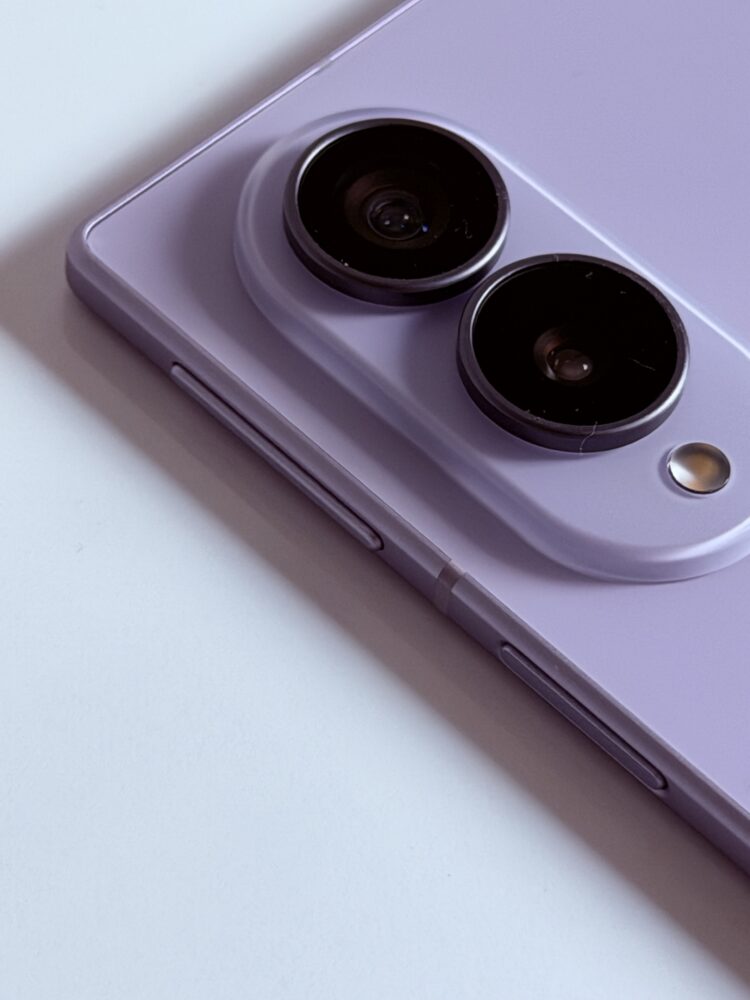
Samsung’s decision to skip a dedicated telephoto camera on the Fold8 is closely tied to the phone’s compact design. At just 201 grams and 4.5mm thick when unfolded, internal space is at a premium, and a separate optical zoom module would add components, thickness and weight. Instead, Samsung uses the 50MP main sensor to deliver 2x optical-quality zoom through sensor cropping, with digital zoom extending to 10x. The Fold8 Ultra has more room to work with, allowing Samsung to add a dedicated 10MP 3x telephoto alongside its 200MP main camera. It’s a sensible distinction between the two models: the Fold8 prioritises portability while still providing useful everyday zoom, while the Ultra is designed for buyers who want the more complete camera system.
PHOTO GALLERY






The 4,800mAh battery is impressive precisely because of where Samsung put it
The Fold8 packs a 4,800mAh battery into a remarkably thin 201-gram body, which is impressive considering everything Samsung has squeezed inside. The company rates it for up to 26 hours of video playback, just behind the Fold8 Ultra despite its larger 5,000mAh battery. In everyday mixed use, endurance is reassuringly solid, with the smaller cover screen helping conserve power during quick interactions. Spend hours gaming or living on the 7.6-inch internal display, however, and you’ll naturally drain it much faster.
Wired charging reaches 25W, making short top-ups useful even if Samsung still trails some rivals in outright charging speed. Wireless charging is supported as well, although magnetic alignment requires a compatible case rather than being integrated directly into the Fold8. It’s a relatively small omission, but on hardware this premium, built-in magnetic accessory support would have been a welcome finishing touch.
Samsung has finally given the standard Fold its own identity
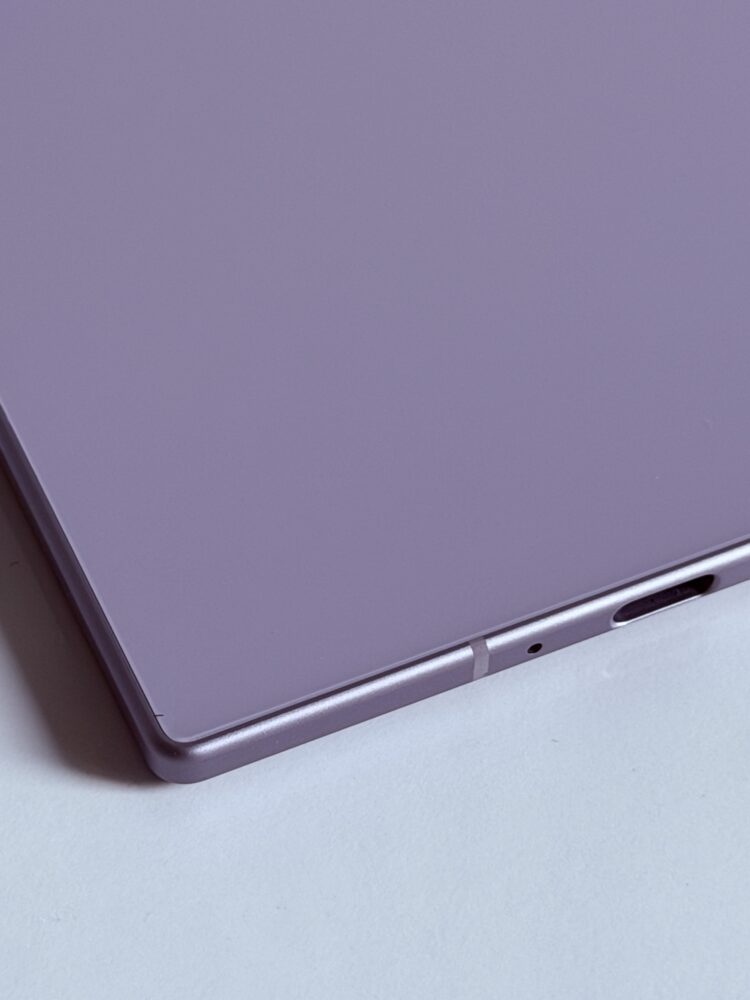
Colour options include Lavender, Graphite and Cream, with Pistachio offered as a Samsung.com exclusive according to Samsung’s product information. It’s a relatively restrained palette, but the lighter, more playful finishes complement the Fold8’s less business-like personality. The phone doesn’t feel as though it was designed exclusively for spreadsheets, executives and people who use the phrase “circle back” without irony. It feels equally comfortable being a reading device, portable cinema, social-media machine, gaming screen and photography companion.
That shift might ultimately matter more than any individual specification. Foldables have spent years being marketed as productivity monsters because manufacturers needed to justify their enormous screens and equally enormous prices. The Fold8 makes another argument: perhaps having a screen that changes size is simply enjoyable. Perhaps reading comics on a 7.6-inch AMOLED display, unfolding a larger map when navigating, showing friends photos without handing them a magnifying glass, or opening a game onto a tablet-like canvas is enough justification for the engineering.
Verdict
The Samsung Galaxy Z Fold8 is one of Samsung’s most convincing foldables because it finally feels focused. Its remarkably light 201-gram body makes it genuinely pocketable, while opening the 7.6-inch AMOLED display transforms it into a capable little tablet. Strong Snapdragon 8 Elite Gen 5 performance, mature One UI 9 multitasking and a 4,800mAh battery complete an experience that feels polished, practical and considerably more refined than earlier generations.
There are still a few trade-offs, although most make sense within Samsung’s focus on keeping the Fold8 thin and light. There’s no dedicated telephoto camera, IP48 protection still leaves room for improved dust resistance, and S Pen support would have been a welcome addition for the spacious internal display. None significantly undermines the experience, though, particularly when weighed against the portability and versatility Samsung has achieved.
What ultimately makes the Galaxy Z Fold8 special is the balance between its two personalities. Closed, it feels compact and effortless; open, it becomes a genuinely useful larger-screen device for entertainment, gaming and multitasking. It may not pack every feature Samsung could squeeze into a Fold, but that restraint is part of its appeal. The Fold8 feels less like a showcase of folding technology and more like a great everyday phone that just happens to unfold into something much bigger.