TL;DR: Cape Fear’s finale is a roaring, rain-soaked triumph that burns the houseboat, crowns Max Cady on a rooftop, and lets the Bowdens claim a hard-won, complicated victory. Messy in the best possible way and wildly entertaining from first flame to final glance.
Cape Fear
There is a particular thrill that arrives when a series that has spent an entire season walking a tightrope between prestige restraint and pure pulp finally decides to leap. Apple TV’s Cape Fear had already proven it could deliver acid-laced nightmares and Southern-gothic unease, but “The Executioners” is the hour where the show stops hedging and simply revels in its own glorious excess. What unfolds is a finale that feels less like a cautious closing chapter and more like a victory lap through fire, rain, and long-overdue reckoning, leaving the Bowden family bloodied yet standing and Max Cady’s myth larger than ever.
The opening stretch alone announces that the gloves are off in the best possible way. Max does not waste time with lingering moral debates or slow-burn confrontations when he confronts the wreckage of his own twisted bloodline. He arrives, he judges, and he erases. Watching an entire boatload of secrets and toxic loyalty vanish in a single inferno is the kind of bold, almost gleeful storytelling move that reminds you why this adaptation was worth making in the first place. Instead of dragging out every last revelation for another episode of circular dialogue, the series trusts its audience to feel the weight of those deaths in the moment and then immediately pivots toward the real confrontation waiting on dry land. That confidence is infectious. It turns what could have been a standard family-reunion set piece into a declaration that Max Cady operates on a different plane of consequence than everyone else, and the show is finally willing to match his energy.
The Roof Shot That Defines the Entire Season
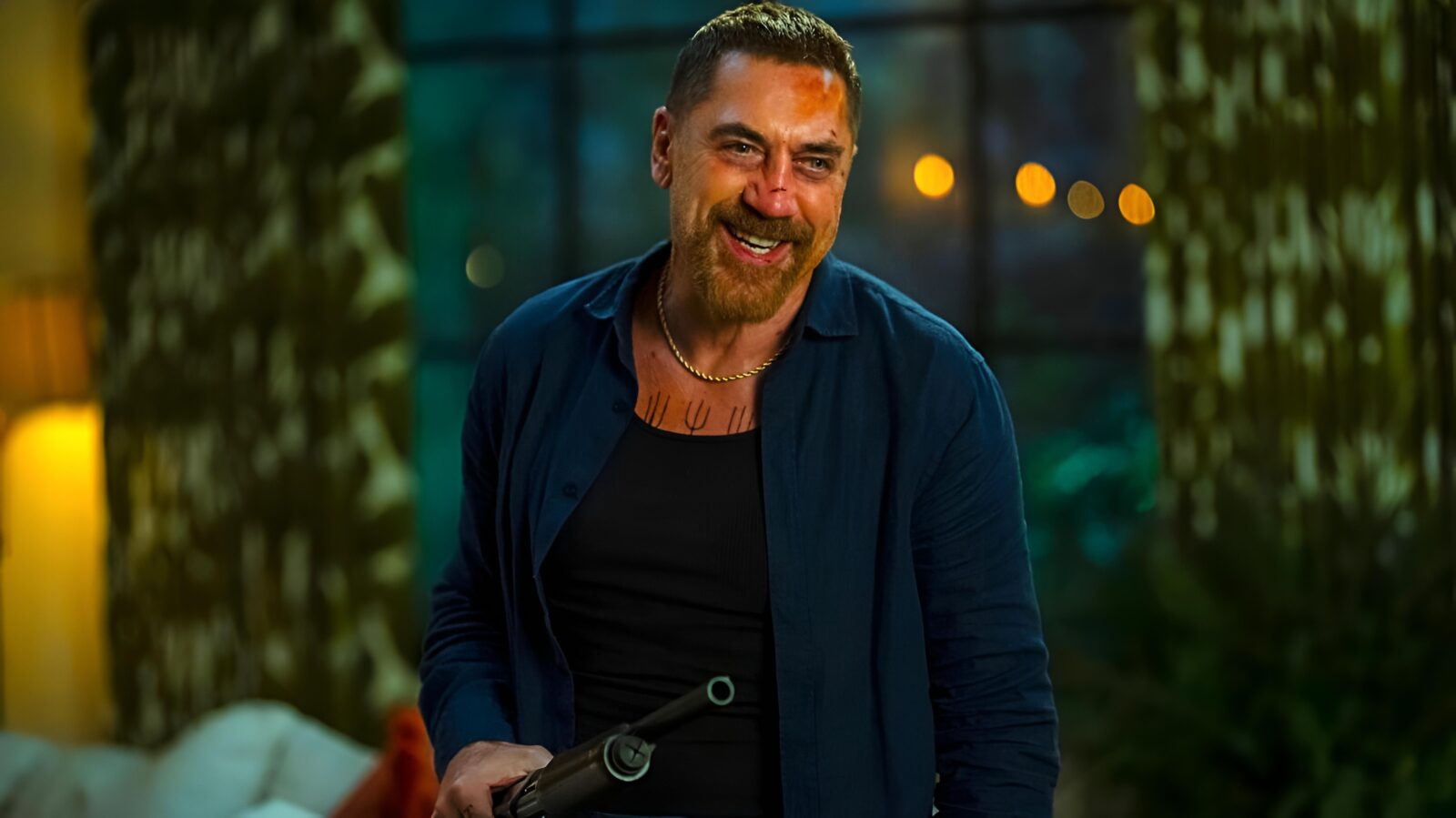
If one image from the full ten-episode run is destined to live rent-free in the collective geek memory, it is Max Cady balanced on the Bowden roof while the hurricane builds around him like a personal special-effects department. The shot is pure cinematic swagger. It is terrifying, it is beautiful, and it is also just a little bit hilarious in the way only the best genre television can be when it fully commits to its own mythology. In that single frame the series crystallizes everything it has been reaching for: Max is no longer merely a released convict with a grudge. He is a force of nature the weather itself seems to have decided to cosign. The moment lands with such perfect theatrical timing that you can practically hear the collective gasp of an audience that has waited nine episodes for the show to lean this hard into spectacle, and the payoff is worth every earlier stretch of slower character work.
From there the episode becomes a masterclass in sustained tension without ever feeling desperate. The forced trial inside the house is theatrical in the best sense of the word, the kind of high-wire sequence that lets Amy Adams and Patrick Wilson dig into the exhausted, compromised cores of their characters while the next generation of Bowdens finally stops being passive observers. When the long-buried truths about the Cady family spill out under the pressure of that makeshift courtroom, the revelations feel earned rather than dumped. The dialogue is dense, yes, but it arrives at the exact moment the audience is most hungry for answers, and the performances turn exposition into something closer to emotional combustion. Natalie stepping up with the nail gun, Zack fighting through the chemical haze, Anna making the calculated choice to keep Max alive so he can face a cage instead of a quick end—these are the beats that feel like the series delivering on the promise it made in the pilot. The Bowdens are not pure heroes, and the finale never pretends otherwise. Their victory is messy, compromised, and deeply human, which makes it far more satisfying than a clean moral triumph ever could have been.
There will be viewers who wanted Max Cady’s body floating face-down in that pool, and the desire is understandable after everything the family has endured. Yet the decision to haul him out and leave him broken but alive is the move that keeps the series honest about its own DNA. This was never a simple story of good people surviving a monster. It has always been a story about two damaged lineages colliding, and the finale refuses to pretend the collision can end with a tidy moral reset. By choosing the cage over the kill, the Bowdens claim a harder, more interesting kind of power. They deny Max the clean martyrdom or the final act of violence he seemed to crave, and in doing so they take control of the narrative in a way that feels earned after ten episodes of watching him rewrite theirs. The final shot of Anna glancing over her shoulder while the family tries to reclaim something resembling normal life is not a cheap cliffhanger; it is an acknowledgment that some storms leave permanent weather patterns. The series has the confidence to end on that note of uneasy possibility rather than forced finality, and that confidence is what makes the hour feel like a genuine high point rather than a rushed conclusion.
Across the full season Cape Fear has been a wild, occasionally uneven experiment in how far a modern prestige thriller can push pulp excess while still delivering character work that sticks. “The Executioners” is the episode that proves the experiment was worth every strange detour. It is louder, bloodier, and more self-assured than anything that came before it, and it leaves the door open for future chaos without ever feeling like it is begging for renewal. If this is the last we see of these particular Bowdens and this particular Max Cady, the finale gives them a send-off that feels appropriately larger than life. If it is only the first chapter, then the hurricane has only just begun to clear, and the wreckage still promises more glorious, unhinged television ahead.