


Spotify has started letting listeners attach short personal notes to individual songs inside their playlists. The feature, called User Notes, lets people record the reason a track was added, the moment they first heard it, or any other memory that sticks to the music. A note might recall discovering a song while walking through Paris or hearing it on a first date. Once saved, the note appears next to the track for anyone who can view that playlist, along with a link to the note-writer’s profile.
The move continues a longer shift in how streaming services treat playlists. What began as simple ordered lists of tracks has gradually turned into something closer to personal archives. Users already rename playlists with private jokes or chronological tags; User Notes simply makes the context more granular and visible. In that sense it echoes earlier habits of writing on cassette cases or filling the margins of mix-tape sleeves, only now the annotations travel with the digital version and can be read by others.
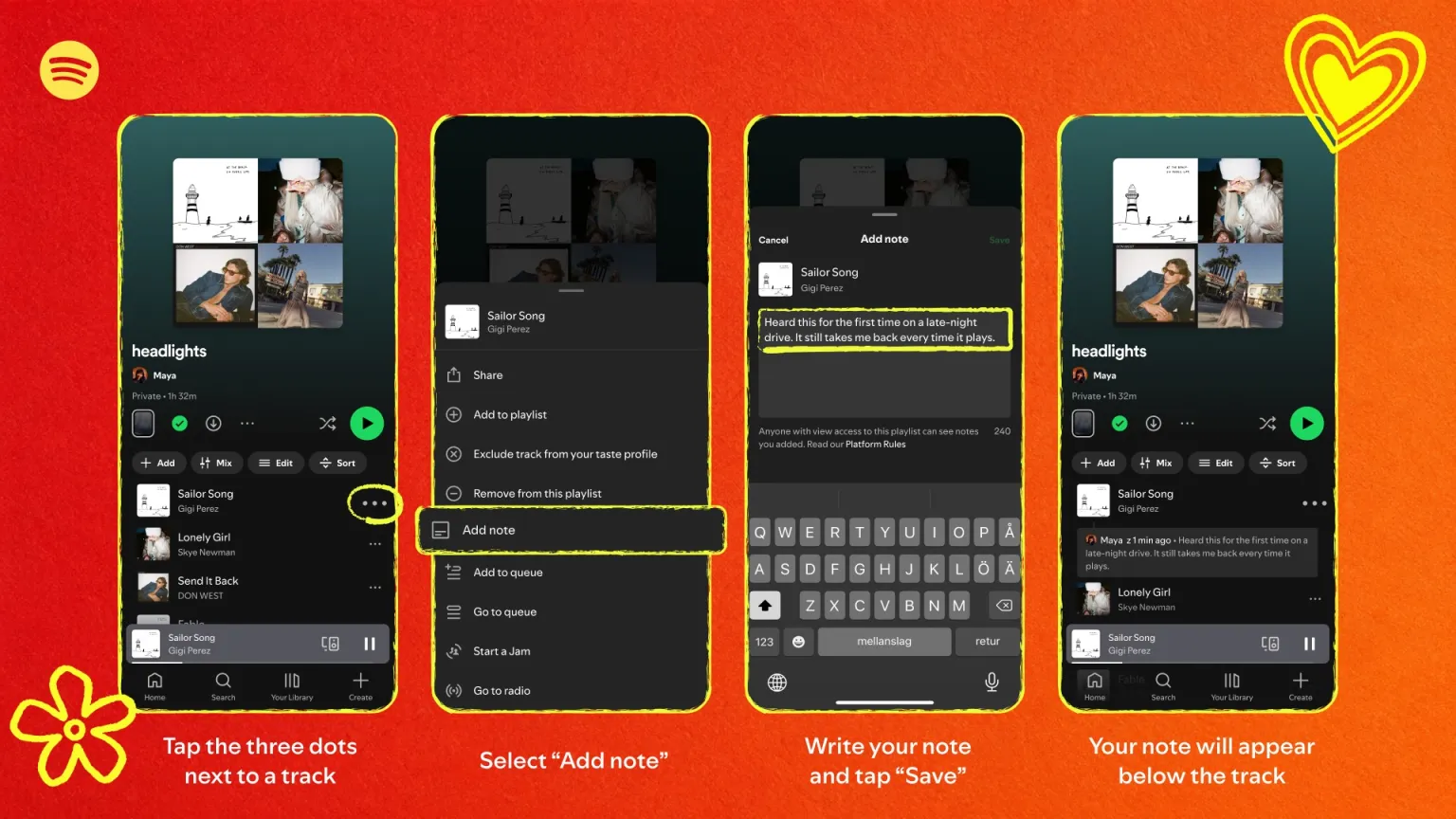
Availability is limited. The option is open to users sixteen and older on both free and paid plans, but only in certain markets for now. Adding a note requires opening a playlist the user created or one that already contains songs they added, tapping the three-dot menu beside a track, and choosing the new command. The text is then stored and displayed publicly within that playlist’s visibility settings. That public visibility raises an obvious question about how personal these memories will remain once shared, especially on collaborative or widely followed lists.
Spotify is not the first platform to experiment with context around music. Social features, collaborative playlists, and even basic commenting have appeared in various forms across services for years. What distinguishes this release is the deliberate framing of notes as memory-keeping rather than conversation. Whether that distinction holds once people start using the tool remains to be seen; shared notes can quickly drift from private reflection into performative posts.
On the same day the company also rolled out Running Mode, a separate feature restricted to premium subscribers in selected countries. It sequences tracks according to the phases of a run and factors in the listener’s preferred styles and current pace. The two announcements sit side by side but address different impulses: one looks backward at the stories songs already carry, the other forward at music as a real-time training partner.
Together they show Spotify still searching for ways to keep its library feeling lived-in rather than purely algorithmic. User Notes offers a modest, low-tech route toward that goal. It does not reinvent discovery or social listening. It simply gives people a place to write down why a song matters before the reason fades.