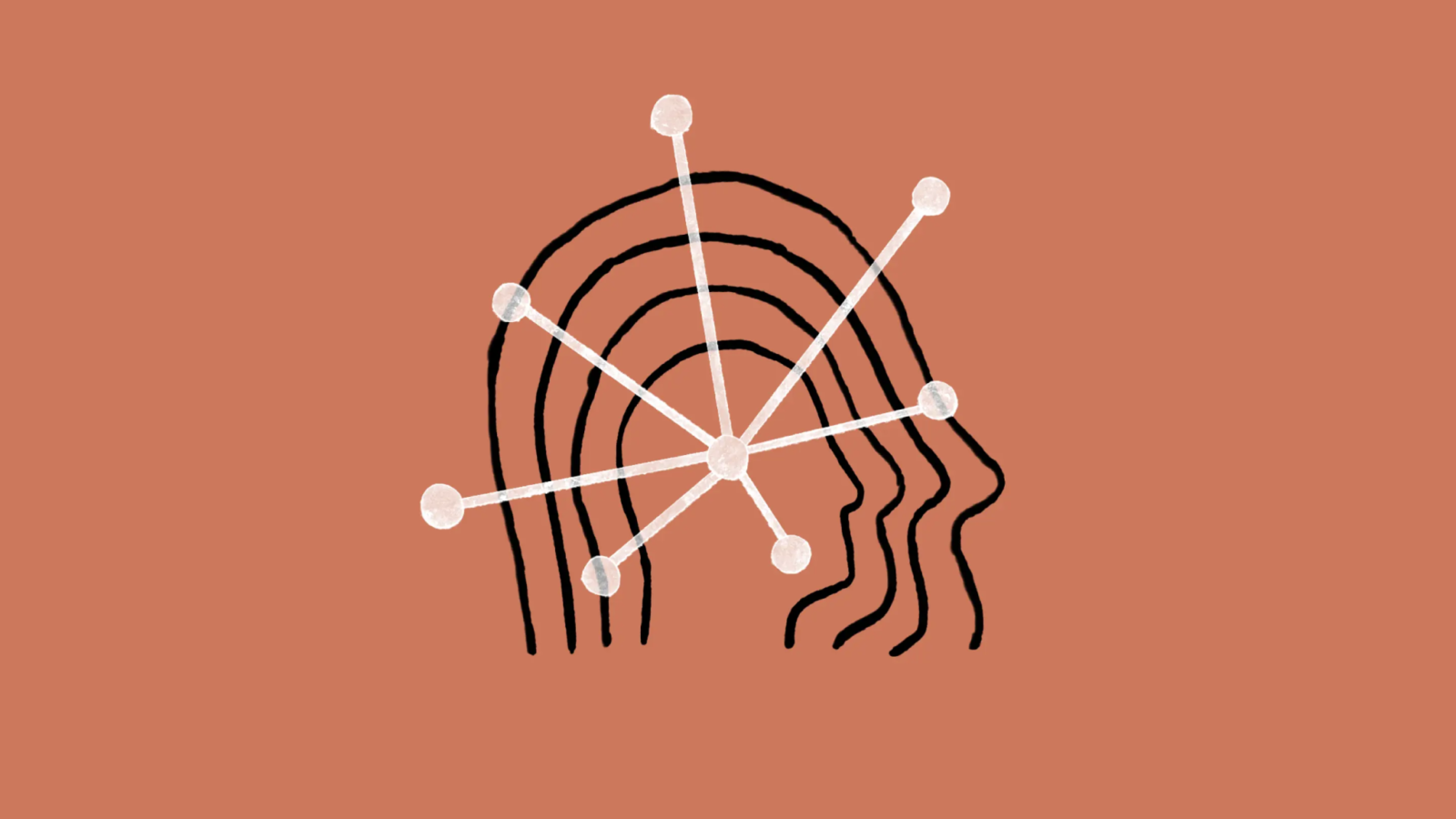


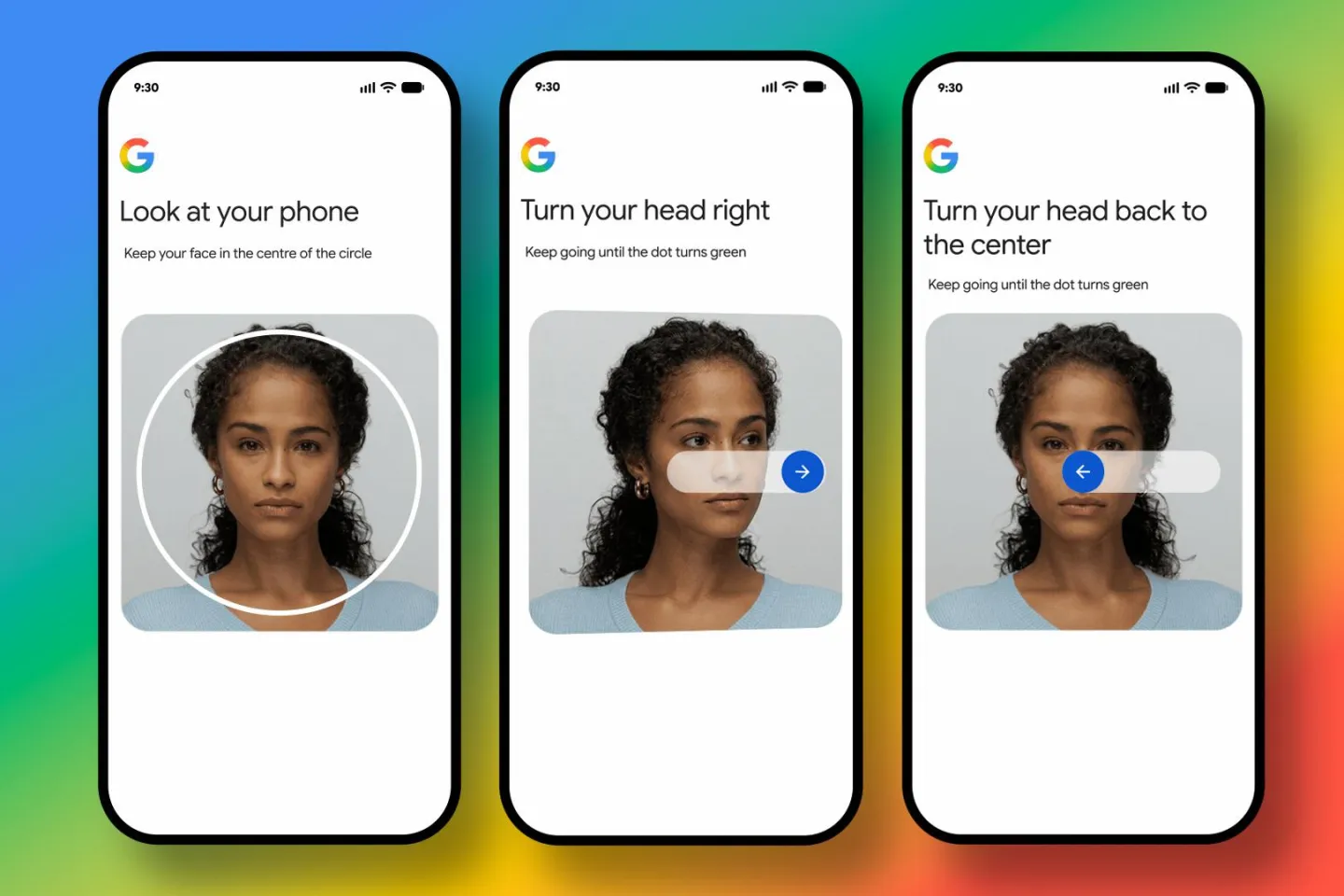
Google has added a new recovery option for locked accounts that relies on a short selfie video rather than a password, phone, or authenticator app. Users who forget credentials or lose access to their usual devices can now prove ownership by recording a brief clip of their face performing simple head turns, which the system then matches against a previously stored reference video.
The setup process asks for a short recording under guided prompts that capture the face from several angles. Google stores that reference file in the cloud under encryption and claims it remains accessible across devices. Account holders can delete the video at any time. By default the recording serves only recovery purposes, though the company notes users may later choose to share it for other uses. During an actual sign-in attempt, another live video is captured with the same head movements so the system can confirm the person is present and compare the new footage against the stored reference.
Google describes multiple technical layers intended to block impersonation through still photos or deepfake video, combined with its existing suspicious-sign-in checks. The feature is rolling out gradually; eligible accounts can enable it at a dedicated setup page.
Facial biometrics for authentication are not new. Apple introduced Face ID nearly a decade ago, and various Android manufacturers followed with their own camera-based systems. What distinguishes this approach is its role as a cloud-backed recovery method rather than a primary unlock on a single device. That design choice brings both convenience and familiar tensions. Storing a facial reference off-device expands accessibility for people who lose phones or change hardware, yet it also concentrates sensitive biometric data in a single provider’s infrastructure. Liveness checks that rely on head movement address the growing sophistication of synthetic media, but they still leave open questions about edge cases: temporary injuries, lighting conditions, or users whose physical movement differs from the expected pattern.
Password fatigue and two-factor friction have driven a steady search for alternatives. Passkeys and hardware security keys already reduce reliance on memorized secrets, yet recovery remains a weak point for many. A video-based fallback sits somewhere between pure convenience and permanent biometric enrollment. Its value will depend less on the marketing of seamless access and more on how rigorously the comparison models resist evolving deepfakes, how clearly users understand the optional sharing provisions, and whether the system remains reliable for the broad population Google serves. For now it is simply another recovery path joining the existing toolkit, one that trades a new form of facial data collection for the promise of fewer permanent lockouts.