


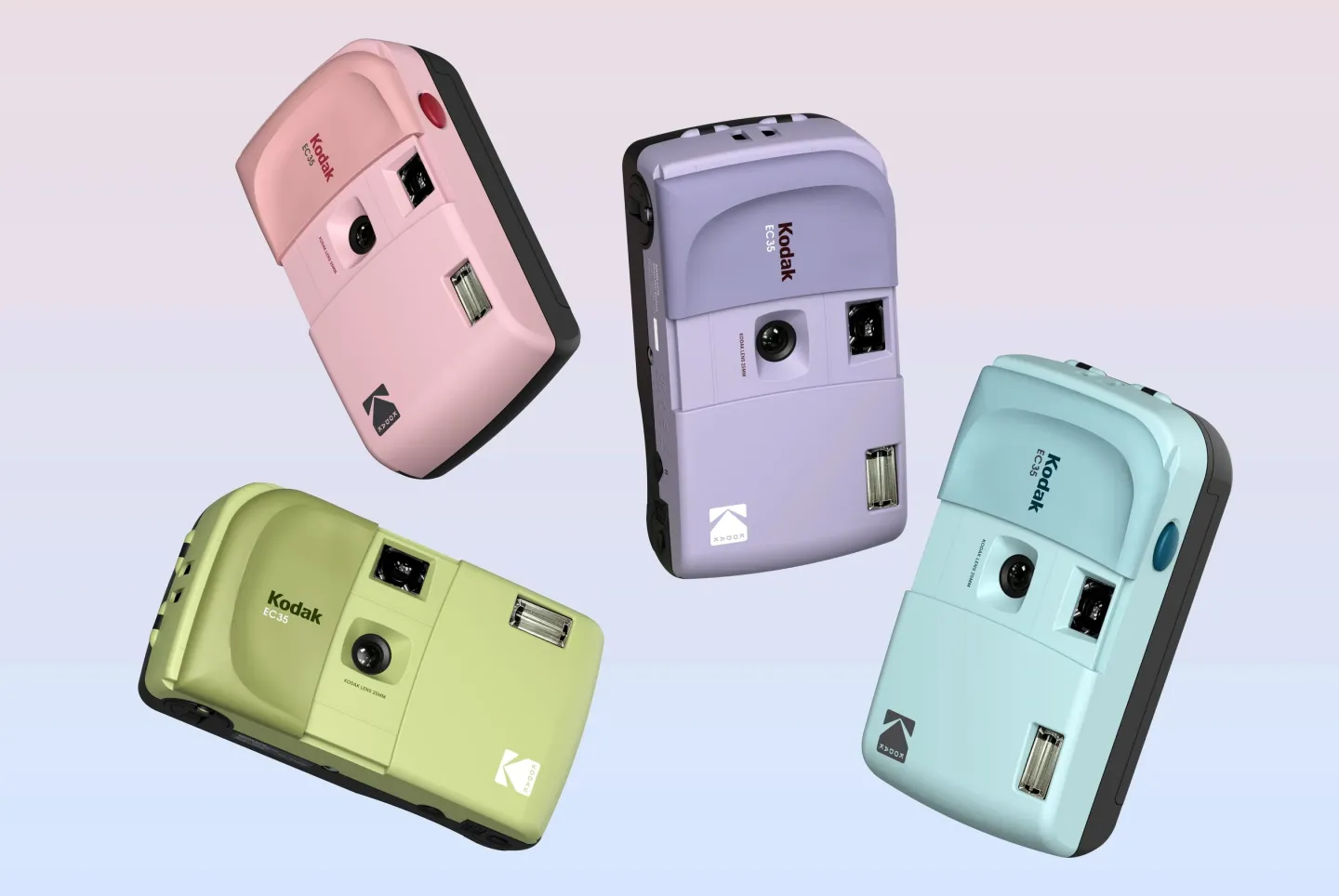
The film photography revival has brought back accessible tools for enthusiasts and newcomers alike, and the latest entry underscores just how low the barrier can get. Reto Project has introduced the Kodak EC35, a basic 35mm point-and-shoot film camera priced at $34.99. This follows their earlier Kodak-branded Snapic A1, which arrived at a still-modest $99, signaling a continued push into budget territory where casual shooting meets analog charm without demanding much expertise or investment.
At its core, the EC35 keeps things deliberately straightforward. It features a 25mm acrylic lens paired with a fixed f/10 aperture and 1/100-second shutter speed, specifications that align closely with those of traditional drugstore disposable cameras. Operation relies on manual film winding and rewinding, and an automatic flash is built in to handle low-light situations without user adjustments. There are no advanced options like double exposure or zone focusing here; the design prioritizes simplicity, making it suitable for users who want to load film and start shooting with minimal setup or learning curve.
This approach echoes the point-and-shoot boom of the late 1980s and 1990s, when compact cameras from brands like Olympus popularized effortless photography through models such as the Stylus and Mju series. The EC35 nods to that heritage with its sliding lens cover, a practical touch that protects the optics while evoking those earlier designs. Available in an array of colors—including butter yellow, lavender, powder blue, blush pink, avocado green, along with midnight black and vanilla white options—the camera adds a layer of visual appeal. The lens covers come in slightly darker tones, creating subtle contrast that elevates the look beyond a plain disposable without complicating the build.
In practice, this level of affordability and minimalism has clear appeal amid the ongoing resurgence of film. Digital fatigue and the tactile satisfaction of analog processes have drawn many back to 35mm, yet high-end gear or even mid-tier options can still feel intimidating or expensive for experimentation. The EC35 lowers those hurdles significantly, encouraging spontaneous use at parties, travels, or everyday moments where the outcome carries an element of surprise due to its fixed settings and reliance on flash. Sample images shared by the maker demonstrate the kind of straightforward, somewhat nostalgic results one might expect—grainy textures, natural color shifts, and an unpolished aesthetic that prioritizes character over technical perfection.
That said, the camera’s limitations are worth noting. Its basic optics and lack of controls mean results can vary widely depending on lighting, film stock, and user steadiness, much like the disposables it resembles. For serious photographers seeking creative flexibility, it may fall short, serving instead as an entry point or fun secondary tool. Yet this very constraint aligns with broader trends in accessible creativity, where stripped-down devices remind us that compelling images often stem from observation rather than equipment features. In a market flooded with premium revivals and app-connected gadgets, the EC35 stands out for embracing restraint, offering a low-stakes way to engage with film without overpromising sophistication.
As film photography evolves, such options help sustain interest by making the medium approachable rather than exclusive. They invite broader participation while acknowledging that not every shot needs to chase technical excellence—sometimes the point is simply pressing the shutter and seeing what develops.