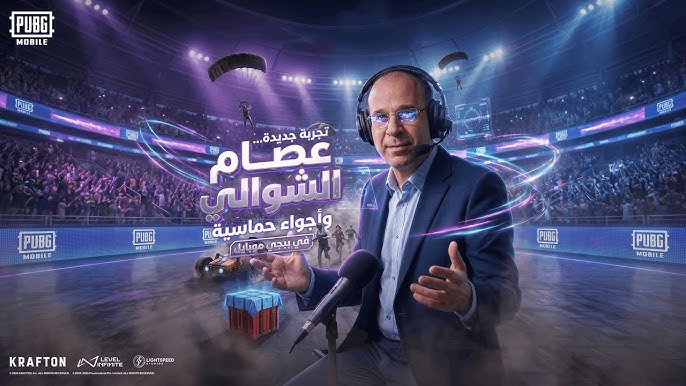
Today’s professionals and gamers in the Middle East and North Africa often move fluidly between competitive mobile battles and passionate football discussions, especially with major tournaments on the horizon. PUBG MOBILE has introduced a collaboration with Tunisian sports commentator Issam Al Chaouali, timed ahead of the FIFA World Cup 2026. The partnership adds a dedicated voice pack featuring his distinctive delivery to the battle royale experience, aiming to tap into the region’s longstanding enthusiasm for both football and gaming.
Issam Al Chaouali, known for his energetic and poetic commentary that has defined Arab football broadcasts for years, now lends that voice to in-game moments in PUBG MOBILE. Players in the MENA region can access this pack, which overlays his trademark style onto the chaos of parachute drops, firefights, and shrinking play zones. The move seeks to blend two cultural staples: the adrenaline of last-man-standing survival gameplay and the communal drama of international football. A promotional video released across social platforms demonstrates the concept, placing Chaouali’s narration directly into high-stakes PUBG MOBILE scenarios to highlight shared themes of competition and excitement.
This is not the first time gaming has borrowed from sports entertainment, but it reflects how mobile titles continue to evolve beyond core mechanics. PUBG MOBILE, which emerged from the 2017 PUBG: BATTLEGROUNDS phenomenon, has maintained popularity by introducing frequent updates, events, and cultural tie-ins. Up to 100 players still drop onto maps, scavenge for weapons and supplies, and navigate tactical circles in a format that rewards positioning and quick decisions. The voice pack adds a layer of regional familiarity, potentially making matches feel more immersive for local audiences who follow both esports and traditional sports.
That said, such collaborations raise questions about depth versus novelty. While the high-energy commentary could enhance casual play sessions and foster community during the World Cup buildup, it remains to be seen whether it meaningfully alters the core loop or simply serves as timely marketing. Mobile battle royales have long experimented with crossovers—from celebrities to sports properties—to sustain engagement amid fierce competition from other free-to-play titles. In the MENA market, where football commands massive followings, this approach makes commercial sense, though it risks feeling promotional if the integration stays superficial.
The voice pack launches as PUBG MOBILE, developed by Lightspeed Studios of Tencent Games and Krafton, remains freely available on major app stores. It joins a pattern of region-specific content designed to strengthen player connections. For gamers balancing work, football viewing, and late-night sessions, familiar voices can add personality to repetitive matches. Yet the real test will lie in how well it holds attention beyond the initial hype, especially as the actual World Cup draws closer and real-world football takes center stage.
Critically, this partnership underscores broader trends in mobile gaming: the push toward cultural relevance over pure technical innovation. PUBG MOBILE has survived shifting player habits by adapting, but sustained success depends on balancing fresh ideas with fair, enjoyable gameplay rather than stacking on external flair. As the tournament approaches, it will be interesting to observe whether such tie-ins genuinely unite communities or primarily drive short-term downloads.