
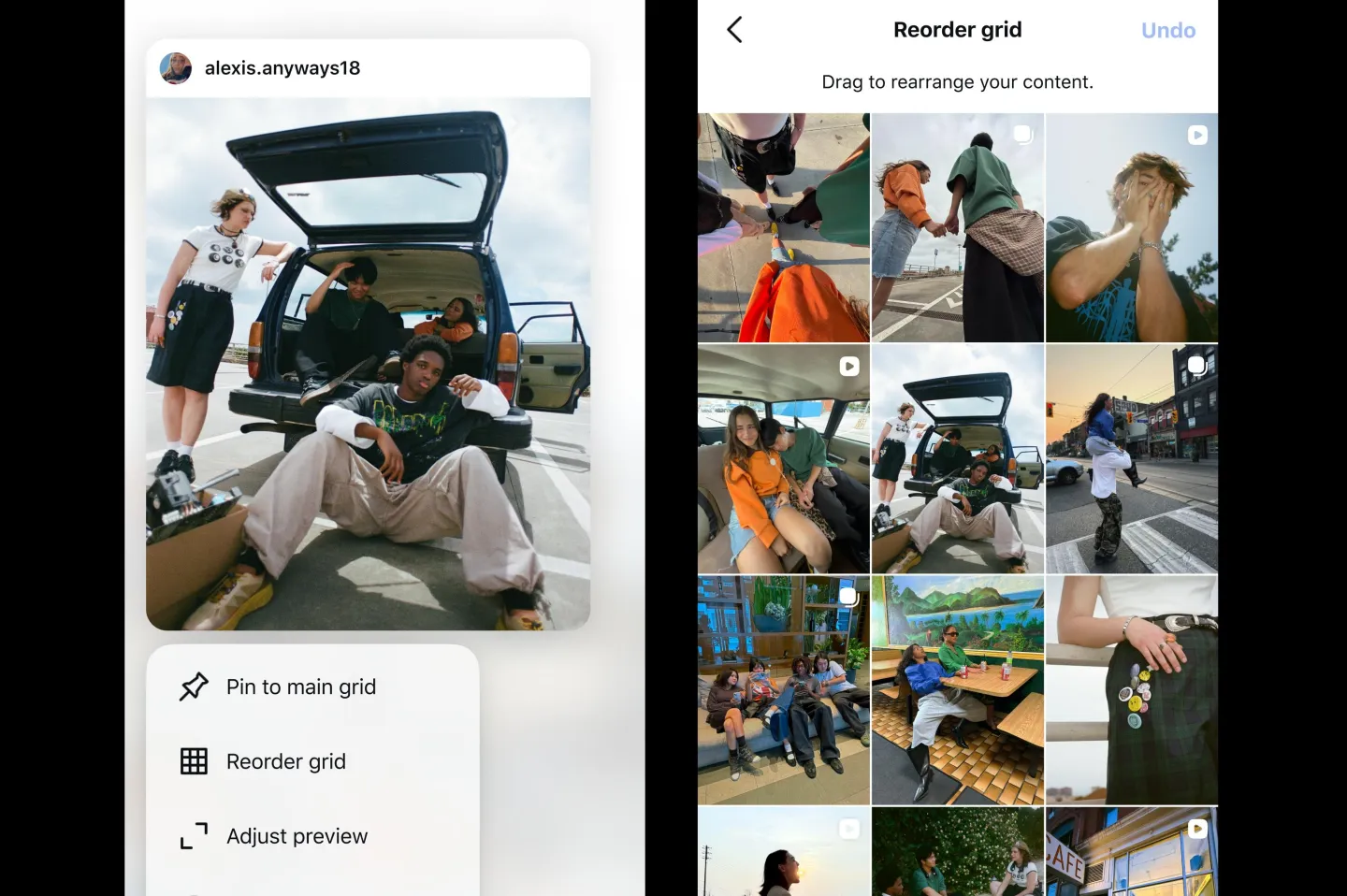
Instagram is gradually introducing the ability to manually reorder posts on user profiles, addressing one of the platform’s longest-standing user requests for greater control over how content appears. The feature allows individuals to tap any photo or video in their grid, select the reorder option, and drag items into a preferred sequence before saving changes. It builds on a similar carousel reordering tool added earlier this year, extending customization from individual posts to the overall profile presentation.
View on Threads
For years, Instagram’s grid has functioned as a rigid visual resume, with chronological or algorithmic sorting limiting personal expression. Influencers, creators, and everyday users often complained about the lack of flexibility, especially when trying to highlight specific work, maintain aesthetic consistency, or update narratives without deleting and reposting content. This update offers a modest step toward treating profiles more like curated digital portfolios rather than immutable timelines. The rollout, announced via the platform’s Threads account as beginning this week, appears phased, meaning availability will vary across accounts in the coming days.
The change arrives at a time when Instagram continues to evolve amid shifting user behaviors and competitive pressures. The app has expanded far beyond its original photo-sharing roots, incorporating Reels, Stories, shopping, and algorithm-driven feeds that often overshadow the profile grid itself. While the ability to rearrange posts provides welcome agency, its impact may prove limited in practice. Most engagement now happens through algorithmic recommendations rather than direct profile browsing, potentially diminishing the significance of grid order for broader visibility. Regular users might appreciate the polish for personal satisfaction or niche audiences, but professional creators could find it more valuable for storytelling coherence.
This development reflects broader patterns in social media design, where platforms slowly concede features demanded for years after users adapt workarounds or migrate elsewhere. Instagram’s parent company Meta has a history of prioritizing data-driven growth and engagement metrics over pure usability, making such user-centric tweaks notable but incremental. Similar frustrations persist with other elements, such as limited editing windows or opaque content moderation. Giving users more say over their digital presence is a positive, yet it also underscores how much control remains centralized with the platform’s algorithms and business priorities.
In a crowded attention economy, small improvements like this can enhance the experience without fundamentally altering the product’s dynamics. The grid reorder function may encourage more deliberate curation, helping some users project a clearer personal or professional identity. However, it does little to address deeper issues around algorithmic transparency, mental health impacts, or the pressure to maintain an idealized online persona. As Instagram pushes further into video and commerce, features that restore even minor editorial authority to users feel like necessary maintenance rather than innovation. For those who have waited patiently, the update is a practical win, though expectations should remain tempered given the app’s complex history of balancing creator needs with platform objectives.