

Star Wars Zero Company brings a tactical turn-based approach to the expansive universe, offering a different kind of gameplay experience amid the franchise’s ongoing video game efforts. Announced in April 2025 during Star Wars Celebration in Japan, the game received further details at Summer Game Fest 2026, including its release date of August 27, 2026, for PlayStation 5, Xbox Series X/S, and PC.
Unlike the action-oriented titles that have dominated recent Star Wars games, Zero Company adopts a structure reminiscent of XCOM, emphasizing strategic decision-making over direct combat spectacle. This shift arrives after the mixed player reception to 2024’s Star Wars Outlaws, which earned critical praise for its open-world elements but struggled to fully satisfy fans seeking deeper engagement. Developer Bit Reactor, working with publisher Electronic Arts, appears well-prepared for launch, with pre-orders already available and no signs of delay.
Pre-order options include Standard and Deluxe editions, with pricing varying by platform. The Standard Edition starts at $49.99 on PC and $59.99 on consoles, including the base game and a pre-order exclusive Crystalline Astromech Cosmetic Pack featuring custom droid designs. The Deluxe Edition, priced at $59.99 on PC and $69.99 on consoles, adds cosmetic packs inspired by the Grand Army of the Republic and Shadow Collective, along with five unique painted weapon themes drawn from the Clone Wars era. These extras highlight the game’s focus on customization, though they remain largely aesthetic rather than transformative to core mechanics.
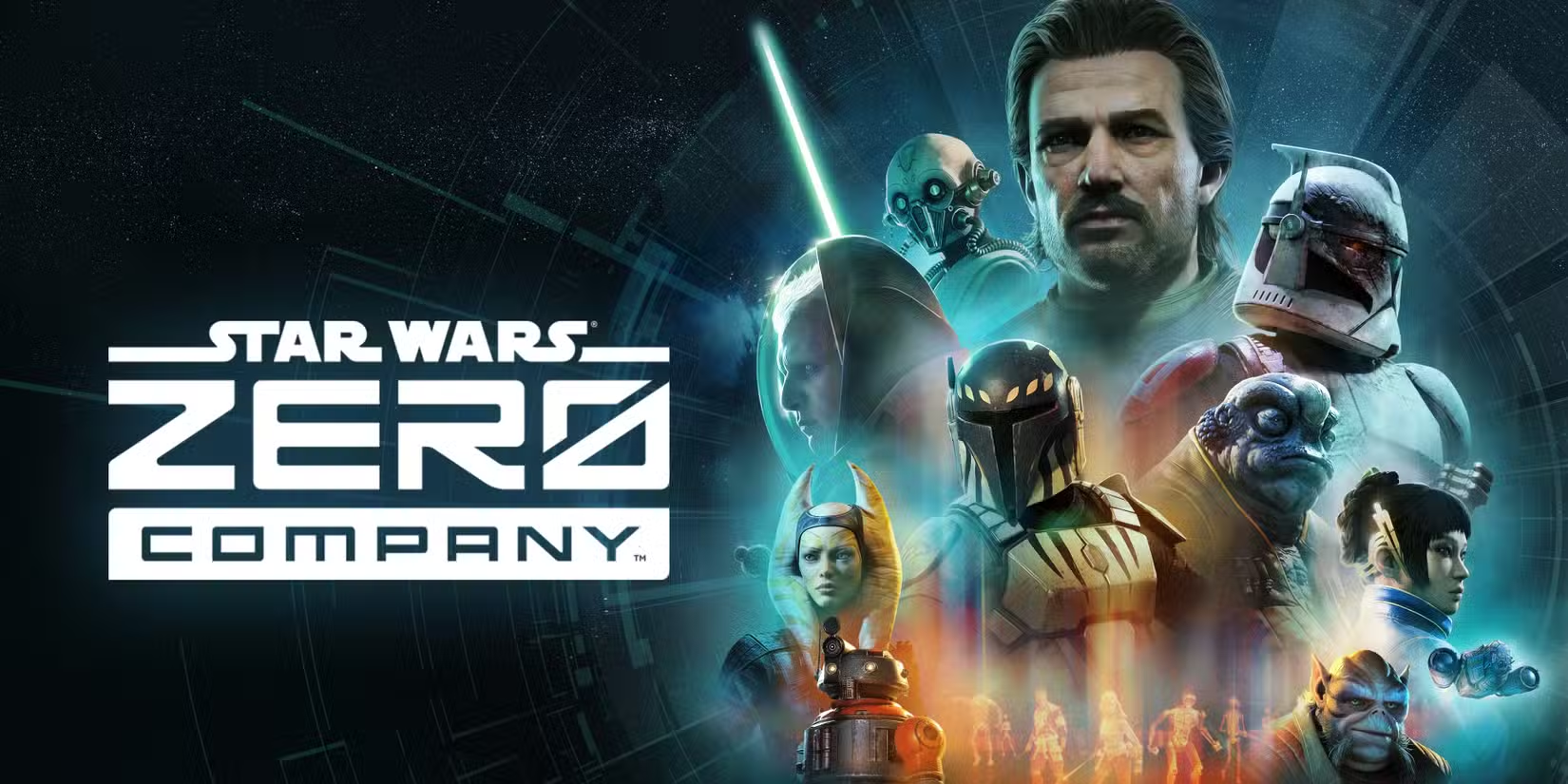
Gameplay centers on turn-based tactics across an ever-changing campaign map spanning more than 150 planets. Players manage a mix of authored and custom characters, recruiting from eight Star Wars species including Twi’lek, Zabrak, and Togruta. Training and ability unlocks allow for meaningful progression, while choices shape the narrative path. A dedicated customization hub lets users adjust appearances and talents, building on the cosmetic incentives in the higher editions. This setup promises strategic depth, yet its success will depend on how well it balances accessibility with the complexity that defines the genre.
The story follows Hawks, a former Galactic Republic officer leading Zero Company, a ragtag group of mercenaries that includes a Clone Trooper, Mandalorian, and Jedi Padawan. Set during the Clone Wars, the campaign involves pursuing Kundri Fathom, leader of the Separatist-aligned Infinite Coil cult. By exploring the conflict through these peripheral perspectives, the game aims to shed light on underrepresented angles of the era, potentially enriching the lore without relying on major canon figures. This restrained approach could prove refreshing compared to stories that lean heavily on familiar heroes.
In a franchise where games have ranged from ambitious experiments to safe adaptations, Zero Company represents a calculated risk on tactical gameplay. Its proximity to launch suggests confidence from the team, but the real test lies in execution—particularly whether the planetary scale and character systems deliver lasting replayability or fall into repetitive mission structures common in the genre. For those drawn to thoughtful strategy within the Star Wars setting, it offers a promising alternative to more conventional entries.