

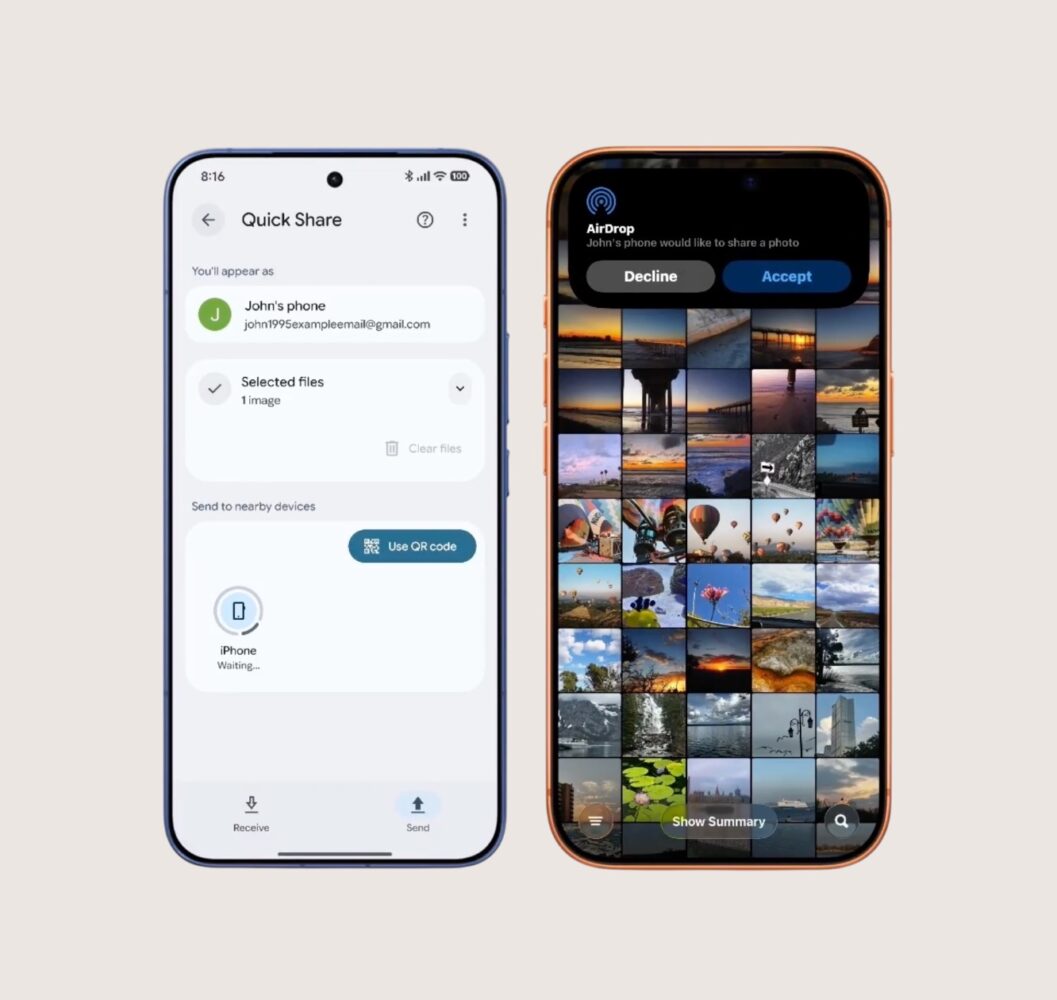
Xiaomi has added support for Apple’s AirDrop feature to its Quick Share system, allowing users on its devices to share photos and files more easily with nearby Apple hardware. The announcement came via the official HyperOS account on X, marking another step in the gradual blurring of lines between Android and iOS sharing tools.
Quick Share, originally developed as Google’s replacement for the more limited Nearby Share, has evolved into a cross-manufacturer platform used by several Android brands. Xiaomi’s implementation now detects compatible Apple devices during sharing sessions, displaying them as potential targets alongside other Android phones. In practice, this means owners of recent Xiaomi handsets can send content directly to iPhones or Macs without relying on third-party apps or cloud services, provided both devices are in close proximity and have the necessary permissions enabled.
AirDrop is now available on Quick Share.
— Xiaomi HyperOS (@XiaomiHyperOS_) June 1, 2026
Fast, seamless sharing of photos and files to Apple devices.#AirDropSupport #XiaomiHyperOS3 #Xiaomi pic.twitter.com/vqJ0w0QUbp
The move follows similar efforts by other Android makers seeking to address a long-standing user frustration: fragmented file-sharing experiences across ecosystems. Samsung integrated AirDrop-like functionality into Quick Share earlier, and Google has pushed broader compatibility improvements over recent Android versions. For Xiaomi, which has built a significant global user base with affordable yet capable phones, this update could improve daily convenience for those juggling devices from both platforms. However, details remain sparse. The company has not clarified whether the feature extends to all Xiaomi models or is limited to those running the latest HyperOS 3 skin. Given past patterns, a software update will likely be required, potentially delaying availability for older or budget-oriented devices in the lineup.
This development reflects broader industry trends toward pragmatic interoperability rather than true open standards. While convenient, it still depends on proprietary implementations that could change with future software updates or face compatibility hiccups. Users have long navigated workarounds like email, messaging apps, or dedicated tools such as Snapdrop for cross-platform transfers. AirDrop support in Quick Share reduces some friction but does not eliminate the underlying ecosystem divide that tech companies carefully maintain for competitive reasons.
From a practical standpoint, the feature works straightforwardly on supported hardware: initiate a share from a Xiaomi phone, and nearby Apple devices should appear in the menu. Yet questions linger about reliability in crowded environments, security implications of expanded discovery protocols, and long-term maintenance. Xiaomi’s vast portfolio means rollout consistency will matter more than the initial announcement. Early adopters with compatible phones and recent iOS devices can test it immediately, but wider adoption may unfold unevenly over the coming months.
In many ways, these incremental cross-compatibility features highlight how user demands eventually pressure manufacturers to cooperate, even if reluctantly. True seamless sharing across all devices remains elusive, but steps like Xiaomi’s addition bring modest improvements to everyday digital life without requiring major hardware overhauls.