

When Overwatch 2 launched in 2022, it struggled to justify its existence beyond surface-level changes. The shift to a new format, a small batch of heroes, and balance adjustments did little to distinguish it from the original game. The cancellation of the long-promised PvE mode only reinforced the sense that the sequel was more of a restructuring than a rethink. For several years, the game coasted on familiarity, relying on incremental hero tweaks and seasonal updates that kept it functional but rarely exciting. That trajectory finally shifted in 2025, not because of a single headline feature, but because Blizzard began reexamining how players interact with the game at a fundamental level.
Rather than continuing the cycle of minor numerical balance changes, Blizzard Entertainment introduced a perk system that reframes how heroes function in specific situations. These perks, which offer both minor and major modifications to abilities, give players more agency in shaping how a match unfolds. Instead of repeatedly reworking the same abilities, Blizzard has started giving players tools to compensate for weaknesses or lean into strengths on their own terms. Balance patches still exist, but moment-to-moment decision-making now matters more than reacting to patch notes.
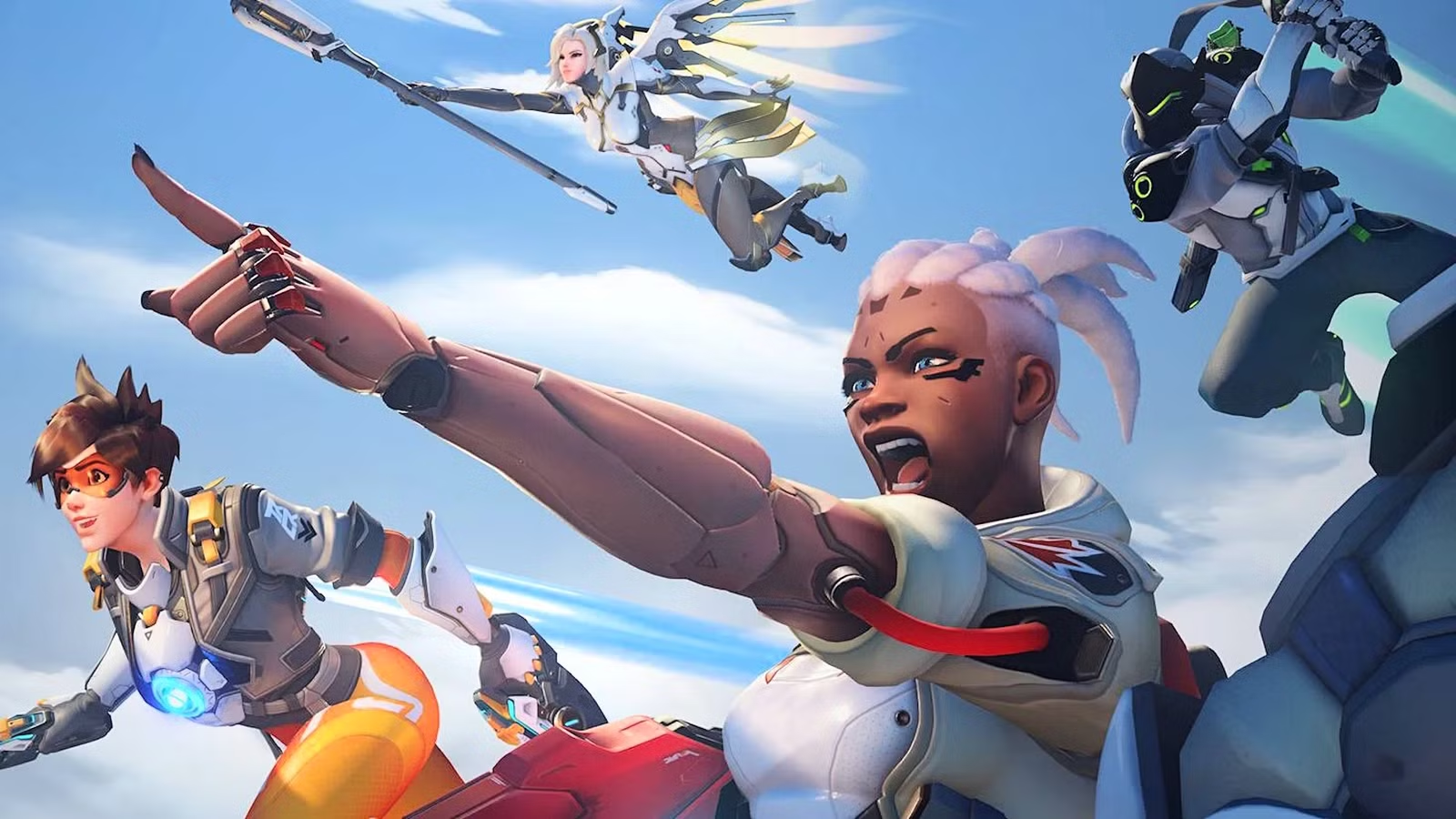
The perk system also adds tactical flexibility during matches. Heroes like Mei, Moira, and Freja can be adjusted to suit team needs or counter specific threats without locking players into a single optimal build. These small choices reduce repetition and encourage adaptation, helping matches feel less scripted even on familiar maps. The result is a game that rewards awareness and experimentation rather than rote execution.
An unexpected contributor to this shift is Stadium, a mode that functions as an informal learning environment. While not designed as a tutorial, Stadium pushes players to explore a hero’s mechanics in depth. Builds that heavily emphasize a single ability force players to think about timing, positioning, and role prioritization in ways standard matches often do not. Skills developed there translate back into core modes, encouraging more varied strategies and better use of map geometry across the broader player base.
This emphasis on experimentation carries over into the 2025 hero lineup, which represents a noticeable break from earlier design trends. Many post-launch heroes previously felt like variations on established archetypes, reinforcing the sense that Overwatch 2 was refining old ideas rather than expanding them. Newer additions avoid easy comparisons. Freja’s flexibility allows her to fill multiple combat roles depending on player approach. Wuyang blends damage and support in a way that rewards mastery rather than specialization. Vendetta, the game’s first dedicated melee damage hero, places an unusual emphasis on movement and spatial awareness, skills that had often been optional rather than essential.
Taken together, these changes mark the first time Overwatch 2 feels meaningfully distinct from its predecessor. The game remains complex and occasionally opaque for new players, but its renewed focus on choice, creativity, and player-driven solutions suggests a clearer long-term vision. In 2025, Overwatch 2 finally began to resemble an evolution rather than an extended update.