
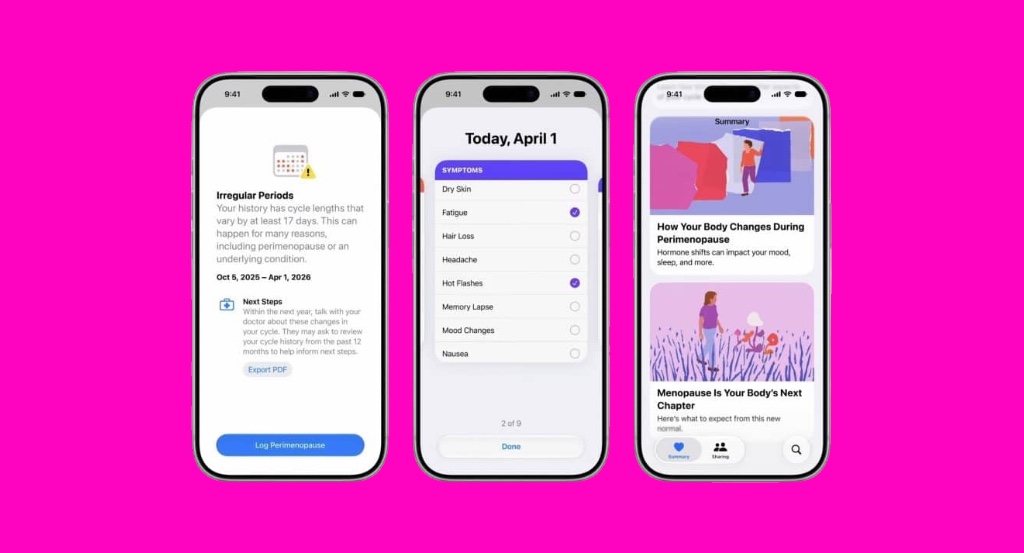
Apple has expanded its Cycle Tracking tools in the Health app with features aimed at perimenopause and menopause, stages that affect millions yet often remain overlooked in mainstream health discussions. Starting with iOS 27, users can now indicate whether they are in perimenopause or menopause, allowing the app to tailor cycle data more precisely. This includes logging symptoms, monitoring patterns over time, and receiving a prompt to consult a doctor if bleeding occurs after menopause, a potential indicator of underlying issues requiring medical evaluation. The update also introduces in-app educational articles on these transitions, drawing from clinical expertise to offer practical management advice.
For context, perimenopause can begin several years before the final menstrual period, bringing irregular cycles, hot flashes, sleep disruptions, and mood shifts that many women miss or dismiss as isolated complaints. Apple’s new notification for users aged 40 and older flags significant deviations in logged cycles that may point to perimenopause, encouraging earlier awareness and action. While proactive alerts like this can help bridge gaps in traditional healthcare, they also raise questions about over-reliance on algorithmic interpretations of personal data without professional oversight. Historical efforts, such as the Apple Women’s Health Study in collaboration with Harvard, have already contributed longitudinal insights into menstrual and reproductive health, underscoring a gradual shift toward more data-driven conversations around women’s experiences that were long understudied.
Complementing the Cycle Tracking enhancements, Apple Fitness+ has launched a three-week progressive program called Strong Through Menopause. It combines weekly yoga and strength sessions focused on building muscle, enhancing balance and mobility, and easing stress—common concerns during hormonal changes. A new Time to Walk episode features actor Busy Philipps discussing her personal perimenopause journey alongside life reflections. These additions arrive alongside fresh data from the Apple Women’s Health Study highlighting trends in sleep disturbances and symptoms during menopause, adding to the growing body of evidence on how these phases impact daily life.
From a broader perspective, integrating such tracking into everyday devices reflects wider industry moves toward holistic wellness tools. Yet critics note that while apps can surface patterns and prompt conversations, they are no substitute for individualized medical care. Menopause remains a deeply personal process influenced by genetics, lifestyle, and environment, and self-reported data has limitations in accuracy and representation. Earlier smartwatch and app features for cycle tracking laid groundwork here, but extending them to later life stages acknowledges an aging user base seeking continuity in health management. The emphasis on strength training and mobility aligns with established recommendations from health organizations, which stress resistance exercise for preserving bone density and mood stability amid estrogen decline.
Overall, these iOS 27 and Fitness+ updates provide accessible entry points for tracking and support during perimenopause and menopause, potentially empowering users to engage more informedly with their bodies. Still, their true value will depend on how seamlessly they fit into clinical workflows and whether they avoid generating unnecessary anxiety around normal variations. As research evolves, including ongoing contributions from large-scale studies, such features may help normalize these life chapters rather than treating them as afterthoughts.